

Closing a yacht deal is defined as the formal process of transferring legal ownership of a vessel from seller to buyer through a sequence of contractual, financial, and documentation steps. For affluent buyers, this process involves far more than a handshake and a wire transfer. It requires coordinating experienced brokers, independent surveyors, and legal counsel across a timeline that typically spans 12 to 24 weeks from offer to final title transfer. Get any one element wrong and the entire transaction can unravel. Get it right, and you step aboard your new vessel with complete confidence and clean title.
How to close a yacht deal: what you must do first
Before a single contract is signed, three pillars must be firmly in place: your advisory team, your financial readiness, and your due diligence plan. Skipping any one of them is the most common reason luxury buyers find themselves in costly delays or, worse, holding a vessel with undisclosed defects.
Your advisory team should include a licensed yacht broker with superyacht experience, a qualified marine surveyor, and maritime legal counsel. These are not interchangeable roles. A broker negotiates on your behalf and manages the transaction workflow. A surveyor assesses the vessel’s physical condition and value. Legal counsel reviews contract terms, governs law clauses, and protects your rights if disputes arise. The MYBA MOA contract used in most superyacht transactions is a sophisticated legal instrument, and reading it without counsel is a risk no serious buyer should take.
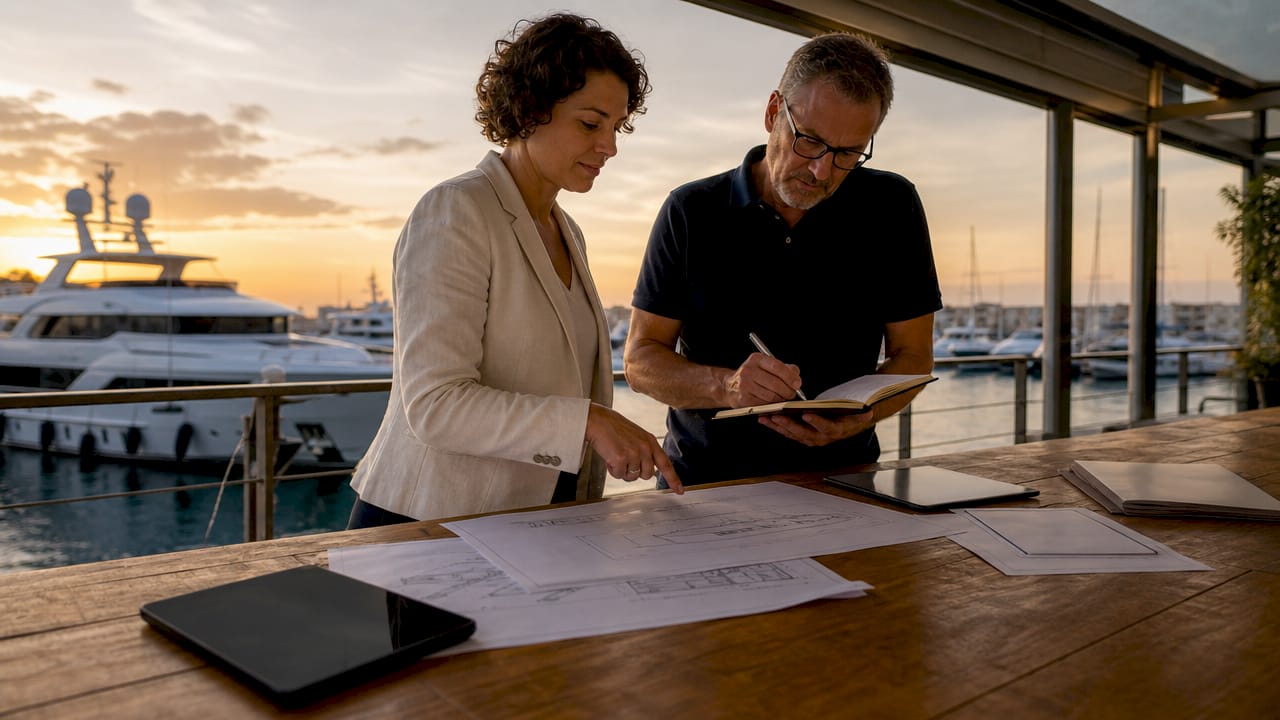
Financial readiness means more than having funds available. It means having them structured correctly. A standard 10% deposit accompanies the Memorandum of Agreement signing and is held in escrow until closing. The balance is due upon acceptance, and delays in fund transfers have derailed more closings than most buyers realize. If financing is involved, pre-approval must be secured before the survey period begins, not after.
Key preparation steps before entering contract:
- Commission a full condition and valuation survey from a certified marine surveyor
- Conduct a sea trial under realistic operating conditions
- Verify the vessel’s title history and confirm no outstanding liens
- Review yacht closing costs including taxes, registration fees, and brokerage commissions
- Confirm your intended use of the vessel, since charter, private, and commercial use each carry different compliance requirements
Pro Tip: Buyers often underestimate how their intended use of the yacht shapes inspection priorities and contract terms. Clarify this with your broker before the survey is scheduled, not after.
How does the yacht closing process typically unfold?
The closing process follows a defined sequence. Understanding each stage prevents surprises and gives you the leverage to move decisively when the moment calls for it.
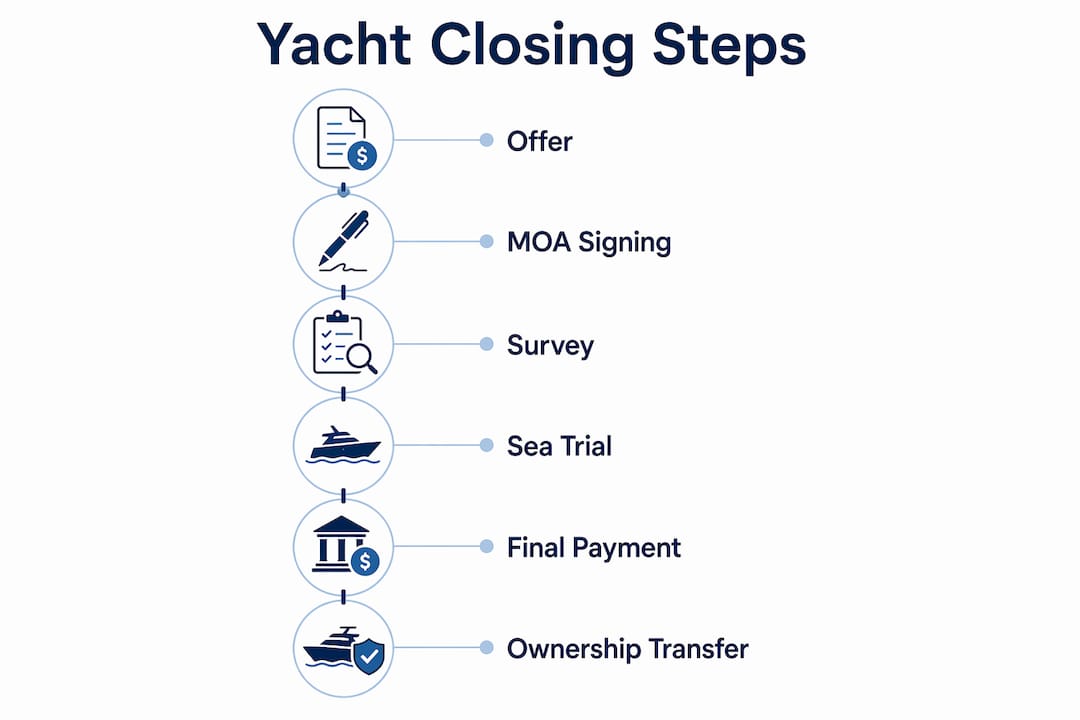
- Offer and MOA signing. Your broker submits a formal offer, which, once accepted, is formalized in a Memorandum of Agreement. The MYBA MOA is the industry standard for large yachts and superyachts. It defines the purchase price, deposit amount, survey timeline, and governing law.
- Deposit into escrow. A 10% deposit is wired to a neutral escrow account, typically held by the listing broker or a designated escrow agent. This protects both parties during the due diligence period.
- Survey and sea trial. An independent marine surveyor inspects the vessel at a mutually agreed location. The sea trial follows, testing all mechanical and navigational systems under load. Survey findings trigger specific contractual outcomes under the MYBA framework.
- Acceptance or rejection. Based on survey results, the buyer formally accepts the vessel, rejects it, or negotiates a price adjustment for identified defects. This step has strict deadlines. Missing them can forfeit your right to withdraw.
- Balance payment and title transfer. Once acceptance is confirmed, the balance is wired to escrow. Legal documents are executed, including the bill of sale, and ownership is formally transferred.
- Registration and documentation. For U.S.-flagged vessels, the new owner files with the U.S. Coast Guard National Vessel Documentation Center to update federal records.
Pro Tip: Schedule your surveyor before the MOA is signed, not after. Top-tier surveyors book weeks in advance, and a delayed survey can push your entire closing timeline past contractual deadlines.
| Stage | Typical timeframe |
|---|---|
| Offer to MOA signing | 1 to 2 weeks |
| Survey and sea trial | 2 to 4 weeks |
| Acceptance and balance payment | 1 to 2 weeks |
| Documentation and registration | 4 to 8 weeks |
| Full closing completion | 12 to 24 weeks total |
What legal documents are critical for closing a yacht transaction?
Legal documentation is where the yacht buying process either holds firm or falls apart. For U.S.-flagged vessels, the bill of sale is the primary document conveying ownership and must be notarized for the U.S. Coast Guard to update its records. Informal agreements, even signed ones, are not accepted. The Coast Guard also requires Form CG-1340 to process the transfer of documentation. Missing either document blocks the title update entirely.
Notarization is not a formality. It includes identity verification and formal acknowledgment that the signatory executed the document willingly. Lack of notarization invalidates the ownership transfer and prevents any title application from moving forward. This is a two-layer system: the bill of sale establishes the transaction, and the transfer form updates the federal record.
| Document | Purpose | Required for |
|---|---|---|
| MYBA MOA | Governs purchase terms, deposit, and survey rights | All superyacht transactions |
| Bill of Sale (notarized) | Conveys legal ownership from seller to buyer | U.S. Coast Guard title update |
| Form CG-1340 | Transfers Certificate of Documentation | U.S.-flagged vessel re-registration |
| Lien release letters | Confirms vessel is free of encumbrances | Clean title transfer |
| Governing law clause | Specifies jurisdiction for dispute resolution | Buyer protection in MYBA MOA |
The MYBA MOA also specifies a governing law clause that typically avoids the seller’s home jurisdiction. This protects the buyer from having disputes adjudicated in a court that may favor the seller. Your legal counsel should review this clause before you sign. For a deeper look at ownership documents specific to U.S. transactions, the yacht deed overview at Yachts-bysteve explains the distinctions clearly.
What are common pitfalls when closing a yacht deal?
The most costly mistakes in finalizing a yacht purchase do not happen at the closing table. Errors causing failed closings arise upstream, in contract drafting and due diligence, long before the balance wire is sent. Recognizing these failure points early is what separates experienced buyers from those who learn the hard way.
Common pitfalls to avoid:
- Rushed surveys. Compressing the survey timeline to accelerate closing creates blind spots. A thorough condition survey on a 30-meter-plus vessel requires multiple days and specialized equipment.
- Missing survey deadlines. The MYBA MOA includes strict deadlines for accepting or rejecting a vessel based on survey findings. Missing these deadlines can eliminate your right to withdraw, even if defects are found.
- Inadequate escrow oversight. Using an unvetted escrow agent or allowing funds to be held outside a formal escrow arrangement exposes both parties to significant financial risk. Learn how luxury yacht escrow works before committing funds.
- Overlooking lien searches. A vessel with an undisclosed maritime lien transfers that lien to the new owner. A title search before closing is non-negotiable.
- Weak governing law terms. Accepting the seller’s preferred jurisdiction without negotiation can leave you without practical legal recourse if post-sale disputes arise.
“A well-negotiated contract is the closest thing to a guarantee in yacht transactions. The closing event itself is rarely where deals fail. It’s the preparation that determines the outcome.” — Maritime legal counsel perspective, consistent with MYBA transaction analysis.
How can you accelerate the closing process without cutting corners?
Speed in closing a yacht sale comes from preparation, not shortcuts. The buyers who close fastest are those who had their team assembled, their finances structured, and their survey logistics planned before the MOA was even drafted.
Practical steps to accelerate without sacrificing rigor:
- Engage your surveyor and legal counsel before making an offer. Having them on standby means you can move immediately once the MOA is signed.
- Use digital document management. E-signature platforms designed for maritime transactions reduce the back-and-forth of physical document execution, cutting days from the closing timeline.
- Pre-clear your escrow account. Wire transfer delays are one of the most common causes of closing postponements. Confirm your bank’s international wire protocols well in advance.
- Align on the survey location early. Moving a large vessel to a boatyard for haulout takes coordination. Agreeing on the location at MOA signing prevents scheduling conflicts later.
- Work with a broker who specializes in brokerage compliance. Experienced brokers know the documentation requirements for each flag state and can anticipate bureaucratic delays before they occur.
Pro Tip: Ask your broker for a closing checklist specific to the vessel’s flag state and your intended registration jurisdiction. A checklist created at MOA signing prevents last-minute scrambles for documents that take weeks to obtain.
Key takeaways
Closing a yacht deal successfully requires assembling the right team, respecting contractual deadlines, and executing legal documentation with precision before the balance wire is ever sent.
| Point | Details |
|---|---|
| Assemble your team early | Engage a broker, surveyor, and maritime attorney before making an offer. |
| Respect survey deadlines | MYBA MOA deadlines for acceptance or rejection are contractually binding and non-negotiable. |
| Notarize all ownership documents | A notarized bill of sale and Form CG-1340 are mandatory for U.S. Coast Guard title updates. |
| Secure escrow properly | A 10% deposit held in formal escrow protects both parties throughout the due diligence period. |
| Negotiate governing law | Ensure the MOA specifies a neutral jurisdiction to protect your rights in any post-sale dispute. |
What I have learned from watching luxury yacht closings go sideways
After years of working in the luxury yacht market, the pattern I see most often is this: buyers who have the financial resources to acquire a magnificent vessel underestimate the procedural complexity of actually owning it. They move quickly on the purchase decision, which is understandable. A stunning 40-meter motor yacht on the Côte d’Azur does not stay available for long. But that urgency, when it bleeds into the due diligence phase, is where real money gets lost.
The contracts in this market, particularly the MYBA MOA, are written by people who have seen every conceivable dispute. The deadlines are there for a reason. The governing law clauses are there for a reason. I have watched buyers waive survey contingencies to close faster, only to discover structural issues that cost more to repair than they saved in negotiation. I have also watched buyers lose their deposit because they missed a rejection deadline by 48 hours.
My honest advice: treat the closing process as the investment it is. The vessel is the reward. The process is the protection. Patience during due diligence is not timidity. It is the mark of a buyer who understands that a yacht is not just a purchase. It is a long-term relationship with the sea, and that relationship deserves a clean foundation.
— Jason
How Yachts-bysteve guides luxury buyers through every closing
Yachts-bysteve works with affluent buyers who expect more than a listing and a handshake. From the moment you identify a vessel of interest, the team at Yachts-bysteve coordinates every element of the closing process: broker selection, survey scheduling, escrow oversight, and documentation review. If you are ready to move forward with confidence, start by reading the guide on how to choose a yacht broker to understand what separates an average broker from one who protects your interests at every stage. For buyers who want full-service support, the yacht brokerage services at Yachts-bysteve are built specifically for transactions at this level of complexity and value.
FAQ
What is the standard deposit for a yacht purchase?
The standard deposit in a superyacht transaction is 10% of the agreed purchase price, wired to an escrow account upon signing the Memorandum of Agreement. This deposit is held until the buyer formally accepts the vessel following survey and sea trial.
How long does it take to close a yacht deal?
The full acquisition process typically spans 12 to 24 weeks, with the most intensive preparation occurring in the first 10 weeks. Timeline varies based on vessel flag state, survey logistics, and documentation complexity.
What documents are required to transfer yacht ownership in the U.S.?
A notarized bill of sale and Form CG-1340 are required to update ownership records with the U.S. Coast Guard for federally documented vessels. The ownership transfer process also requires lien clearance and, in most cases, a MYBA MOA or equivalent purchase contract.
What is the MYBA MOA and why does it matter?
The MYBA Memorandum of Agreement is the industry-standard purchase contract for large yachts and superyachts. It governs deposit terms, survey rights, acceptance deadlines, and governing law, making it the primary legal protection for both buyer and seller throughout the closing process.
Can a yacht deal fall through after the contract is signed?
Yes. A deal can fail if the buyer misses survey acceptance deadlines, if title defects are discovered without contractual remedy, or if funds are not transferred within the agreed timeframe. Thorough preparation and experienced legal counsel are the most reliable safeguards against a failed closing.
Recommended
Featured Listings
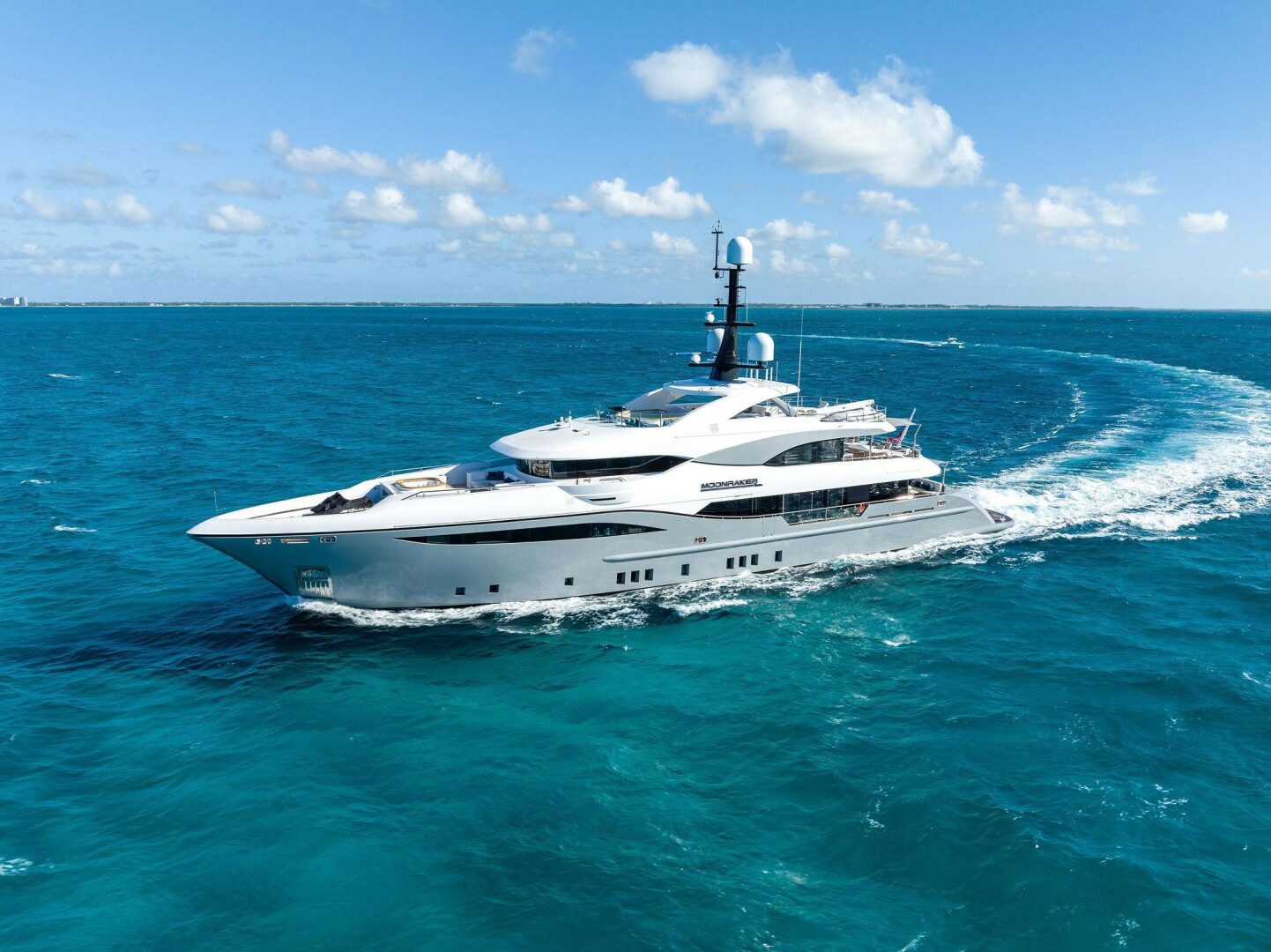
2019 Bilgin MOONRAKER
$21,404,500
156
West Palm Beach Florida

2028 Columbus Yachts
$22,900,008
137
Ancona
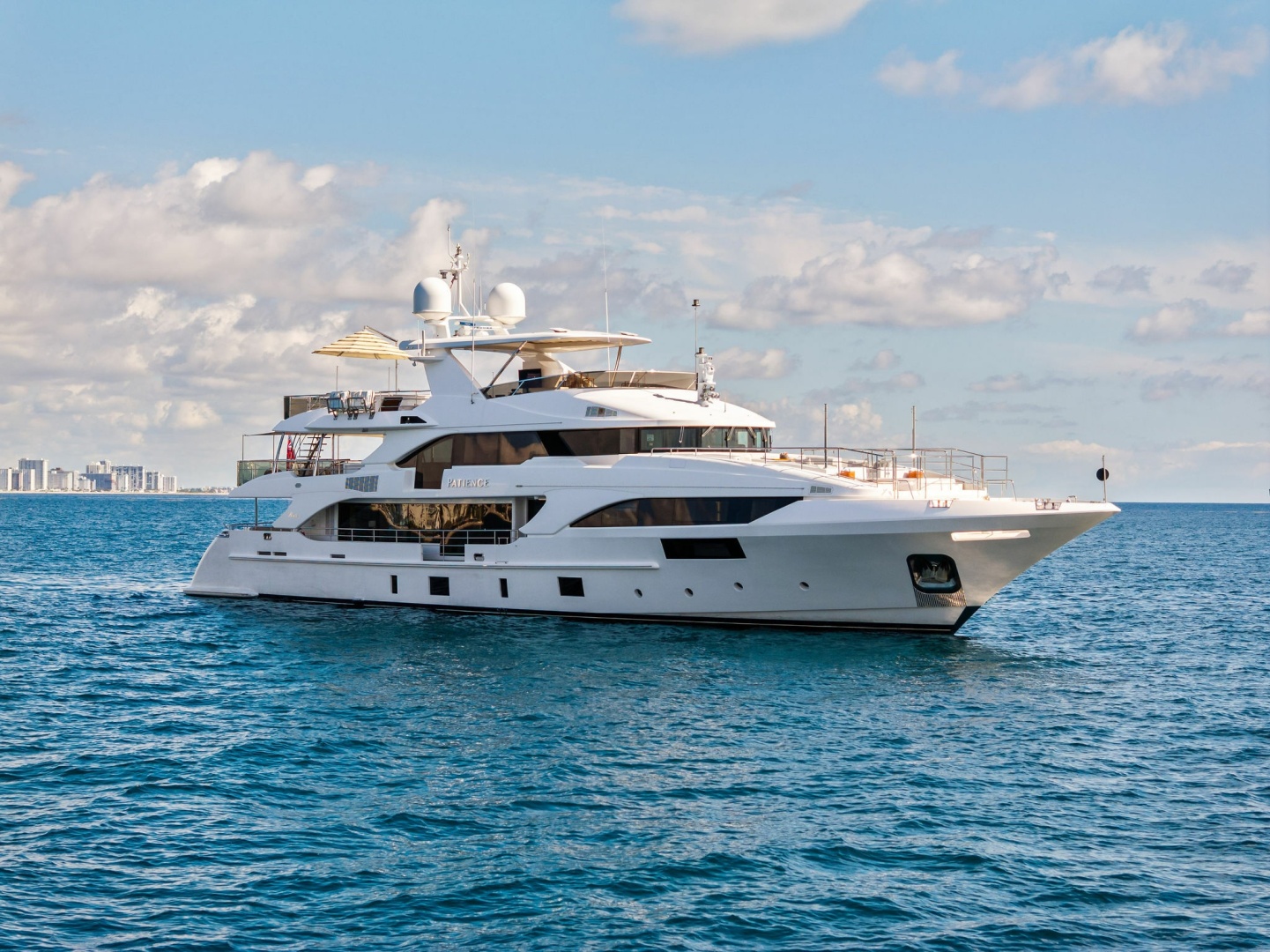
2012 Benetti PATIENCE
$10,975,000
132
Fort Lauderdale Florida
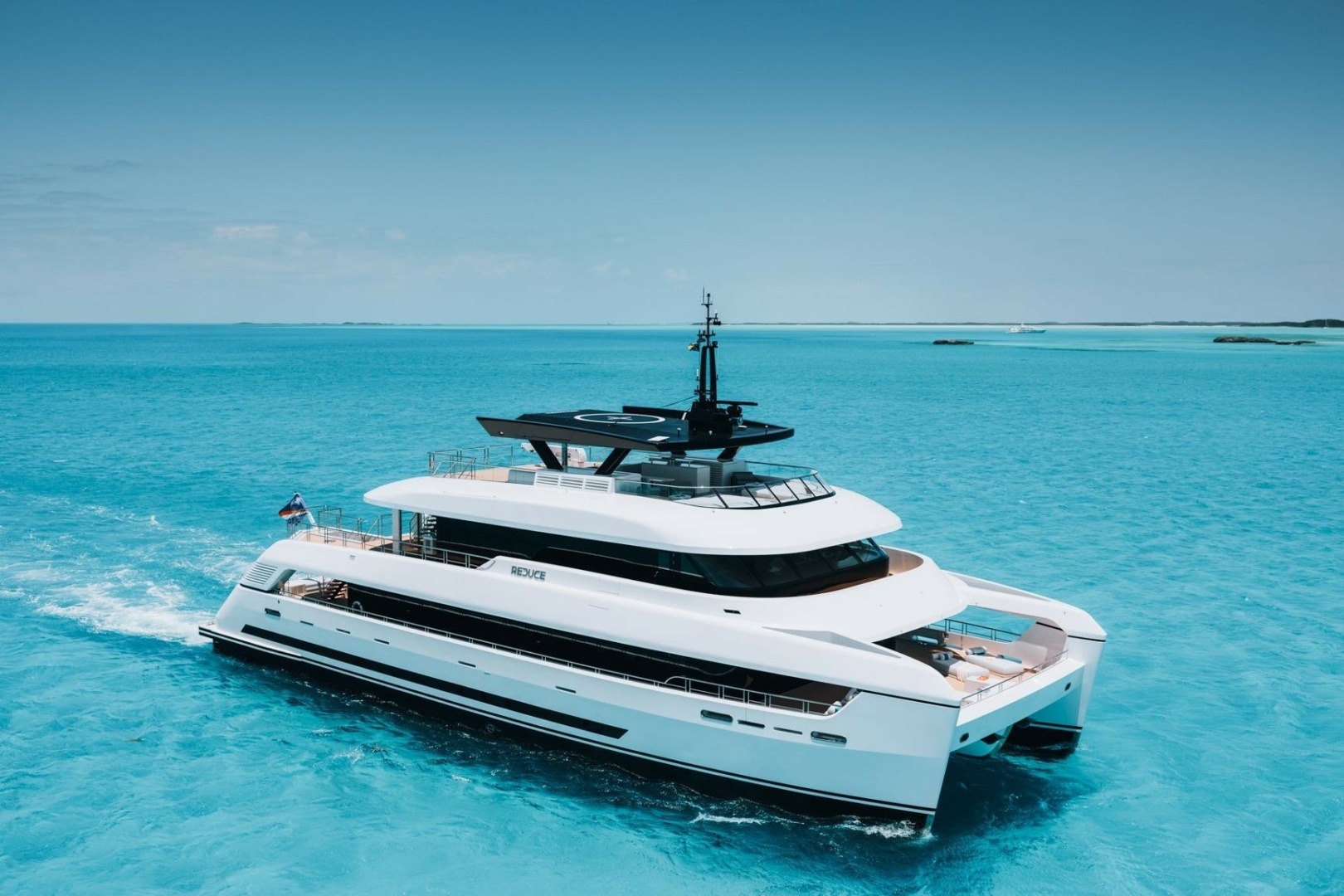
2024 Silver Yachts
$25,400,000
117
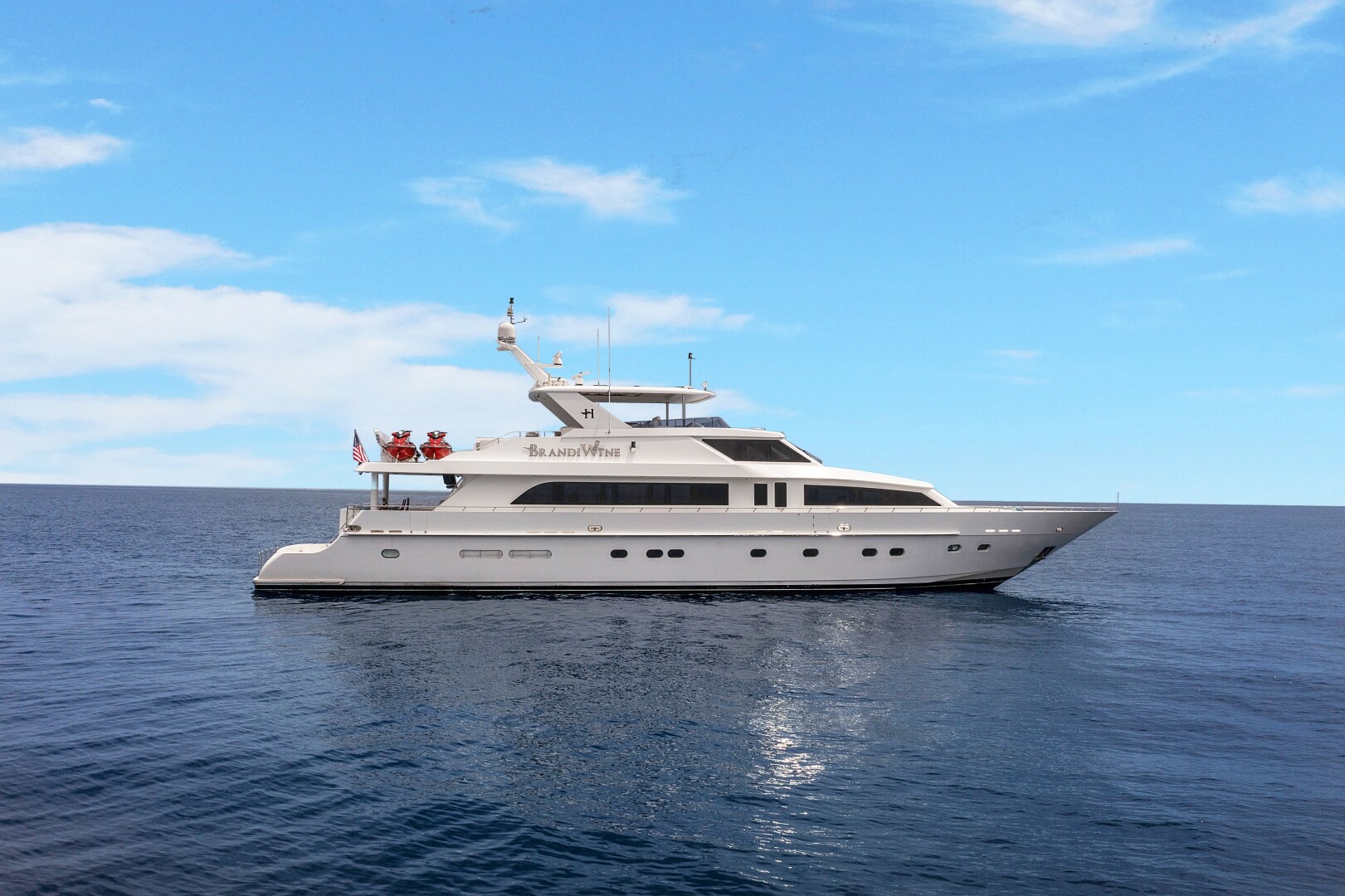
2009 Hargrave BRANDI WINE
$2,995,000
114
Fort Lauderdale Florida

2028 Extra Yachts
$21,404,500
100
Ancona

2028 Extra Yachts Extra 96
$9,495,000
96
Ancona
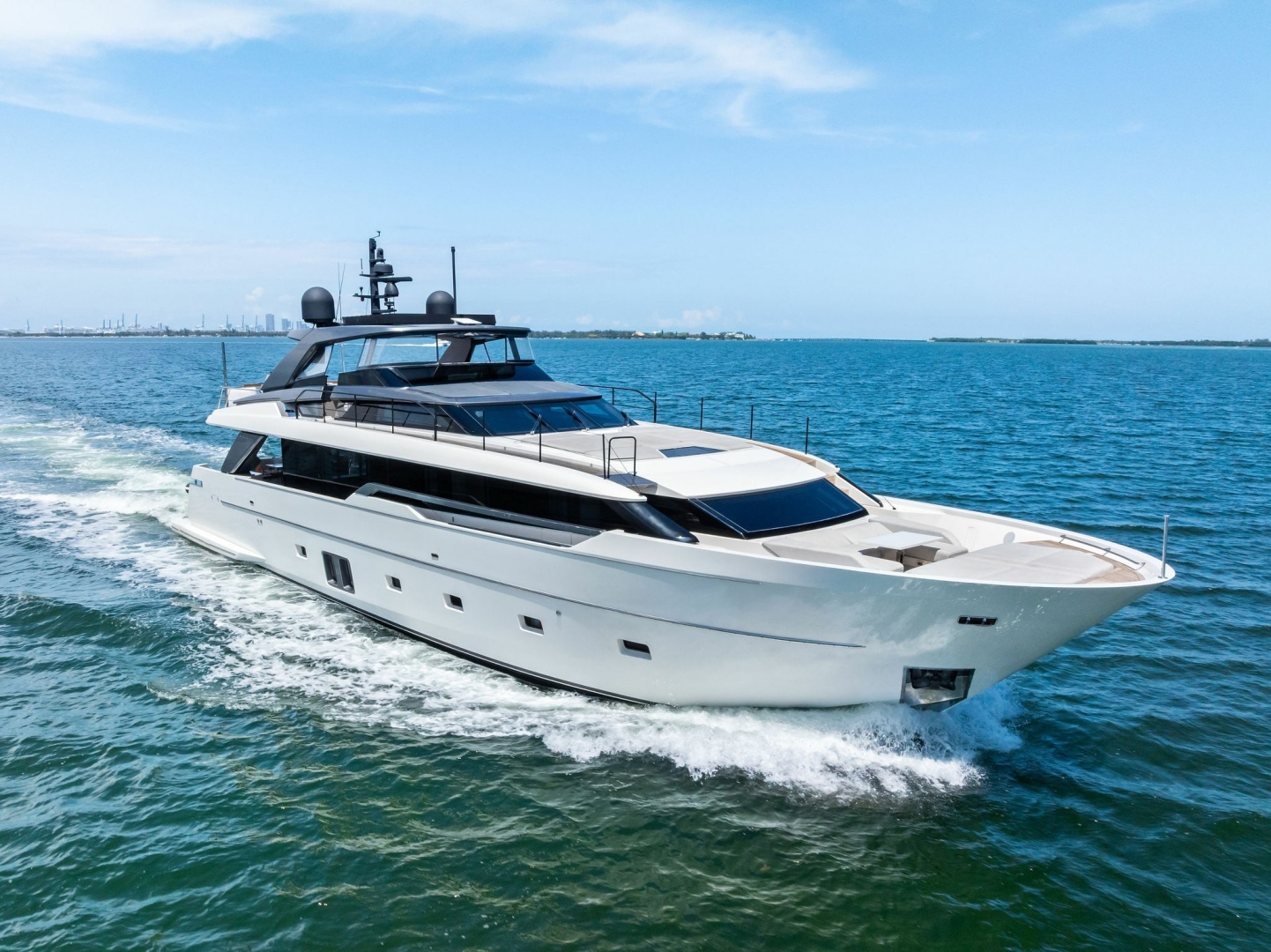
2021 Sanlorenzo GATSBY
$6,795,000
96
Miami Beach Florida

1999 Northern Marine OFF LINE
$2,495,000
84
Ft Lauderdale Florida
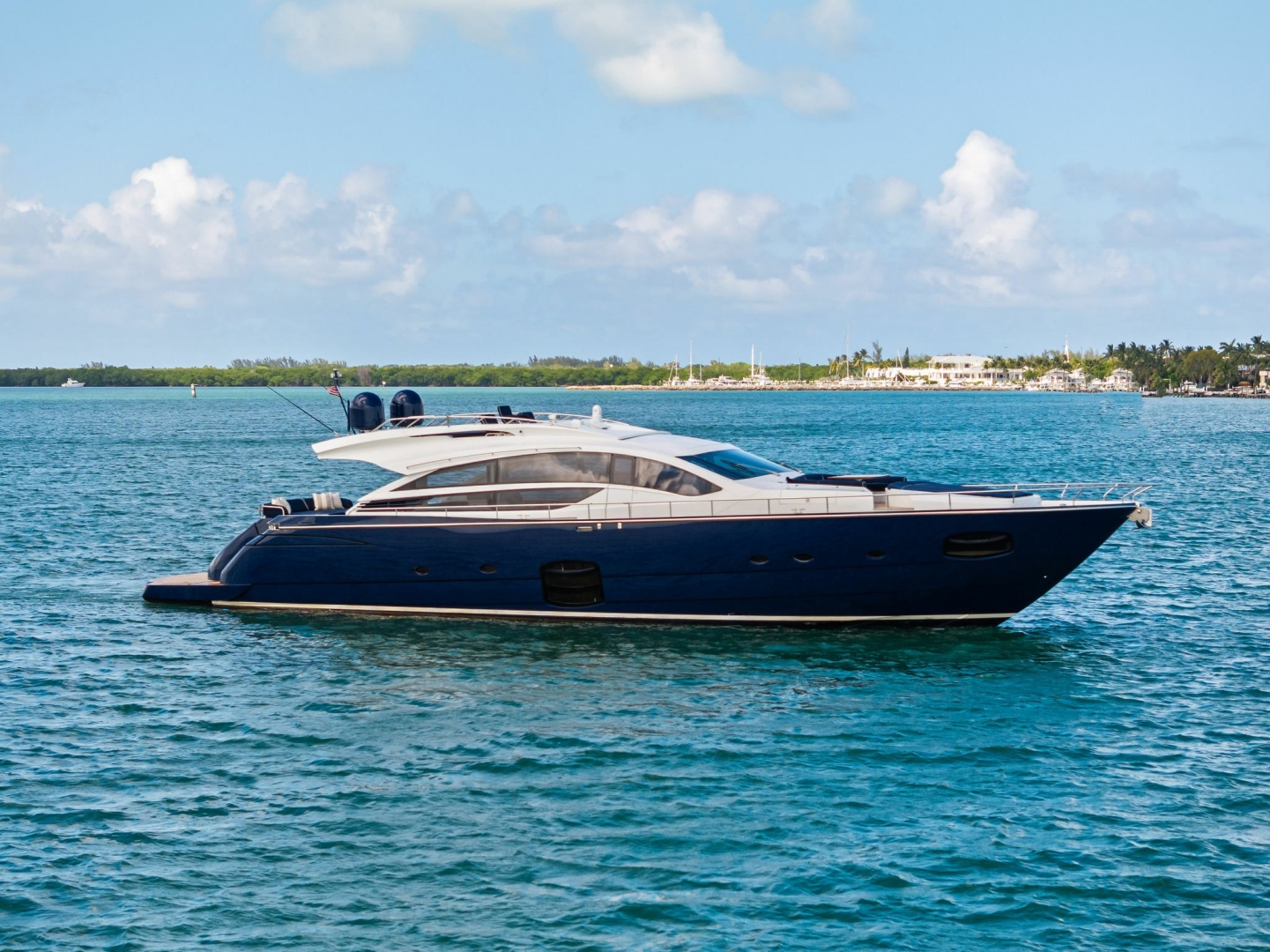
2013 Pershing DOROTHY ANN
$1,750,000
82
Miami Beach Florida

1997 Ferretti Yachts
$850,000
80
La Paz
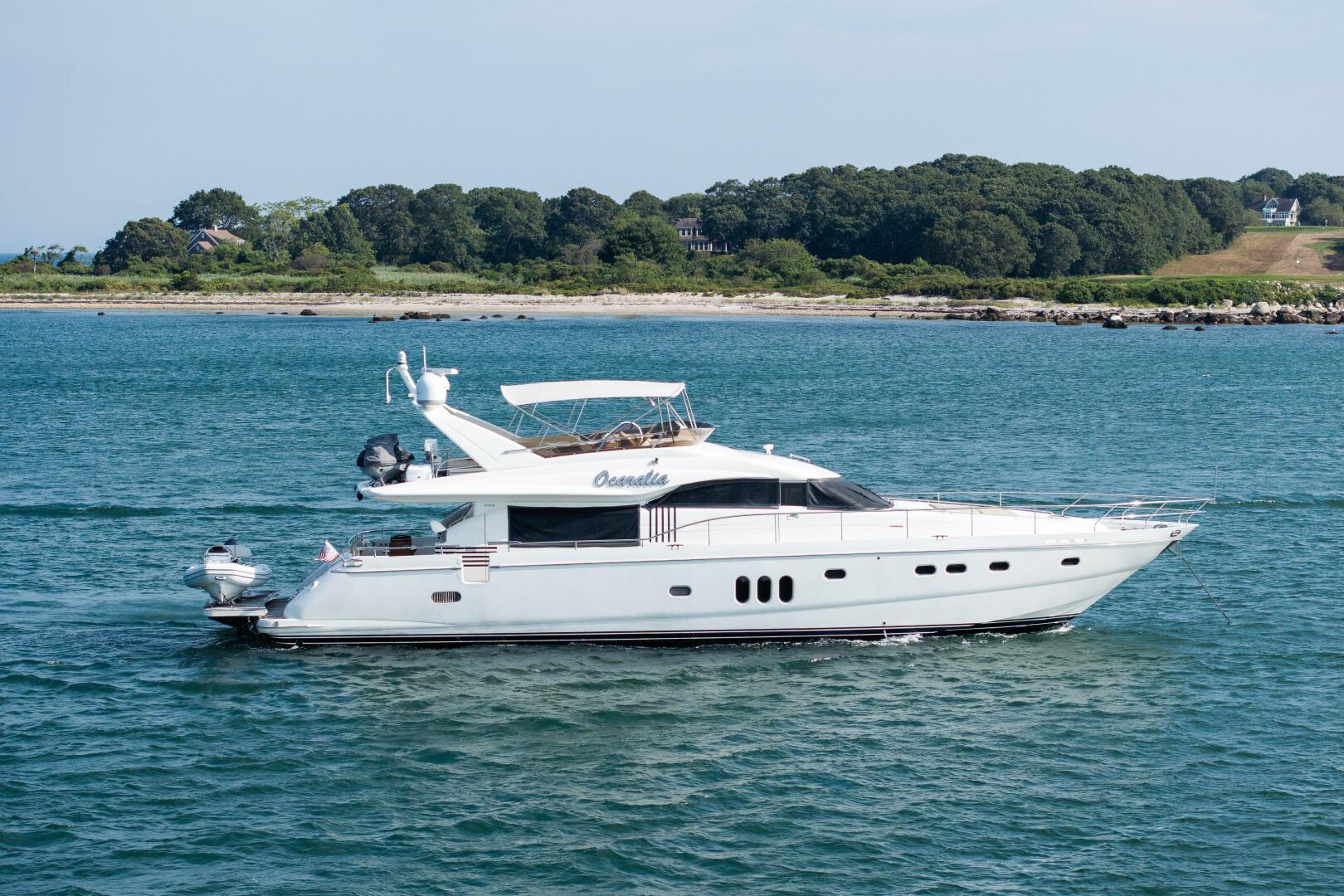
2008 Princess Yachts OCARALIA
$1,095,000
75
Charleston South Carolina
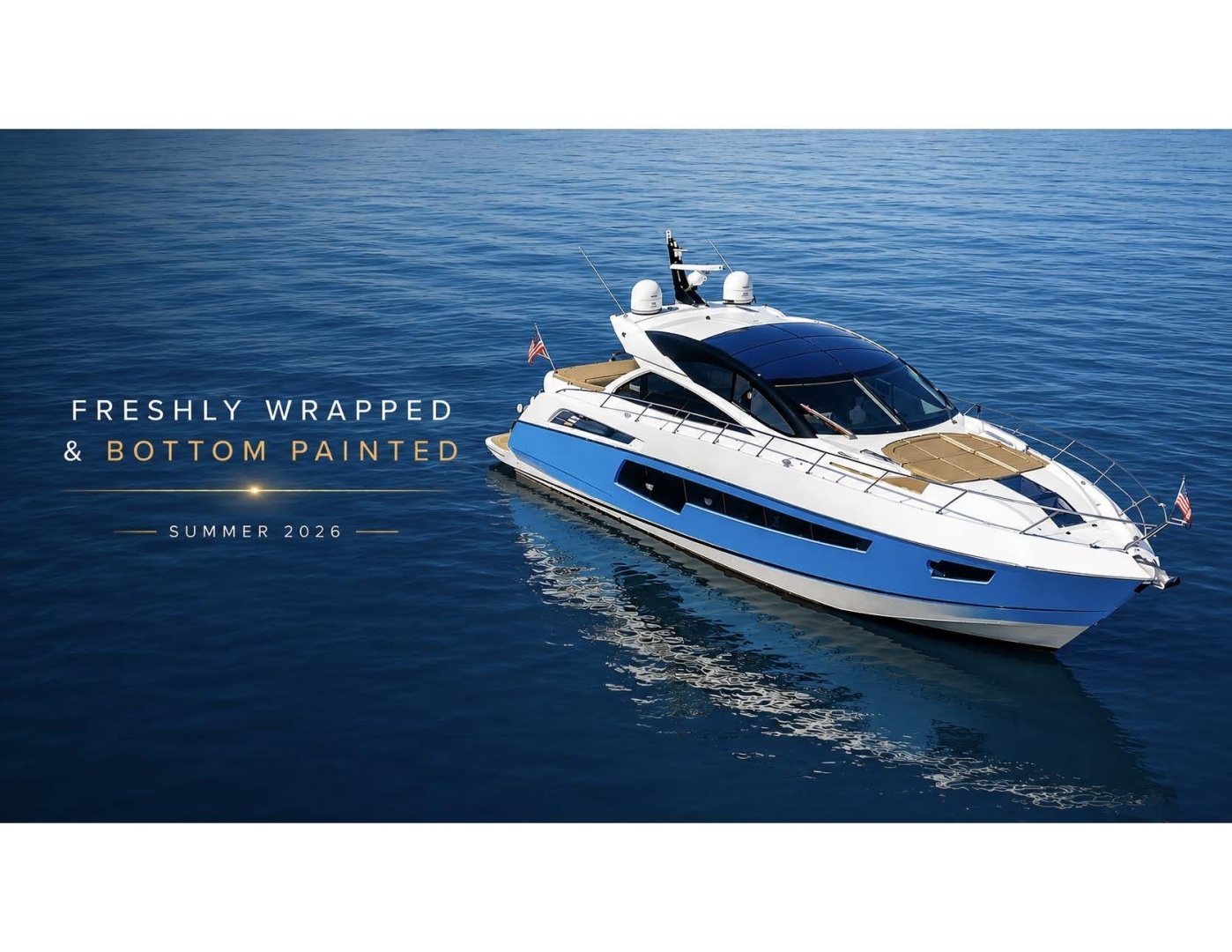
2014 Sunseeker
$1,400,000
68
New York New York

2024 Fairline
$2,750,000
68
Ft. Lauderdale Florida

2024 Sunreef Catallaxi
$3,700,000
60
Newport Rhode Island
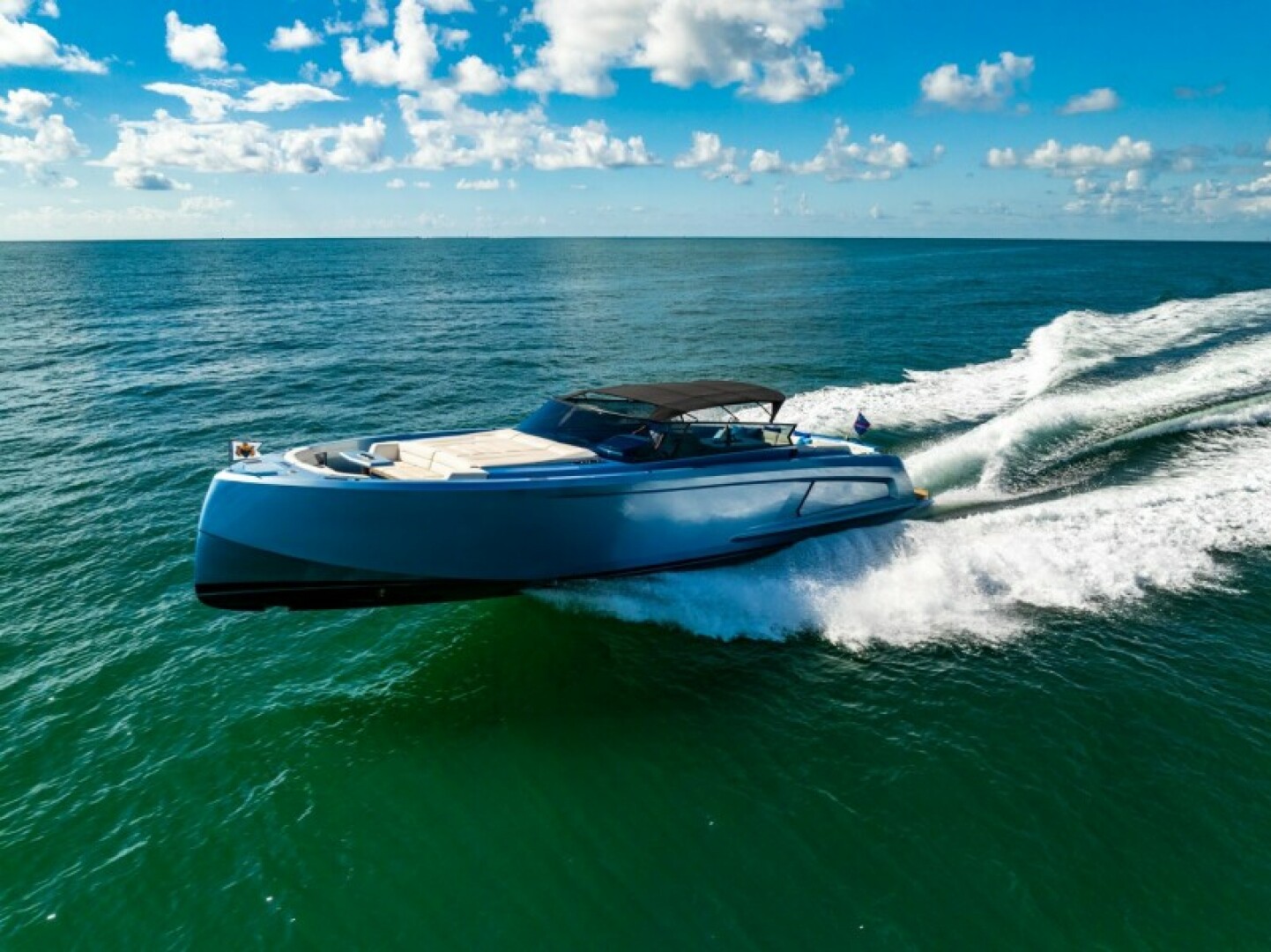
2019 Vanquish Yachts IMPULSIVE
$1,799,000
58
Miami Beach Florida
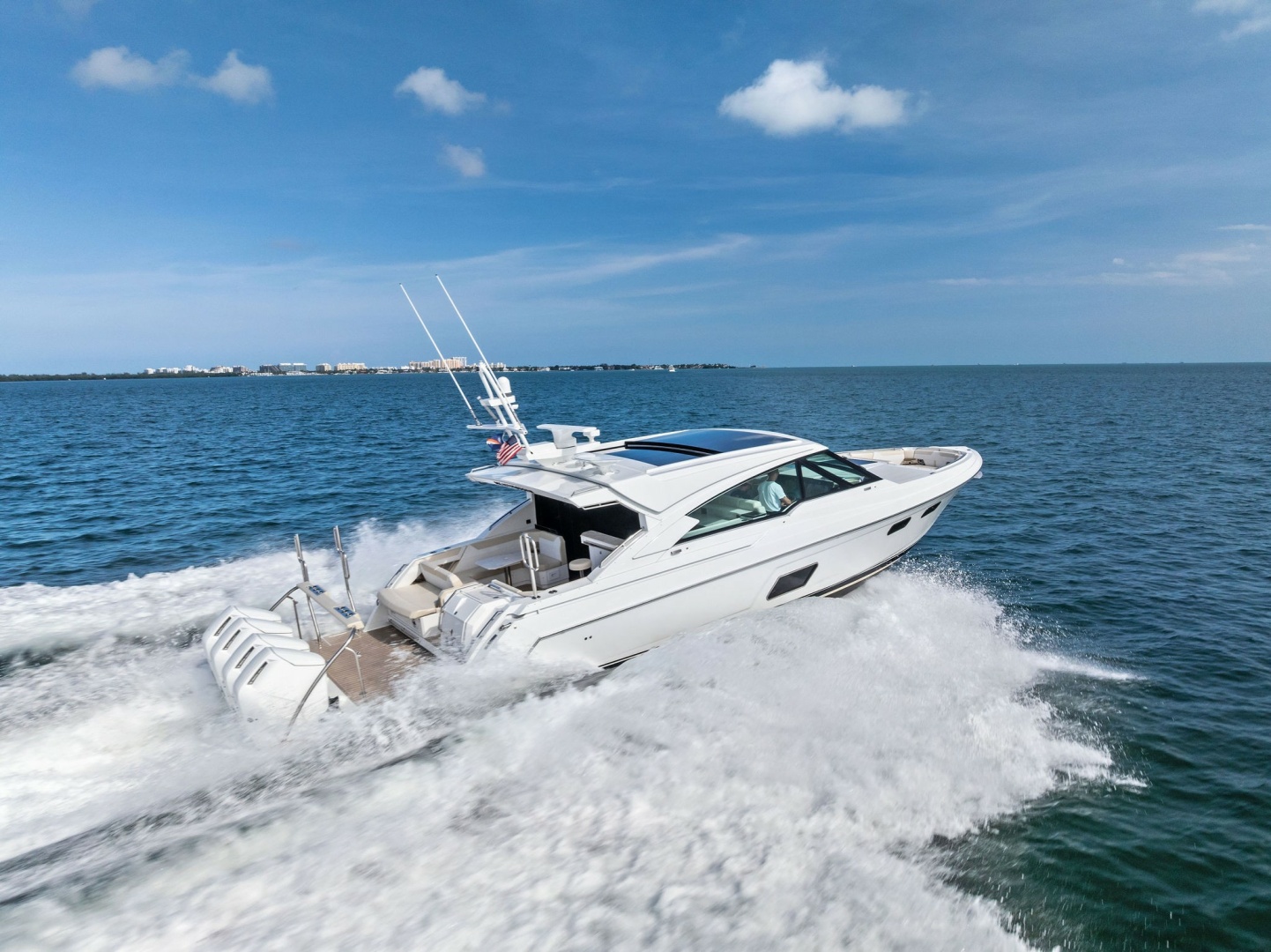
2025 Formula BREAKTHROUGH III
$1,895,000
53
Miami Beach Florida

2023 Fairline
$900,000
45
Fort Lauderdale Florida
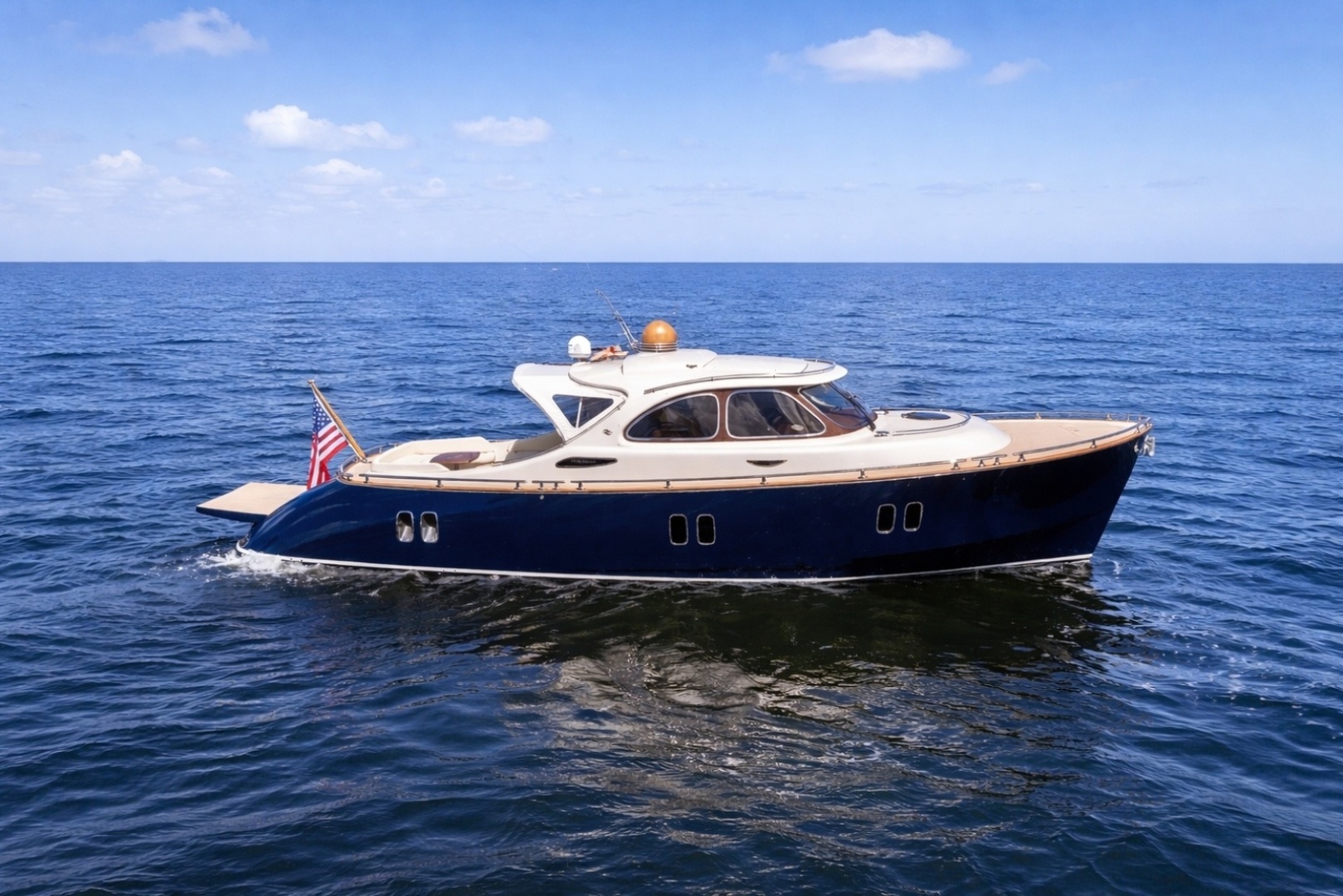
2012 Zeelander Mississippi Queen
$575,000
44
West Palm Beach Florida
2019 Bilgin 156'
$21,404,500
2028 Columbus Yachts 137'
$22,900,008
2012 Benetti 132'
$10,975,000
2024 Silver Yachts 117'
$25,400,000
2009 Hargrave 114'
$2,995,000
2028 Extra Yachts 100'
$21,404,500
2028 Extra Yachts 96'
$9,495,000
2021 Sanlorenzo 96'
$6,795,000
1999 Northern Marine 84'
$2,495,000
2013 Pershing 82'
$1,750,000
1997 Ferretti Yachts 80'
$850,000
2008 Princess Yachts 75'
$1,095,000
2014 Sunseeker 68'
$1,400,000
2024 Fairline 68'
$2,750,000
2024 Sunreef 60'
$3,700,000
2019 Vanquish Yachts 58'
$1,799,000
2025 Formula 53'
$1,895,000
2023 Fairline 45'
$900,000
2012 Zeelander 44'
$575,000