

Choosing the right upgrades for your yacht is one of the most rewarding yet complex decisions you’ll face as an owner. The range of possibilities is vast, from sweeping structural transformations to refined cosmetic touches, and the investment levels vary just as dramatically. What separates a truly satisfying refit from an expensive regret is knowing which changes align with your lifestyle, your vessel’s character, and the long-term value you want to protect. This article draws on real-world examples from recent high-profile refits to show you exactly what’s possible, what it costs, and how to make every dollar count.
Table of Contents
- How to prioritize your yacht upgrade wish list
- Comprehensive refits: Real transformations and upgrades
- Carbon footprint and tech: Propulsion and energy upgrades
- Onboard luxury: Comfort, leisure, and water access upgrades
- Upgrade or new build? Value comparisons and timing
- A fresh perspective: Upgrades that truly matter for today’s owners
- Ready for your dream yacht upgrade?
- Frequently asked questions
Key Takeaways
| Point | Details |
|---|---|
| Prioritize smart upgrades | Focus on system modernization and high-ROI features before cosmetic changes. |
| Comprehensive refits transform value | Major refits can significantly boost comfort, style, and resale value without the cost of new builds. |
| Hybrid tech offers real savings | Hybrid propulsion upgrades deliver both lower fuel bills and a quieter, greener cruising experience. |
| Luxury features drive demand | Highly desirable amenities like new swim platforms and terraces attract premium buyers and charter clients. |
| Evaluating timing pays off | Comparing upgrades to new yacht builds helps maximize your investment and tailor your yachting experience. |
How to prioritize your yacht upgrade wish list
Before a single panel is removed or a new system is ordered, clarity on your goals will save you significant time and money. Most owners approach upgrades with one of three motivations: elevating personal comfort, boosting resale appeal, or futureproofing the vessel against evolving design and technology standards. Often, the best projects serve all three at once.
Understanding the scope of your planned work is the essential first step. Upgrades generally fall into four categories:
- Cosmetic refresh: New paint, upholstery, and interior finishes that renew the yacht’s visual appeal without touching core systems.
- Systems overhaul: Electrical rewiring, propulsion upgrades, and navigation modernization that improve reliability and efficiency.
- Structural improvements: Hull work, deck reinforcement, and platform additions that extend the vessel’s lifespan.
- Lifestyle features: Jacuzzis, terraces, tender platforms, and entertainment systems that transform the onboard experience.
Balancing investment against expected return is where many owners stumble. Refit costs typically run 10 to 40% of a yacht’s value, and professionals consistently recommend holding a 10 to 20% contingency above your stated budget. Surprises are not the exception in refit work; they are practically guaranteed.
When evaluating luxury yacht design choices, focus on features that resonate with today’s charter clients and private buyers alike. Studying yacht amenities examples from comparable vessels in your size range will reveal which additions command genuine premiums and which are simply personal indulgences.
Pro Tip: Bring a reputable broker and an experienced naval designer into the conversation before you commit to any scope. They will steer you toward in-demand features and away from costly choices that may not translate into real value at resale.
With priorities in mind, let’s examine standout examples of major upgrade projects.
Comprehensive refits: Real transformations and upgrades
Nothing illustrates the power of a well-executed refit quite like seeing what dedicated owners and designers have achieved on real vessels. Two recent projects stand out as particularly instructive.
The 48-meter Trinity yacht Mirabella underwent a dramatic transformation that touched nearly every corner of the vessel. The Mirabella refit included an interior wood refinish, a full hull repaint, a complete electrical overhaul, a Jacuzzi replacement, and the installation of a transformer swim platform. The result was a yacht that felt entirely new without the timeline or cost of a ground-up build.
The 52-meter Benetti Solafide tells an equally compelling story. The Benetti Solafide project involved an exterior restyle by Tommaso Spadolini, a full engine overhaul, hull plating renewal, the addition of fold-down terraces, and a flybridge helipad. These additions repositioned the yacht at the top of its competitive set.
A comprehensive refit on a 40 to 60-meter yacht typically runs between 12 and 24 months and costs a fraction of a comparable new build, while delivering a vessel that reflects the owner’s personal vision rather than a shipyard’s standard specification.
| Yacht | Key upgrades | Scope |
|---|---|---|
| Mirabella (48m Trinity) | Wood refinish, hull repaint, electrical overhaul, Jacuzzi, swim platform | Interior and systems |
| Solafide (52m Benetti) | Exterior restyle, engine overhaul, hull plating, terraces, helipad | Full exterior and structural |
| Typical 40m refit | Paint, upholstery, navigation systems, deck hardware | Cosmetic and systems |
The common thread across successful refits is intentionality. Owners who align their upgrades with current design trends for luxury yachts and prioritize popular superyacht features consistently see stronger interest from both charter brokers and private buyers.
Examining specific upgrades, let’s see how modern refit projects create true value.
Carbon footprint and tech: Propulsion and energy upgrades
Few upgrades generate as much conversation in the industry right now as hybrid propulsion and advanced energy management. The appeal is clear: quieter operation, lower running costs, and a genuinely reduced environmental footprint.
Hybrid propulsion delivers a 30 to 40% fuel savings and up to a 40% reduction in CO2 emissions under the right operating conditions. That qualifier matters. Hybrid systems perform best during harbor maneuvering, short coastal passages, and anchored operations. They are not yet the optimal solution for extended blue-water passages where diesel range and reliability remain paramount.
Here is what a typical hybrid retrofit looks like in practice:
- Retrofit cost range: €30,000 to €80,000 for vessels in the 40 to 50-foot range, depending on system complexity.
- Battery life: Modern marine lithium battery banks typically carry a 10-year lifespan with proper management.
- Payback period: Fuel savings can offset installation costs within 5 to 8 years for frequent short-distance cruisers.
- Solar support: Roof-mounted solar panels now integrate seamlessly with battery management systems, extending silent running time.
| Upgrade type | Fuel/energy saving | Typical cost | Best application |
|---|---|---|---|
| Hybrid propulsion | 30 to 40% | €30k to €80k | Harbor, coastal use |
| Solar panel array | 10 to 20% | €15k to €40k | Anchored, low-load use |
| Battery management system | 5 to 15% | €10k to €25k | All vessels |
| LED and systems modernization | 8 to 12% | €5k to €15k | Universal |
The hybrid design trends shaping the 2026 market make one thing clear: buyers are actively seeking vessels with modern energy credentials. A yacht with a well-documented hybrid upgrade commands measurably stronger interest.
Pro Tip: If you are planning any major refit, budget to modernize your main electrical switchboard and cabling at the same time. This foundational work makes future technology additions far simpler and significantly enhances market appeal.
With propulsion and power addressed, onboard comfort can take center stage.
Onboard luxury: Comfort, leisure, and water access upgrades
This is where a yacht truly becomes a sanctuary rather than simply a vessel. Lifestyle upgrades create the moments owners and their guests remember long after they’ve returned to shore, and they are increasingly decisive factors for charter clients choosing between comparable yachts.
The most impactful comfort and leisure upgrades, ranked by owner satisfaction and market demand, include:
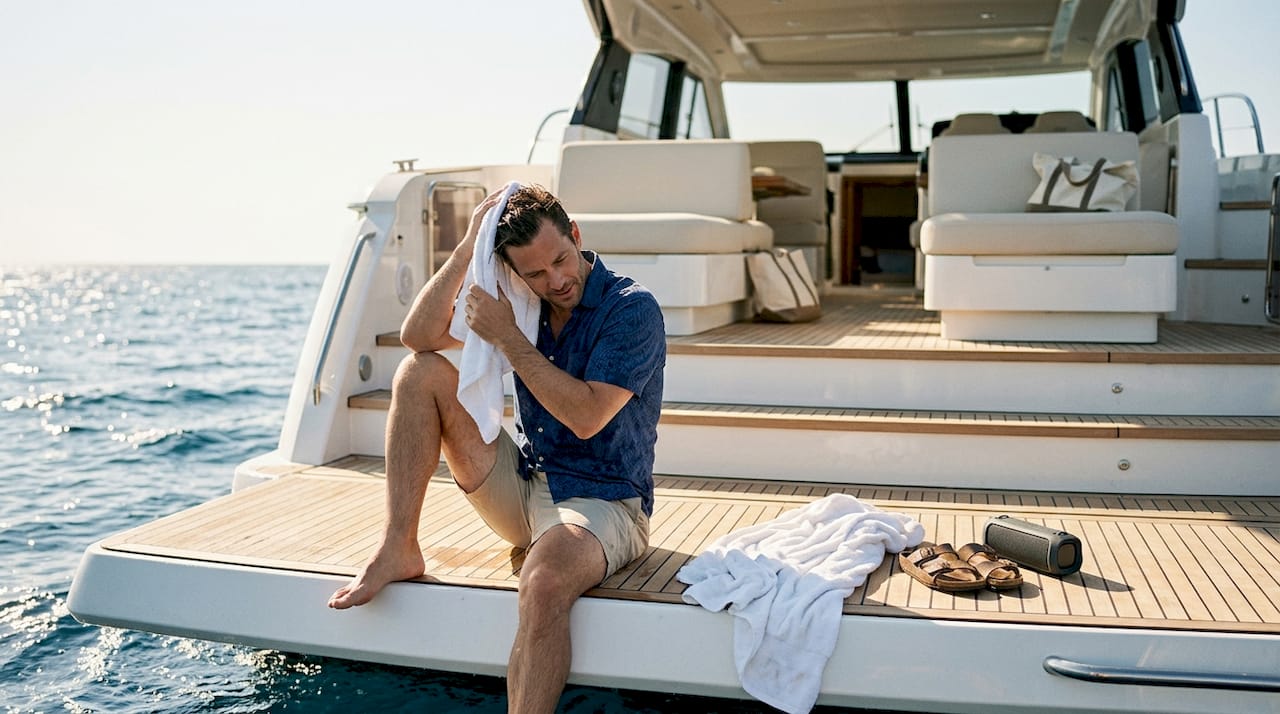
- Transformer swim platforms: Fold-down platforms that expand the water-level footprint dramatically, creating a seamless connection between yacht and sea.
- Fold-down terraces: Side terraces that open to create shaded, private outdoor living spaces with unobstructed water views.
- Jacuzzi installations or replacements: Modern Jacuzzis with integrated lighting, temperature control, and sleek surrounds.
- Flybridge helipads: A statement feature for larger vessels that also adds genuine operational flexibility.
- Electric or jet tenders: Quiet, elegant, and increasingly expected by discerning charter guests.
Tender upgrade options span an extraordinary range. Custom amenities and tenders can range from $20,000 for a well-specified electric tender to over $2 million for a fully bespoke jet tender with custom storage integration. The choice depends on how you use your yacht and who you want to impress.
Charter clients in particular respond strongly to visible lifestyle features. A yacht with a transformer swim platform and a new terrace will consistently outperform a comparable vessel without them in both booking rates and weekly charter fees. Exploring amenities for your yacht with an experienced designer can reveal which additions will resonate most powerfully with your target audience.
For those choosing between upgrading and buying new, let’s compare outcomes.
Upgrade or new build? Value comparisons and timing
This is the question every serious yacht owner eventually faces. A refit can breathe extraordinary new life into a beloved vessel. A new build offers a blank canvas. The right answer depends on your timeline, your budget, and your emotional connection to your current yacht.
The financial case for a refit is compelling. A major refit is typically 30 to 60% cheaper than a comparable new build and takes 7 to 15 months, compared to 30 to 48 months for a new construction project. For owners who want to be back on the water quickly, the refit path is almost always the faster route.
| Factor | Major refit | New build |
|---|---|---|
| Cost | 30 to 60% less than new | Full market price |
| Timeline | 7 to 15 months | 30 to 48 months |
| Customization | High, within existing structure | Unlimited |
| Value retention | Strong if well-executed | Depreciates from delivery |
| Emotional continuity | Preserves the vessel’s history | Fresh start |
Scenarios where a refit makes clear sense:
- Your yacht’s hull and structure are sound but systems and interiors are dated.
- You want to be on the water within the next 12 to 18 months.
- Your budget is better suited to targeted improvements than a full replacement.
- You have a strong personal or sentimental connection to the vessel.
A new build becomes the stronger choice when the existing vessel’s structure requires work that approaches or exceeds new build costs, or when your vision has evolved beyond what the current platform can support. Reviewing yacht value strategies with a trusted broker will help you model both scenarios with real numbers before committing.
A fresh perspective: Upgrades that truly matter for today’s owners
Here is an opinion you may not find in a shipyard brochure: the most expensive upgrade is rarely the most valuable one. After observing countless refit projects, the pattern is consistent. Owners who invest in integrated, flexible platforms, such as convertible deck spaces, modular tender systems, and future-ready electrical infrastructure, consistently report higher satisfaction than those who prioritize singular statement features.
A helipad is impressive. A yacht that adapts seamlessly to how your life actually changes over five years is transformative. The owners who get the most from their refits are those who think in terms of systems and flexibility rather than individual features.
Not every high-cost upgrade adds resale value, either. Highly personalized interiors, for example, can actually narrow your buyer pool rather than expand it. The wisest investments tend to be those that any discerning buyer would appreciate, regardless of their personal taste. Consulting yacht investment insights before finalizing your scope is a step that pays for itself many times over. Involve your designer and broker from the very first conversation, and prioritize layouts that can evolve with changing trends.
Ready for your dream yacht upgrade?
Planning a meaningful yacht upgrade requires more than inspiration. It requires trusted guidance from professionals who understand both the market and your personal vision. At Yachts by Steve, we work alongside owners and buyers at every stage of the process, from evaluating upgrade potential in a vessel you already own to identifying listings that arrive refit-ready.
Understanding what yacht brokerage truly involves will help you see how a skilled broker adds value well beyond the transaction itself. When you are ready to move forward, choosing a yacht broker with deep refit knowledge and market insight is the single most important decision you will make. We are here to help you make it with confidence.
Frequently asked questions
What is the first upgrade to consider for an older yacht?
Overhauling major systems such as propulsion and electrical infrastructure delivers the strongest foundation for all subsequent upgrades, improving reliability, safety, and future resale appeal. Most experts recommend starting here before investing in cosmetic or lifestyle features.
How long does it take to complete a major yacht refit?
Yacht refit timelines typically run 3 to 12 months for major work, with larger megayacht projects often requiring the full 6 to 12 months or more depending on scope and yard availability.
What are typical costs for major yacht upgrades?
Expect to invest between 10 to 40% of your yacht’s value, or roughly €10,000 to €25,000 per gross ton, for a thorough refit that addresses both systems and lifestyle features.
Do luxury amenities increase yacht resale value?
Fold-down terraces and transformer swim platforms are among the amenities that consistently attract premium buyers and support stronger asking prices, particularly in the charter-active market.
Are hybrid propulsion upgrades worth the investment?
Hybrid upgrades bring 30 to 40% fuel savings and up to 40% CO2 reductions, making them an excellent choice for owners who cruise frequently in coastal or harbor environments rather than on extended offshore passages.
Recommended
Featured Listings
2019 Bilgin MOONRAKER
$21,404,500
156
West Palm Beach Florida

2028 Columbus Yachts
$22,900,008
137
Ancona
2012 Benetti PATIENCE
$10,975,000
132
Fort Lauderdale Florida
2024 Silver Yachts
$25,400,000
117
2009 Hargrave BRANDI WINE
$2,995,000
114
Fort Lauderdale Florida

2028 Extra Yachts
$21,404,500
100
Ancona

2028 Extra Yachts Extra 96
$9,495,000
96
Ancona
2021 Sanlorenzo GATSBY
$6,795,000
96
Miami Beach Florida

1999 Northern Marine OFF LINE
$2,495,000
84
Ft Lauderdale Florida
2013 Pershing DOROTHY ANN
$1,750,000
82
Miami Beach Florida

1997 Ferretti Yachts
$850,000
80
La Paz
2008 Princess Yachts OCARALIA
$1,095,000
75
Charleston South Carolina
2014 Sunseeker
$1,400,000
68
New York New York

2024 Fairline
$2,750,000
68
Ft. Lauderdale Florida

2024 Sunreef Catallaxi
$3,700,000
60
Newport Rhode Island
2019 Vanquish Yachts IMPULSIVE
$1,799,000
58
Miami Beach Florida
2025 Formula BREAKTHROUGH III
$1,895,000
53
Miami Beach Florida

2023 Fairline
$900,000
45
Fort Lauderdale Florida
2012 Zeelander Mississippi Queen
$575,000
44
West Palm Beach Florida