

Oil analysis is the quickest, lowest-cost way to detect internal engine wear and contamination before it becomes a costly failure. Backed by ABYC maintenance standards and lab-grade spectrometry, a single oil sample can reveal a failing head gasket, saltwater ingress, or a bearing on borrowed time, months before you’d feel it at the helm. If you own a yacht, the next step is simple: pull a warm sample and send it to a qualified marine lab, or ask your technician to do it at the next service.
TL;DR:
- Oil analysis reliably detects critical engine wear, contamination, and lubricant breakdown, enabling early intervention before costly damage occurs.
- Proper sampling involves warming the engine, purging the line, and collecting from a consistent point to prevent false positives.
- Trend patterns in wear metals and contamination levels provide more accurate diagnostics than isolated results, especially for abrupt changes.
- Sampling frequency should match engine usage, with more frequent testing every 50 to 100 hours for high-use vessels and after unusual events.
- Combining lab analysis with onboard kits offers a comprehensive approach, balancing immediate checks with long-term trend building.
Table of Contents
- What Oil Analysis for Yachts Actually Measures
- How to Take a Representative Oil Sample on a Yacht
- Reading an Oil Report: What the Flags Actually Mean
- How Often Should You Sample Yacht Engine Oil?
- Lab Testing vs Onboard Kits: Choosing the Right Tool
- What Oil Analysis for Yachts Costs and How Long It Takes
- Using Oil Analysis in Yacht Buying, Selling, and Maintenance Planning
- Why Disciplined Owners Make Oil Analysis Routine
- Let Yachts-bysteve Help You Interpret What the Report Tells You
- Sources
What Oil Analysis for Yachts Actually Measures
A used-oil sample tells three separate stories, and a good lab report keeps them distinct rather than lumping everything into one vague “pass or fail.”
The first story is wear. Spectrometry measures trace metals in parts per million, and each metal points to a specific component. Iron usually traces back to cylinder liners or crankshaft wear; copper and lead point to bearings; aluminum often means piston or turbocharger wear. The second story is contamination. Water, fuel dilution, sodium, potassium, and glycol all show up here, and each has a different likely source, from a leaking heat exchanger to a failing raw water pump. The third story is the oil itself: is it still doing its job? Viscosity, Total Base Number (TBN), and oxidation or nitration levels determine whether the lubricant can still protect metal surfaces or whether it has broken down.
Labs pull these numbers using a defined instrument set:
- ICP or ICP-OES spectrometry for wear metals and additive elements
- Karl Fischer titration for precise water content
- Viscometers to check whether oil has thinned or thickened out of spec
- Centrifuge and insolubles testing for soot, sludge, and particulate load
- Infrared (IR) or gas chromatography (GC) on select panels to characterize oxidation or fuel type
Quality labs follow standardized test methods and run internal quality checks so a reading from March lines up against a reading from November. That consistency is what makes trend history rather than a single snapshot the real diagnostic tool, since one number rarely tells you as much as a pattern.
How to Take a Representative Oil Sample on a Yacht
The lab can only interpret what you send it, and a sloppy sample produces a misleading report almost every time. Marine diesel technicians consistently point to warm-engine sampling and line-purging as the two steps most owners skip, and both matter.
- Run the engine until oil is fully warmed and circulating, roughly 15 minutes, so metal particles and contaminants stay suspended instead of settled in the sump.
- Sample from a consistent, designated point, never straight from the sump plug, filter housing, or cooler drain, since those spots collect settled sludge that skews readings.
- Purge a small amount of oil through the sampling line before collecting, clearing out old residue.
- Use a dedicated clean pump or a fresh disposable one for each engine. Cross-contamination between engines is a classic and avoidable error.
- Fill the lab-supplied bottle completely, seal it, and label it with engine hours, vessel name, and any recent maintenance or fuel top-offs.
- Record chain-of-custody details and ship promptly using the lab’s specified method.
Contaminated funnels, reused pumps, and off-point sampling are among the most common causes of false positives in marine oil analysis, which means a “bad” report sometimes reflects bad technique rather than a bad engine.
Pro Tip: Note the exact operating conditions since the last sample, hours run, recent passages, any refueling, any parts replaced. That metadata turns a confusing result into an obvious one when a lab technician sits down to interpret it.
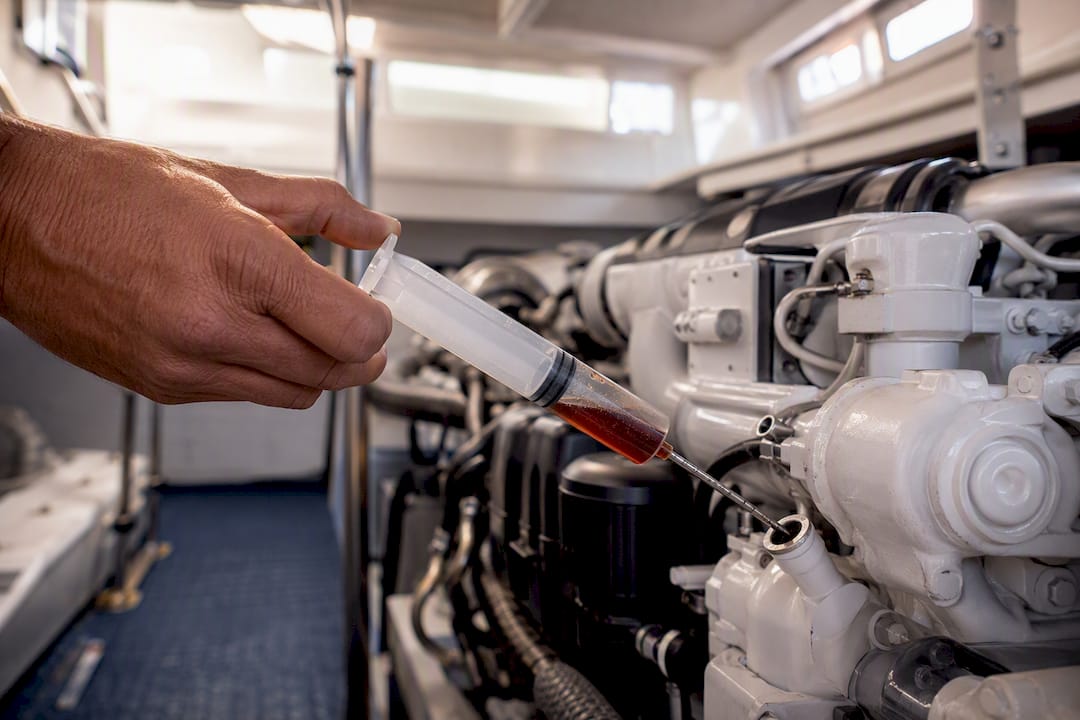
Watch for hot exhaust components and live electrical connections near the sampling point. A rushed sample taken around a running engine is not worth the risk.
Reading an Oil Report: What the Flags Actually Mean
A single result is a snapshot. A trend line is a diagnosis. The same iron reading of 40 ppm might be unremarkable if it has held steady for three samples, or it might be an urgent flag if it jumped from 15 ppm the visit before. Marine technicians treat a sharp step-change in one wear metal between consecutive samples as more diagnostic than the absolute number itself, since the slope reveals whether something has changed mechanically.
Here’s how to prioritize common flags:
- Elevated iron, copper, or lead: Points to liner, bearing, or valve train wear. Schedule a borescope inspection or oil filter cutting analysis before the next long passage.
- Sodium without potassium: Suggests saltwater intrusion, often from a raw water pump seal or heat exchanger leak.
- Sodium and potassium elevated together: Points toward coolant, or glycol, contamination rather than seawater, and warrants a follow-up glycol test to confirm.
- Fuel dilution: Thins the oil and reduces lubricity. Check injectors, injection timing, and idle habits.
- Falling TBN: Signals the oil’s acid-neutralizing additive package is depleted, a clear trigger for an oil change even if the interval hasn’t technically arrived.
Some thresholds are urgent rather than advisory. Water content above roughly 0.5% or fuel dilution above 2 to 3% typically calls for immediate investigation rather than a wait-and-see approach. When results cross that line, involve a factory-authorized technician before running the engine hard again.
Statistic callout: Standard lab turnaround runs 3 to 7 business days, which means a sample pulled before a passage can often return results before you leave the dock, cheap insurance against an expensive mid-crossing surprise.
How Often Should You Sample Yacht Engine Oil?
Sampling cadence should track engine use, not the calendar. A charter yacht logging heavy hours needs a tighter interval than a weekend cruiser that sits at the dock most of the season.
- High-use or charter vessels: Sample at every oil change, roughly every 50 to 100 hours.
- Recreational, moderate-use yachts: Every 100 to 250 hours, or at minimum once per season.
- Generators: These often get overlooked, but varied load profiles mean generators deserve more frequent sampling and their own separate baseline rather than being lumped in with main engine data.
- Event-driven sampling: Pull a sample after a long passage, before a sale, or following anything unusual, like overheating or an oil pressure warning.
Keep a centralized log per engine and generator. Consistency in engine oil analysis for boats depends entirely on comparing like against like, and a shared spreadsheet with your yacht’s maintenance records makes that comparison effortless instead of a scavenger hunt through old email attachments.
Lab Testing vs Onboard Kits: Choosing the Right Tool
Full laboratory analysis and portable onboard kits solve different problems, and the smartest owners use both rather than picking one.
- Full-service labs offer spectrometry, Karl Fischer water testing, and expert commentary tied to trend history, the depth needed for real diagnostics and for OEM-level interpretation of borderline results.
- Onboard kits, such as portable marine analyzers, deliver immediate readings on a limited set of parameters, useful for a quick check before departure.
- Onboard devices do not replace full-spectrum lab work for long-term trend building or pre-purchase due diligence.
- Look for kits that test water content, base number (BN), and viscosity comparison, the three checks that catch the most urgent problems fastest.
The practical approach: use a kit for at-sea triage, and send a sample to a lab for confirmation and for building your baseline history.
What Oil Analysis for Yachts Costs and How Long It Takes
Basic marine oil analysis packages typically run $25 to $75 per sample, with advanced panels or expedited turnaround pushing the price higher. Standard results arrive in 3 to 7 business days.
- A complete report includes numeric values for every measured element, trend graphs comparing this sample to prior ones, flagged items, and written commentary with recommended next steps.
- Weigh the cost against the alternative: a $50 test that catches early bearing wear is a rounding error next to a $15,000 engine rebuild.
Using Oil Analysis in Yacht Buying, Selling, and Maintenance Planning
A fresh oil sample belongs in every serious pre-purchase survey. Ask the seller or surveyor to pull one from each engine and generator, then read the results alongside the mechanical inspection, not instead of it.
- A string of clean, consistent reports over several years adds real weight to a listing and can support a stronger negotiating position during a sale.
- A single ambiguous result deserves a second sample before anyone walks away from a deal. Trends matter more than one number.
- Fold every lab recommendation into your planned maintenance calendar, and escalate anything involving TBN collapse or heavy wear metals to a factory-authorized technician rather than a general mechanic.
Why Disciplined Owners Make Oil Analysis Routine
I’ve seen enough service records to know the pattern: owners who sample religiously catch problems while they’re still cheap, and owners who skip it find out the hard way, usually at the worst possible time, mid-charter or mid-survey. Build a sample history the same way you’d build a maintenance file, and pair it with professional inspections whenever you’re on either side of a sale. That combination, documented oil condition monitoring plus a qualified survey, is what gives buyers and sellers confidence that a number on a spec sheet holds up.
— Jason
Let Yachts-bysteve Help You Interpret What the Report Tells You
Yachts-bysteve does not run the spectrometer or titrate the Karl Fischer sample, but we sit on the other side of the transaction where those reports actually get used. When a marine oil testing result comes back ambiguous during a purchase, or when a seller needs their maintenance history to support asking price, that’s where a broker earns their keep, translating lab findings into negotiating leverage or a clear repair timeline instead of leaving you to guess what the numbers mean. We also coordinate the surveys and inspections that pair with oil analysis for a complete due diligence picture, and we can point you toward preventive maintenance resources, including partners like Dust Free Film for finish protection, that keep a vessel’s value intact between sales. If you’re weighing a purchase or preparing to list, start by learning how to choose a yacht broker who can coordinate this process for you from first inspection to closing.
Sources
- What Oil Analysis Reveals About Your Engine – Practical Sailor
- Marine Diesel Service: Oil Analysis & Predictive Maintenance Benefits – Diesel Services of America
- LubDiag Oil Analysis Service – Lubmarine (TotalEnergies)
- FAST OnBoard marine lubricant analysis kit – Chevron
Recommended
Featured Listings

2028 Columbus Yachts
$22,900,008
137
Ancona

2012 Benetti PATIENCE
$10,975,000
132
Fort Lauderdale Florida

2028 Kingship Kingship
$20,350,000
125

2024 Silver Yachts
$25,400,000
117

2009 Hargrave BRANDI WINE
$2,500,000
114
Fort Lauderdale Florida

2028 Extra Yachts
$20,350,000
100
Ancona

2028 Alpha
$12,100,000
100
Ft Lauderdale Florida

2028 Extra Yachts Extra 96
$9,495,000
96
Ancona

2021 Sanlorenzo GATSBY
$6,795,000
96
Fort Lauderdale Florida

2028 Kingship
$11,990,000
90

2028 Alpha
$9,894,500
90
Fano

2023 Azimut COMPASS
$7,950,000
88
Miami Beach Florida

1999 Northern Marine OFF LINE
$2,495,000
84
Ft Lauderdale Florida

2013 Pershing DOROTHY ANN
$1,375,000
82
Fort Lauderdale Florida

1997 Ferretti Yachts
$825,000
80
La Paz

2008 Princess Yachts OCARALIA
$1,095,000
75
Charleston South Carolina

2014 Sunseeker
$1,400,000
68
New York New York

2024 Fairline
$2,750,000
68
Ft. Lauderdale Florida

2019 Vanquish Yachts IMPULSIVE
$1,799,000
58
Miami Beach Florida

2021 Ferretti Yachts HAVEN
$1,595,000
57
Fort Lauderdale Florida

2025 Formula BREAKTHROUGH III
$1,895,000
53
Miami Beach Florida

2023 Fairline
$900,000
45
Fort Lauderdale Florida

2012 Zeelander Mississippi Queen
$575,000
44
West Palm Beach Florida
2028 Columbus Yachts 137'
$22,900,008
2012 Benetti 132'
$10,975,000
2028 Kingship 125'
$20,350,000
2024 Silver Yachts 117'
$25,400,000
2009 Hargrave 114'
$2,500,000
2028 Extra Yachts 100'
$20,350,000
2028 Alpha 100'
$12,100,000
2028 Extra Yachts 96'
$9,495,000
2021 Sanlorenzo 96'
$6,795,000
2028 Kingship 90'
$11,990,000
2028 Alpha 90'
$9,894,500
2023 Azimut 88'
$7,950,000
1999 Northern Marine 84'
$2,495,000
2013 Pershing 82'
$1,375,000
1997 Ferretti Yachts 80'
$825,000
2008 Princess Yachts 75'
$1,095,000
2014 Sunseeker 68'
$1,400,000
2024 Fairline 68'
$2,750,000
2019 Vanquish Yachts 58'
$1,799,000
2021 Ferretti Yachts 57'
$1,595,000
2025 Formula 53'
$1,895,000
2023 Fairline 45'
$900,000
2012 Zeelander 44'
$575,000