

Yes, owner operation is genuinely realistic. Many modern yachts are engineered so a couple or a small family can cruise crew-free, provided the size, systems, and support network are right. The trade-off is privacy and total control in exchange for real limits on scale and some hands-on logistics you’d otherwise hand off to a crew. The sections ahead cover the features that make a yacht manageable, the buying checklist that protects you, and the costs you should actually plan for.
TL;DR:
- Yachts suitable for owner operation typically have docking aids, redundant propulsion systems, accessible engine rooms, and integrated electronics that simplify handling.
- Size and layout are critical, with below 40 feet manageable solo, but larger boats over 55 feet requiring additional assistance or crew support.
- Performing a thorough pre-departure systems check while docked significantly reduces the risk of first-day failures during voyages.
- Proximity to a capable service network influences ownership success more than specific features or luxurious extras.
- Budgeting 8 to 12 percent of the purchase price annually covers operational costs, with owner-operators managing more maintenance and vendor coordination themselves.
Table of Contents
- What Makes a Yacht Owner-Operator Capable?
- What Size and Layout Work Best Without Crew?
- The Pre-Departure Systems Check Before Every Voyage
- Ownership Logistics: Support, Insurance, and Management Choices
- Buying Checklist: Sea-Trial and Survey Priorities
- What Should You Budget for Running Costs?
- How Yachts by Steve Supports Owner-Operators
- Owner Operator Yachts: What the Conventional Advice Gets Wrong
- Ready to Find Your Owner-Operator Yacht?
- Sources
What Makes a Yacht Owner-Operator Capable?
An owner-operator is someone who owns and personally runs the vessel without professional crew, which means the boat itself has to do some of the heavy lifting that a captain and deckhand normally would. Success comes down to mechanical familiarity, navigation confidence, and provisioning discipline, according to YachtCreators’ definition of the role. The equipment either supports that independence or quietly undermines it.
Look for these features when evaluating a boat:
- Docking aids: bow and stern thrusters, or better, a joystick system that lets one person park a 60-foot yacht without a second set of hands on the lines.
- Redundant propulsion: twin engines or backup steering so a single mechanical hiccup doesn’t strand you.
- Accessible engine room: clear isolation valves, labeled breakers, and enough headroom to actually troubleshoot something at 2 a.m.
- Owner-friendly hotel systems: shore power connections, generators, and watermakers that don’t require a technician to operate day to day.
- Integrated helm electronics: multifunction displays, autopilot, and AIS that consolidate what used to take three crew members watching three different stations.
A boat that nails these points feels less like a machine you’re wrestling and more like one that’s working with you.
What Size and Layout Work Best Without Crew?
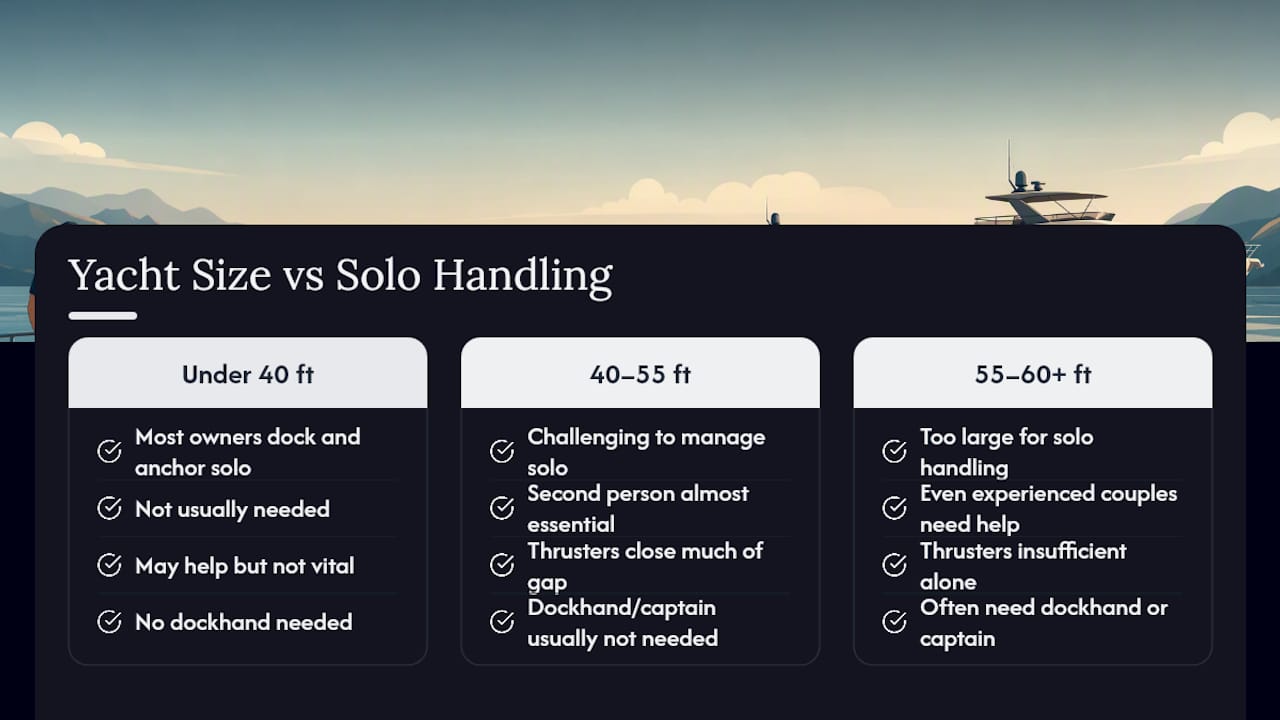
Handling difficulty rises fast with length, and bareboat skippering guidance backs that up with specific size bands tied to crew count, according to Twoboat’s bareboat skippering guide. Below 40 feet, most reasonably fit owners handle docking and anchoring solo. Between 40 and 55 feet, a second person becomes almost essential for lines and fendering, though thrusters close much of that gap. Above 55 to 60 feet, even experienced couples start leaning on dockhands or a part-time captain for tight marina work.
Layout matters as much as length. Clear sightlines from the cockpit to the helm let one person dock while the other handles lines, and easy foredeck access keeps anchoring from becoming a hike across the deck. A powered tender davit saves a genuine strain injury. Marina berth depth and service availability at your home port often decide the practical ceiling on size more than your own confidence does.
The Pre-Departure Systems Check Before Every Voyage
Testing while tied to the dock, not after you’ve cast off, is the single habit that prevents most first-day failures, according to Twoboat’s yacht systems checklist for skippers. Run this sequence before any trip, especially the first one after a delivery or a long layup:
- Check fuel levels and inspect for water contamination.
- Verify engine oil and coolant, then start both engines and let them idle.
- Confirm bilge pumps cycle automatically and manually.
- Test the windlass under load, not just a quick tap of the switch.
- Run electronics, VHF, and navigation systems on shore power.
- Cycle the generator and confirm it picks up load cleanly.
- Check refrigeration and freezer temperatures before provisioning.
Testing on shore power specifically matters because it isolates whether a failure is electrical or generator-related before you’re relying on the generator alone offshore.
Pro Tip: Write down every hiccup, even minor ones, and insist the seller or dealer demonstrate a fix before you sign off. A rattle at the dock is a much cheaper problem than the same rattle 20 miles offshore.
Ownership Logistics: Support, Insurance, and Management Choices
New buyers consistently underweight one factor: dealer proximity and service quality matter more than an extra galley upgrade or teak deck package, according to Yachting World’s guide for first-time buyers. A boat with a mediocre spec but a responsive service network nearby will make your first year easier than a beautifully equipped yacht with no local support.
You have three broad paths for ongoing management. Full management hands maintenance, compliance, and vendor coordination to a professional firm. Self-management keeps you in the driver’s seat for everything, which suits owners who genuinely enjoy the mechanical side. Most owners land somewhere in between: handling day-to-day tasks themselves while outsourcing complex technical or administrative work to specialists, according to Southern Right Yachting’s guidance for new owners.
Before handover, get insurance bound, decide your ownership structure (personal versus an LLC or trust), and lock in mooring agreements. A broker who understands yacht management can help you weigh which model actually fits how you plan to use the boat.
Buying Checklist: Sea-Trial and Survey Priorities
Walk into any negotiation with a written owner-operator brief: intended use, preferred LOA, and the specific systems you consider non-negotiable, whether that’s a joystick docking system or dual autopilot redundancy. Handing this to a broker or seller upfront filters out boats that look right on paper but fail your actual use case.
Once you’ve found a candidate, prioritize these steps:
- Hire an independent surveyor with no financial tie to the seller or listing broker.
- Insist on an out-of-water inspection for hull, running gear, and underwater fittings.
- Test thrusters, joystick response, generator start-up, and windlass load during the sea trial, not just at idle.
- Script the trial to include top-speed runs and systems performance under real load, witnessed by the surveyor.
A full sea-trial checklist that ties RPM, speed, and fuel burn into your negotiation gives you real leverage on price. For anything approaching superyacht scale, bringing in a technical superintendent alongside a maritime attorney helps structure contingencies so remediation costs get negotiated into the price rather than absorbed after closing, a pattern Foreland Marine’s buyer guide lays out clearly.
What Should You Budget for Running Costs?
Budget roughly 8 to 12 percent of the purchase price annually for running costs, a rule of thumb that holds reasonably well for boats in typical private use, according to Foreland Marine’s practical guide for new owners. That range shifts if you’re doing extensive offshore passages or operating in a high-cost marina market.
As an owner-operator, you save meaningfully on crew salaries, but that savings shows up elsewhere: more vendor call-outs for jobs a crew would have handled in-house, and more of your own time spent coordinating maintenance schedules and vendor visits. Some owners offset costs through limited part-charter arrangements, though that route brings licensing and insurance compliance requirements worth confirming before you commit to it.
How Yachts by Steve Supports Owner-Operators
Owner operation only works when the purchase process sets you up correctly, and that’s where brokerage guidance earns its keep. The brokerage connects buyers with detailed listings, market insight, and personalized search assistance built around how you actually intend to use the boat, not a generic spec sheet.
A broker’s real value during purchase is coordination: lining up an independent surveyor, bringing in a technical superintendent for complex deliveries, and managing the dealer service relationship so nothing falls through the cracks during handover, as seen in Axopar Brabus private charters | Veil Concierge. Yachts-bysteve’s guide to onboarding new owners walks through what that first-voyage handoff should look like, and the site’s VIP contact options connect you directly with guidance tailored to owner-operator priorities rather than a one-size-fits-all sales process.
Owner Operator Yachts: What the Conventional Advice Gets Wrong
Most guidance on this topic obsesses over specs: thruster horsepower, generator capacity, the size of the watermaker. That’s not wrong, exactly, but it’s incomplete. The research consistently points somewhere else. Dealer proximity and service quality predict a smoother first year better than any single onboard feature does, and yet buyers routinely skip that question to argue over teak versus synthetic decking.
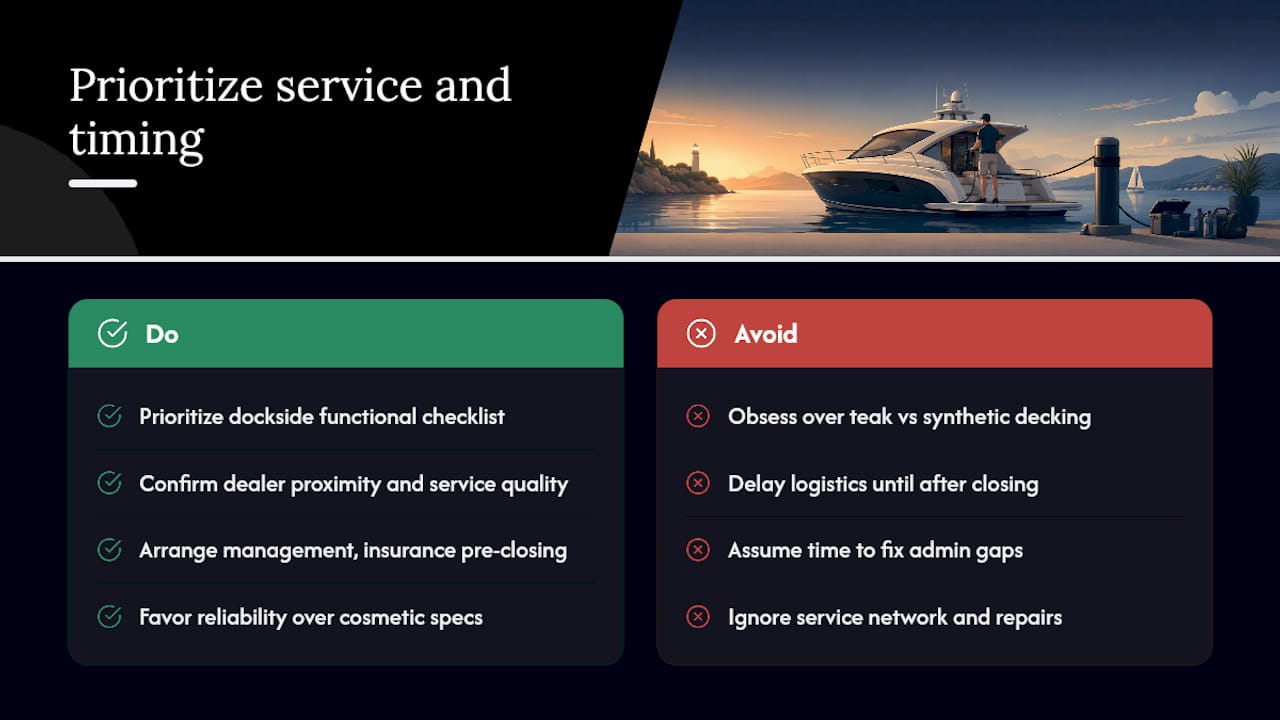
The bigger gap is timing. Owners wait until after closing to sort out management structure, insurance, and compliance, when that work needs to happen before legal ownership transfers. Southern Right Yachting’s research on early-ownership regret makes this exact point: certificate lapses and uninsured exposure happen because owners assumed there’d be time to sort logistics later. There usually isn’t.
If you’re serious about owner operation, prioritize your dockside functional checklist and your service network before you obsess over joystick brand or hull finish. The boat that starts every time and gets fixed fast when it doesn’t will beat the boat with the fancier spec sheet every single season.
— Jason
Ready to Find Your Owner-Operator Yacht?
Model roundups and spec sheets won’t tell you whether a yacht actually fits how you plan to run it yourself. This brokerage works differently: instead of pointing you at a generic listing, the team matches your intended use, preferred length, and must-have systems (thrusters, joystick docking, generator redundancy) to boats that genuinely suit hands-on ownership, then coordinates the surveyor and delivery handover so nothing gets missed.
Before reaching out, have three things ready: your budget band, your target LOA range, and the two or three systems you consider non-negotiable. Start with how to choose a yacht broker for a sense of what good representation looks like, then review how to buy a yacht for the full purchase framework. From there, a conversation with Yachts-bysteve can put the search on rails toward a boat you’ll actually enjoy running yourself.
Sources
- How to buy your first yacht – Yachting World
- How to Buy Your First Superyacht: A Practical Guide for New Owners | Foreland Marine
- What do new yacht owners wish they had known before buying? – Southern Right Yachting
Recommended
Featured Listings

2028 Columbus Yachts
$22,900,008
137
Ancona

2012 Benetti PATIENCE
$10,975,000
132
Fort Lauderdale Florida

2028 Kingship Kingship
$20,350,000
125

2024 Silver Yachts
$25,400,000
117

2009 Hargrave BRANDI WINE
$2,500,000
114
Fort Lauderdale Florida

2028 Extra Yachts
$20,350,000
100
Ancona

2028 Alpha
$12,100,000
100
Ft Lauderdale Florida

2028 Extra Yachts Extra 96
$9,495,000
96
Ancona

2021 Sanlorenzo GATSBY
$6,795,000
96
Fort Lauderdale Florida

2028 Kingship
$11,990,000
90

2028 Alpha
$9,894,500
90
Fano

2023 Azimut COMPASS
$7,950,000
88
Miami Beach Florida

1999 Northern Marine OFF LINE
$2,495,000
84
Ft Lauderdale Florida

2013 Pershing DOROTHY ANN
$1,375,000
82
Fort Lauderdale Florida

1997 Ferretti Yachts
$825,000
80
La Paz

2008 Princess Yachts OCARALIA
$1,095,000
75
Charleston South Carolina

2014 Sunseeker
$1,400,000
68
New York New York

2024 Fairline
$2,750,000
68
Ft. Lauderdale Florida

2019 Vanquish Yachts IMPULSIVE
$1,799,000
58
Miami Beach Florida

2021 Ferretti Yachts HAVEN
$1,595,000
57
Fort Lauderdale Florida

2025 Formula BREAKTHROUGH III
$1,895,000
53
Miami Beach Florida

2023 Fairline
$900,000
45
Fort Lauderdale Florida

2012 Zeelander Mississippi Queen
$575,000
44
West Palm Beach Florida
2028 Columbus Yachts 137'
$22,900,008
2012 Benetti 132'
$10,975,000
2028 Kingship 125'
$20,350,000
2024 Silver Yachts 117'
$25,400,000
2009 Hargrave 114'
$2,500,000
2028 Extra Yachts 100'
$20,350,000
2028 Alpha 100'
$12,100,000
2028 Extra Yachts 96'
$9,495,000
2021 Sanlorenzo 96'
$6,795,000
2028 Kingship 90'
$11,990,000
2028 Alpha 90'
$9,894,500
2023 Azimut 88'
$7,950,000
1999 Northern Marine 84'
$2,495,000
2013 Pershing 82'
$1,375,000
1997 Ferretti Yachts 80'
$825,000
2008 Princess Yachts 75'
$1,095,000
2014 Sunseeker 68'
$1,400,000
2024 Fairline 68'
$2,750,000
2019 Vanquish Yachts 58'
$1,799,000
2021 Ferretti Yachts 57'
$1,595,000
2025 Formula 53'
$1,895,000
2023 Fairline 45'
$900,000
2012 Zeelander 44'
$575,000