

Preparing a luxury yacht for photoshoot is defined as the full process of cleaning, styling, lighting calibration, and crew coordination required to capture a vessel’s elegance on camera. The industry term for this work is pre-production staging, and it applies whether you are shooting for a charter brochure, a brokerage listing, or a lifestyle editorial. A poorly staged yacht wastes golden-hour light and produces images that feel flat, regardless of how beautiful the vessel actually is. The difference between a listing photo that stops a buyer mid-scroll and one that gets skipped comes down almost entirely to what happens before the shutter clicks.
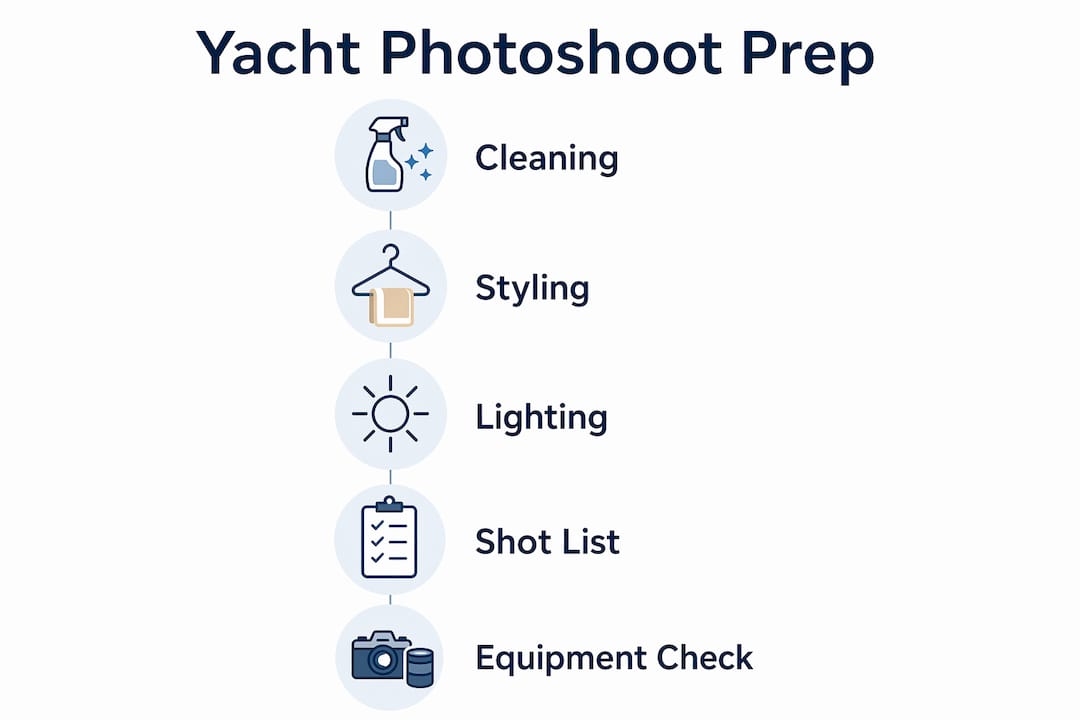
What are the essential preparations for a luxury yacht photoshoot?
Preparation is the foundation of every great yacht photo session. Photographers who arrive on shoot day without a structured plan spend the first hour solving problems that should have been resolved the week before. The following steps create the conditions for fluid, high-quality execution.
-
Schedule around natural light. Early mornings and late afternoons provide the most flattering light for yacht photography. That warm, directional glow wraps around hull curves and deck lines in a way that midday sun simply cannot replicate.
-
Book enough time. A single session rarely covers aerial, lifestyle, interior, and exterior shots at their best. Block separate windows for each asset type so you are not rushing a sunset cocktail scene while the drone battery runs low.
-
Complete a full washdown. Salt residue and streaking on decks, superstructure, and hull become glaring distractions in high-resolution images. Schedule the washdown the morning of the shoot, not the night before, so overnight dew does not undo the work.
-
Brief the crew and captain. Every person on board needs to know the shot sequence, their position during each setup, and what “clear the frame” means in practice. A confused crew member walking through a hero shot costs you irreplaceable light.
-
Inspect gear 48 hours out. Gear inspection and weather forecasting done two days before the shoot reduce the risk of technical failure or costly delays on the day itself.
Pro Tip: Create a printed shot list organized by location on the vessel, from bow to stern, and share it with the captain the day before. It doubles as a crew briefing document and keeps everyone moving in the same direction.
How to style the luxury yacht interior and exterior for photography
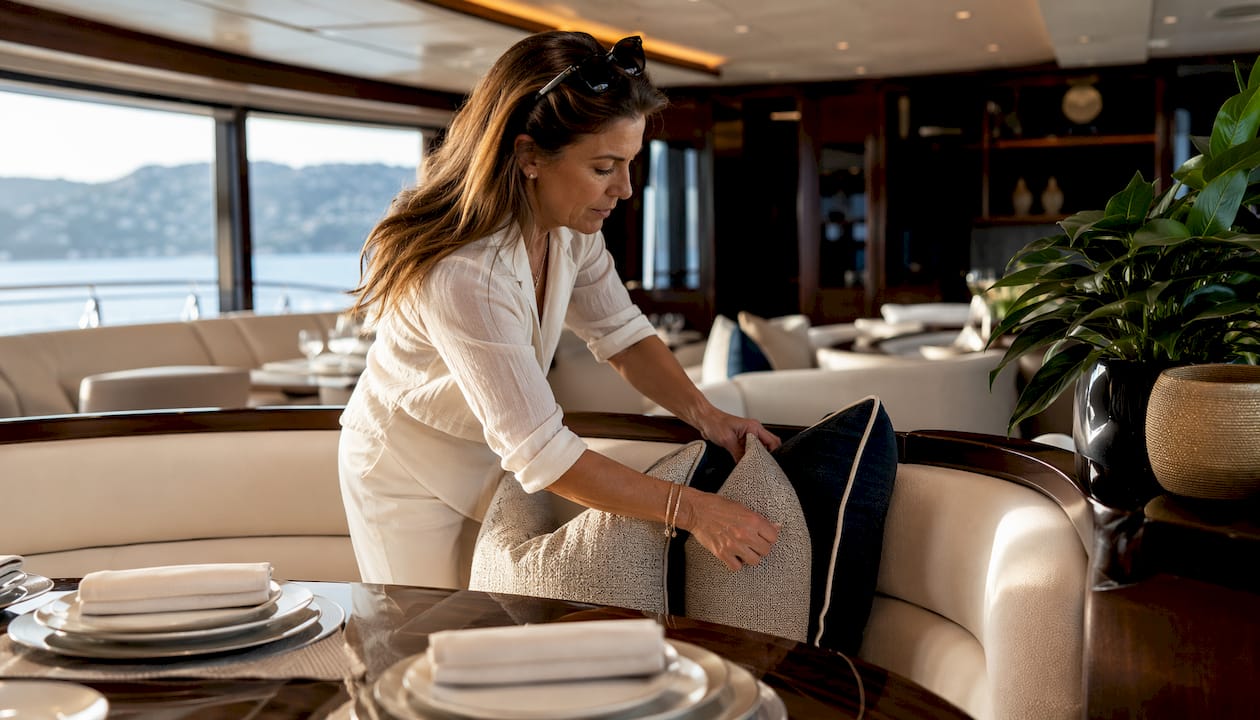
Styling is where preparation meets artistry. The goal is to make every space feel lived-in and aspirational at the same time, the way a well-appointed hotel suite looks effortlessly inviting rather than staged.
-
Declutter every surface. Remove personal items, safety equipment that is not part of the shot, and any gear that breaks the visual story. A single misplaced life jacket on a teak sun deck can pull a viewer’s eye away from the entire composition.
-
Arrange soft furnishings with intention. Plump cushions, fold towels with clean edges, and angle throw pillows so they face the camera’s likely position. Flat, lifeless cushions read as neglect in a photograph.
-
Set the lighting temperature before the photographer arrives. All onboard lights should match in color temperature to prevent uneven color tones that are difficult to correct in post-production. Mixing warm incandescent bulbs with cool LED strips creates a muddy, unprofessional look that no editing software fixes cleanly.
-
Use props naturally. Lifestyle vignettes like swim platform shots or sunset cocktails perform best because they allow viewers to picture themselves onboard. A half-filled wine glass, a folded magazine, and a bowl of fresh fruit communicate luxury without screaming it.
-
Stage the exterior with the same care as the interior. Fenders must be removed before exterior shots. Lines should be coiled neatly. The swim platform deserves its own dedicated setup, since it is one of the most aspirational spaces on any yacht.
For photographers who want a deeper framework on staging a yacht’s spaces, Yachts-bysteve offers detailed guidance built around maximizing visual and market value simultaneously.
Pro Tip: Walk every space through the viewfinder before the official shoot begins. What looks tidy to the naked eye often reveals clutter, reflections, or color mismatches when seen through a lens.
What lighting and camera setup strategies maximize luxury yacht photo quality?
Light is the single most powerful variable in yacht photography, and managing it well separates professional results from amateur ones. The strategies below apply across exterior, interior, and aerial work.
-
Shoot during golden hour without exception. The low angle of early morning and late afternoon sun creates depth, warmth, and shadow detail that flat midday light destroys. Plan your exterior hero shots for these windows and use the middle of the day for interior setups where you control the light.
-
Use gimbal stabilizers for all handheld work. Even slight swells soften images below 1/250s shutter speed, and a gimbal stabilizer recovers sharpness that would otherwise be lost to vessel movement. This is non-negotiable on any vessel that is not anchored in perfectly calm water.
-
Plan drone shots with permits in hand. Aerial drone photography requires advance permits due to airspace restrictions and marine conditions. Wind windows are narrow, and losing a drone slot because paperwork was not filed costs you the most dramatic exterior angles in your entire shoot.
-
Adapt ISO carefully in low light. Interior and night shots require higher ISO settings, but pushing too far introduces grain that undermines the polished feel a luxury vessel demands. Test your camera’s clean ISO ceiling before the shoot day, not during it.
| Scenario | Recommended approach |
|---|---|
| Exterior hero shots | Golden hour, polarizing filter, 1/500s or faster |
| Interior wide angles | Matched color temperature, tripod, HDR bracketing |
| Night deck shots | ISO 800–3200, long exposure, remote shutter |
| Aerial drone work | Pre-filed permits, calm wind window, ND filter |
| Lifestyle action shots | Gimbal stabilizer, continuous autofocus, burst mode |
How to ensure safety and effective communication during a yacht photoshoot?
Safety on a working vessel is not a formality. Wet decks, moving equipment, and distracted crew create real hazards, and a single incident can end a shoot before the best light arrives.
-
Tether all camera gear. Camera equipment should be secured with straps rated for its weight, and every lens cap, filter, and accessory pouch should be clipped or stowed. Losing a lens overboard is expensive. Losing a crew member’s footing because they tripped over an unsecured bag is far worse.
-
Conduct a formal safety briefing before boarding. Cover wet surface protocols, restricted zones during maneuvering, and the signal for “all stop” if something goes wrong. A five-minute briefing prevents hours of problems.
-
Establish clear communication signals with the captain. Effective communication between photographer, crew, and captain is what allows anchor positions and shooting schedules to align with optimal lighting conditions. A simple hand signal system works better than shouting across a deck in wind.
-
Manage guest and model movements deliberately. For candid lifestyle shots, brief your subjects on general positions and let them move naturally within those boundaries. Overly directed talent looks stiff. Undirected talent wanders into the wrong frame.
-
Build contingency plans into the schedule. Backup shooting locations and alternate days matter because wind and light shift unpredictably. A plan that depends on one perfect afternoon is a plan that fails regularly.
For a broader look at safety practices on the water, the principles that apply to sailing vacations translate directly to photoshoot environments.
“The boat may be the stage, but preparation is the director. Every great yacht image you have ever admired was the result of decisions made days before the camera was ever raised.”
What I have learned from years of yacht photoshoots
The single biggest mistake photographers make on luxury yacht shoots is treating the vessel like a static subject. A yacht is a living environment with crew, guests, movement, and weather all competing for your attention at once. The photographers who produce the best work are the ones who arrive having already solved most of those variables on paper.
I have seen shoots fall apart because the crew was never told which areas were off-limits during a hero shot, and a deckhand walked through a $50,000 golden-hour frame. I have also seen shoots saved because the photographer had a backup location scouted and a second shoot day already penciled in with the captain.
The advice that actually separates good yacht photography from great yacht photography is this: separate your shoot types into dedicated time windows. Aerial, lifestyle, and night shots each demand different crew positioning, different light, and a different mental mode from everyone on board. Trying to capture all three in one chaotic session produces mediocre results across all three. Sequencing them produces images that look like they came from three different shoots, in the best possible way.
Backup gear is not optional. Professional yacht photographers carry extra batteries, memory cards, and alternate shoot days as standard practice. The ocean does not care about your deadline.
— Jason
How Yachts-bysteve helps you get the most from your yacht photography
Great photography only creates value when it is paired with a marketing strategy built to use it well. Yachts-bysteve works with yacht owners and sellers to ensure that every image captured during a photoshoot feeds directly into a listing and marketing workflow designed to attract serious buyers. The team understands what high-end buyers respond to visually, and that knowledge shapes every recommendation made during the preparation process. Whether you are preparing images for a brokerage listing or a charter campaign, the luxury yacht marketing workflow resources at Yachts-bysteve give you a clear path from raw images to real results. For personalized guidance on positioning your vessel, explore expert yacht brokerage support tailored to the luxury market.
Key takeaways
Preparing a luxury yacht for a photoshoot requires pre-production staging that covers cleaning, lighting calibration, crew briefing, and sequenced shoot planning to produce images that genuinely sell the lifestyle.
| Point | Details |
|---|---|
| Schedule around natural light | Shoot exterior hero shots during golden hour for depth, warmth, and flattering shadow detail. |
| Match all onboard lighting | Consistent color temperature across all cabin lights prevents color casts that are hard to fix in editing. |
| Sequence your shoot types | Separate aerial, lifestyle, and night shots into dedicated windows for higher quality across all asset families. |
| Secure all gear on deck | Tether every piece of camera equipment and brief the crew on safety protocols before boarding. |
| Build in contingency plans | Carry backup batteries and memory cards, and schedule an alternate shoot day in case of weather changes. |
FAQ
What is the best time of day for a luxury yacht photoshoot?
Early morning and late afternoon provide the most flattering natural light for yacht photography. These golden-hour windows create warm, directional light that highlights hull curves and deck details far better than midday sun.
How far in advance should I prepare a yacht for a photoshoot?
Begin preparation at least 48 hours before the shoot. Gear inspection, weather checks, crew briefings, and permit filing for drone work all require lead time to execute properly.
Do I need permits for drone photography on a yacht?
Aerial drone photography requires advance permits due to airspace restrictions and marine conditions. File paperwork well before the shoot date to protect your drone time window.
How do I prevent color casts in yacht interior photos?
Check all onboard lights before the shoot and replace any bulbs that do not match the dominant color temperature. Mixing warm and cool light sources creates uneven tones that are difficult to correct in post-production.
What props work best for luxury yacht lifestyle photography?
Natural, unforced props such as filled wine glasses, fresh fruit, folded towels, and open books communicate luxury without looking staged. Swim platform setups and sunset cocktail scenes consistently perform well for charter and brokerage marketing.
Recommended
Featured Listings

2028 Columbus Yachts
$22,900,008
137
Ancona

2012 Benetti PATIENCE
$10,975,000
132
Fort Lauderdale Florida

2028 Kingship Kingship
$20,350,000
125

2024 Silver Yachts
$25,400,000
117

2009 Hargrave BRANDI WINE
$2,500,000
114
Fort Lauderdale Florida

2028 Extra Yachts
$20,350,000
100
Ancona

2028 Alpha
$12,100,000
100
Ft Lauderdale Florida

2028 Extra Yachts Extra 96
$9,495,000
96
Ancona

2021 Sanlorenzo GATSBY
$6,795,000
96
Fort Lauderdale Florida

2028 Kingship
$11,990,000
90

2028 Alpha
$9,894,500
90
Fano

2023 Azimut COMPASS
$7,950,000
88
Miami Beach Florida

1999 Northern Marine OFF LINE
$2,495,000
84
Ft Lauderdale Florida

2013 Pershing DOROTHY ANN
$1,375,000
82
Fort Lauderdale Florida

1997 Ferretti Yachts
$825,000
80
La Paz

2008 Princess Yachts OCARALIA
$1,095,000
75
Charleston South Carolina

2014 Sunseeker
$1,400,000
68
New York New York

2024 Fairline
$2,750,000
68
Ft. Lauderdale Florida

2019 Vanquish Yachts IMPULSIVE
$1,799,000
58
Miami Beach Florida

2021 Ferretti Yachts HAVEN
$1,595,000
57
Fort Lauderdale Florida

2025 Formula BREAKTHROUGH III
$1,895,000
53
Miami Beach Florida

2023 Fairline
$900,000
45
Fort Lauderdale Florida

2012 Zeelander Mississippi Queen
$575,000
44
West Palm Beach Florida
2028 Columbus Yachts 137'
$22,900,008
2012 Benetti 132'
$10,975,000
2028 Kingship 125'
$20,350,000
2024 Silver Yachts 117'
$25,400,000
2009 Hargrave 114'
$2,500,000
2028 Extra Yachts 100'
$20,350,000
2028 Alpha 100'
$12,100,000
2028 Extra Yachts 96'
$9,495,000
2021 Sanlorenzo 96'
$6,795,000
2028 Kingship 90'
$11,990,000
2028 Alpha 90'
$9,894,500
2023 Azimut 88'
$7,950,000
1999 Northern Marine 84'
$2,495,000
2013 Pershing 82'
$1,375,000
1997 Ferretti Yachts 80'
$825,000
2008 Princess Yachts 75'
$1,095,000
2014 Sunseeker 68'
$1,400,000
2024 Fairline 68'
$2,750,000
2019 Vanquish Yachts 58'
$1,799,000
2021 Ferretti Yachts 57'
$1,595,000
2025 Formula 53'
$1,895,000
2023 Fairline 45'
$900,000
2012 Zeelander 44'
$575,000