

A shallow draft yacht is any vessel engineered to float and operate in water depths most boats can’t touch, typically anything drawing under three feet, with specialized skiffs measuring their draft in inches rather than feet. Flats anglers chasing bonefish over ankle deep sand, inshore cruisers who want to tuck into hidden anchorages, and island hoppers who value getting close to shore all benefit most from these designs. The right choice depends entirely on how much open water performance you’re willing to trade for access.
TL;DR:
- Verify loaded draft with a surveyor or yourself under typical conditions, as load increases draft by several inches or more.
- Regularly inspect keel, daggerboard, and trunk components for corrosion or wear, especially if the boat has been stored or unused for long periods.
- Test mechanical systems like jackplates, trim, and lifting keels under power to ensure they function properly in shallow water conditions.
- Choose the hull type based on your activity, with flats skiffs optimized for extreme shallow water and catamarans offering more stability and comfort at slight depth compromises.
- Avoid shallow-draft boats listed solely by hull-only figures; confirm draft under full load and proper servicing history to prevent surprises during actual use.
Table of Contents
- What Shallow Draft Actually Means on a Spec Sheet
- How Builders Engineer a Shallow Hull Yacht
- Which Boat Types Actually Deliver Shallow-Water Access
- The Real Tradeoffs: Ride, Load, and Control
- Buying a Shallow-Draft Yacht: One Checklist That Covers It
- Matching Your Plans to the Right Hull
- How a Broker Verifies a Shallow-Draft Yacht Before You Buy
- A Broker’s Honest Take on Shallow-Draft Boats
- Ready to Find a Shallow-Draft Yacht That Fits Your Plans?
- Sources
What Shallow Draft Actually Means on a Spec Sheet
Draft is the distance from the waterline to the lowest point of the hull, and every builder measures it slightly differently. A “hull only draft” figure, common on flats boats, ignores the outboard motor’s skeg and any load aboard. That number looks impressive on a brochure but rarely matches what you experience on the water.
Realistic draft ranges by boat class vary from just a few inches for flats skiffs and microskiffs to a few feet for shoal-keel sailing cruisers and shallow-draft catamarans, with bay boats and hybrids occupying an intermediate range.
The Wingmaster XIV lists an approximate 4 inch draft, about as extreme as production shallow draft yachts get. The Dusky 18R publishes a hull-only draft near 10 inches while still holding up in a chop, proof that low draft and decent ride aren’t mutually exclusive.
Fuel, water, ice, gear, and a full crew can add several inches to a small skiff and a foot or more to a larger cruiser. Always ask for draft under load, not the brochure figure.
How Builders Engineer a Shallow Hull Yacht
There’s no single trick to shallow draft sailing or shallow water power boating. Builders lean on a handful of proven mechanical solutions, each with a real cost attached.
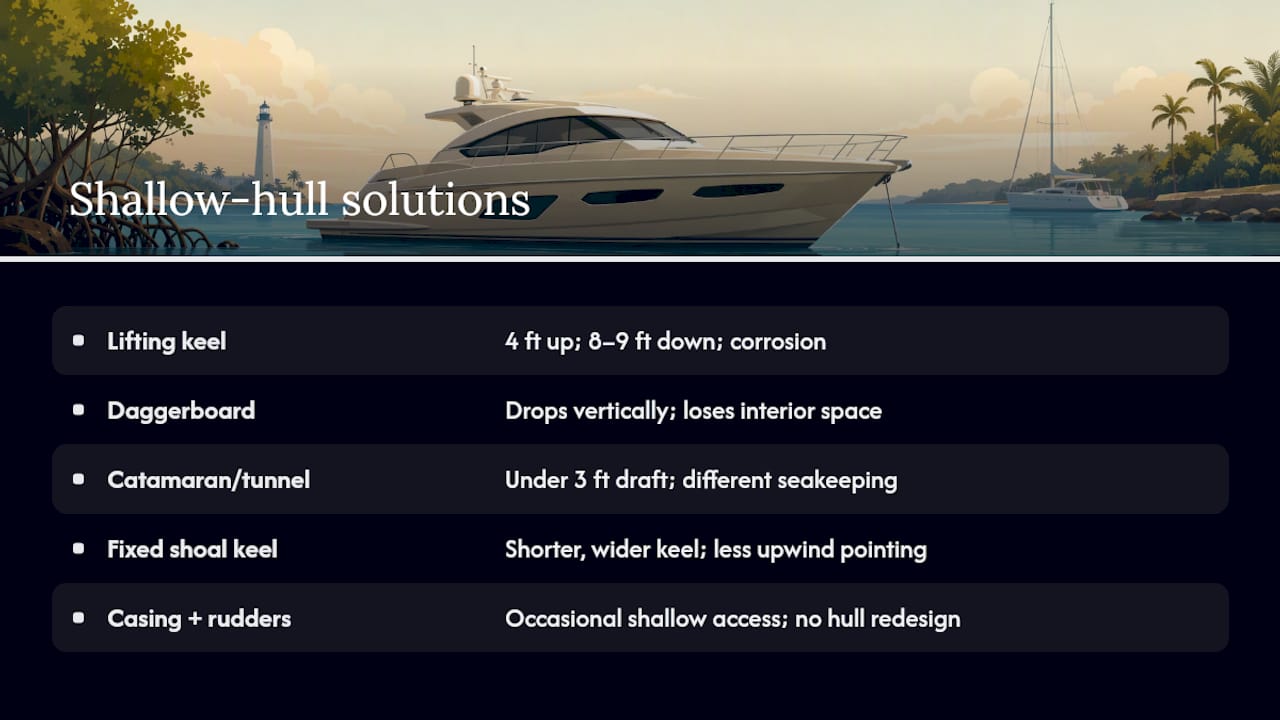
Centerboards and lifting keels pull the appendage up into a trunk built into the hull, letting a sailboat draw four feet raised and eight or nine feet lowered for upwind performance. That trunk is also where trouble hides. Corrosion or water intrusion inside the keel housing is a common survey finding that quietly undermines a vessel’s shallow-water readiness, so a lifting mechanism that hasn’t been serviced in years deserves real scrutiny.
Retractable daggerboards work on a similar principle but drop straight down rather than pivoting, which simplifies the mechanism at the cost of interior floor space and sometimes powertrain placement.
Catamarans and tunnel hulls sidestep the keel question entirely. Twin slender hulls spread displacement wide instead of deep, which is why shallow draft catamarans routinely draw under three feet despite offering cruising boat interior volume. The tradeoff shows up in a following sea, where catamarans respond differently than a monohull and demand their own seamanship habits.
Fixed shoal keels simply cut a standard keel shorter and often wider, sacrificing some pointing ability upwind for a boat that never needs a mechanism to fail. On larger yachts, designers sometimes combine integrated centerboard casings with multiple rudders to give a big boat occasional shallow-water access without redesigning the whole hull.
Pro Tip: Ask when the lifting keel or daggerboard was last pulled and inspected. A seized centerboard at the dock becomes a very expensive problem the first time you need it in a hurry.
Which Boat Types Actually Deliver Shallow-Water Access
Not every “shallow draft” listing means the same thing in practice. Match the hull to the activity before you match it to the price.
- Flats skiffs exist to pole across water inches deep. You give up rough-water comfort, storage, and often a full windshield, but you gain access no other boat class can touch.
- Bay boats and hybrids split the difference, adding a foot or so of draft for a taller bow and enough hull to handle a bay crossing or a short offshore run.
- Shoal-keel cruisers and shallow-draft sailboats trade some upwind pointing for the ability to anchor in coves that scare off deeper-draft sailboats, a real advantage for island-hopping.
- Powercats and shallow-draft catamarans deliver liveaboard comfort and stability at anchor, at the cost of dock and slip fees calculated on width rather than length.
The Real Tradeoffs: Ride, Load, and Control
Shallow doesn’t come free. Builders reduce draft by removing the very things that make a hull settle and track true in a chop, and that shows up the first time conditions turn.
- A shoal keel or flat-bottomed skiff will pound and wander more in open water than a deep-draft equivalent built for the same length.
- Every pound of fuel, gear, and crew raises the waterline, so the draft on the spec sheet is a best case, not a guarantee.
- Jackplates, hydraulic trim, and electric-assist trolling motors let skinny-water boats claw back some of the control they lose by shedding keel and skeg, but each adds a system that can fail and needs its own maintenance.
Buying a Shallow-Draft Yacht: One Checklist That Covers It
Before you sign anything, settle three numbers: the shallowest water you’ll actually run in regularly, your typical load with fuel and gear aboard, and the safety margin you want between your draft and the bottom. Everything else on this checklist exists to verify those three numbers against reality rather than a brochure.
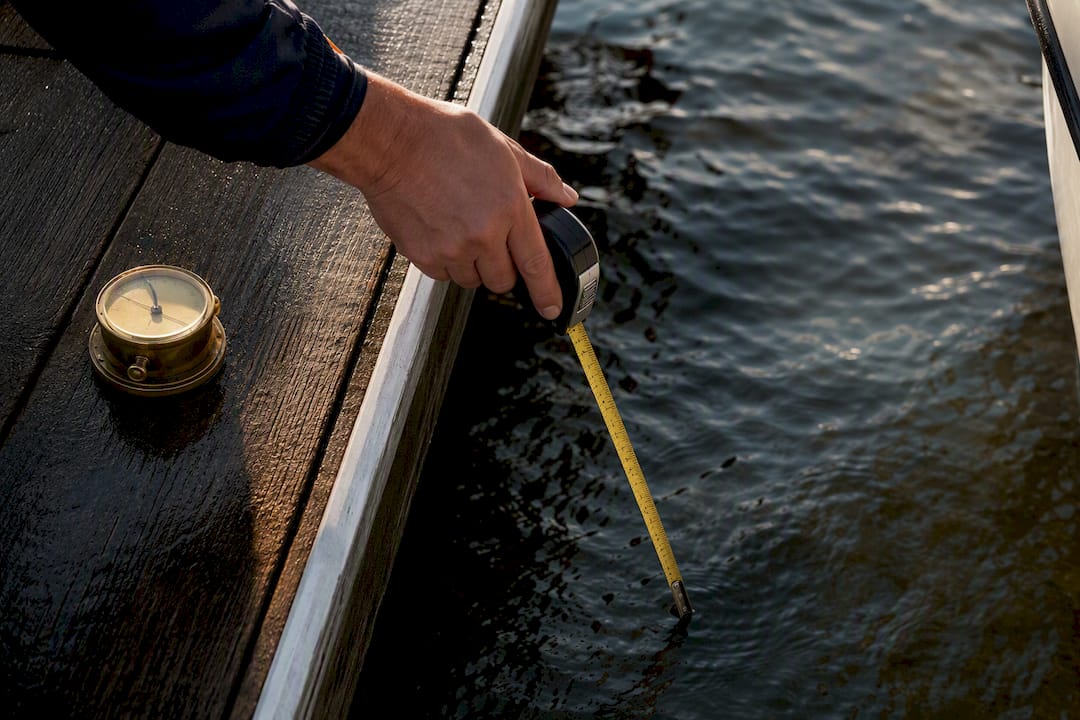
- Measure loaded draft yourself, or have a surveyor do it, with fuel, water, and a representative crew aboard. Small craft can gain several inches under a modest load; larger boats can gain a full foot or more.
- Pull the lifting keel or daggerboard and inspect the trunk, seals, and cables for corrosion or wear. This is where deferred maintenance hides on any shallow hull yacht.
- Test the jackplate and trim system under power, not just at idle, to confirm it actually raises the motor enough to matter in the depths you plan to run.
- Survey the rudder and steering geometry. Shallow-draft boats often run shorter rudders, which affects low-speed handling more than most buyers expect.
- Check the deck layout. A poling platform, clear push-pole mounts, and unobstructed walkways often matter as much as the draft number itself once you’re actually working the boat.
Ask the seller directly when the keel or board was last serviced and whether the boat has ever grounded hard enough to need a haul-out inspection. A seller who can’t answer either question, or a listing with no documented specifications, is a reason to walk.
Pro Tip: Bring a tape measure and a tide chart to any dock walk. A boat that looks perfect at high tide can tell a very different story two hours later.
Matching Your Plans to the Right Hull
Flats fishing rewards a light loadout, an electric trolling motor, and a poling platform kept clear of rod holders and coolers. Add weight and you add draft exactly where you can least afford it.
Inshore cruising and island-hopping run on tide planning as much as draft. Know the tide window before you commit to an anchorage, and give yourself real scope and holding ground rather than trusting depth alone.
Charter operators face a different math: guest comfort against hull limits. A shallow-draft catamaran solves for comfort at anchor; a skiff solves for access. Rarely both.
How a Broker Verifies a Shallow-Draft Yacht Before You Buy
A yacht brokerage should walk the dock so you don’t inherit someone else’s deferred maintenance. That means verifying draft under a realistic load, checking lifting-keel or centerboard condition firsthand, and flagging survey and liability considerations before an offer goes in. Brokers who understand what a corroded keel trunk looks like can save buyers the cost of finding out themselves, after closing.
A Broker’s Honest Take on Shallow-Draft Boats
I’ve watched buyers fall for a brochure draft number and skip the loaded measurement entirely, only to find their new skiff sits three inches deeper than advertised the first time it’s fueled and provisioned. That gap is rarely dishonest. It’s just a spec sheet written for a boat with nothing and no one aboard.
A shallow-draft yacht is the right call when your plans genuinely require it, poling flats, anchoring in a shoal cove, running a skinny back bay. It’s the wrong call if you’re buying draft numbers you’ll never actually need and giving up seakeeping for water you’ll rarely visit.
— Jason
Ready to Find a Shallow-Draft Yacht That Fits Your Plans?
Spec sheets lie by omission, and the gap between hull-only draft and loaded draft is exactly where private buyers get burned. Some yacht brokers exist to close that gap: verifying draft under real load, inspecting lifting gear and centerboard trunks before offers, and coordinating survey scheduling so nothing gets rubber-stamped. That’s the difference between buying a listing and buying a boat you actually understand.
If you’re weighing a flats skiff against a shoal-keel cruiser, or trying to figure out how to choose a yacht broker who actually knows the difference, reach out to Yachts-bysteve and start a tailored search built around the depths you actually run.
Sources
Recommended
Featured Listings

2028 Columbus Yachts
$22,900,008
137
Ancona

2012 Benetti PATIENCE
$10,975,000
132
Fort Lauderdale Florida

2028 Kingship Kingship
$20,350,000
125

2024 Silver Yachts
$25,400,000
117

2009 Hargrave BRANDI WINE
$2,500,000
114
Fort Lauderdale Florida

2028 Extra Yachts
$20,350,000
100
Ancona

2028 Alpha
$12,100,000
100
Ft Lauderdale Florida

2028 Extra Yachts Extra 96
$9,495,000
96
Ancona

2021 Sanlorenzo GATSBY
$6,795,000
96
Fort Lauderdale Florida

2028 Kingship
$11,990,000
90

2028 Alpha
$9,894,500
90
Fano

2023 Azimut COMPASS
$7,950,000
88
Miami Beach Florida

1999 Northern Marine OFF LINE
$2,495,000
84
Ft Lauderdale Florida

2013 Pershing DOROTHY ANN
$1,375,000
82
Fort Lauderdale Florida

1997 Ferretti Yachts
$825,000
80
La Paz

2008 Princess Yachts OCARALIA
$1,095,000
75
Charleston South Carolina

2014 Sunseeker
$1,400,000
68
New York New York

2024 Fairline
$2,750,000
68
Ft. Lauderdale Florida

2019 Vanquish Yachts IMPULSIVE
$1,799,000
58
Miami Beach Florida

2021 Ferretti Yachts HAVEN
$1,595,000
57
Fort Lauderdale Florida

2025 Formula BREAKTHROUGH III
$1,895,000
53
Miami Beach Florida

2023 Fairline
$900,000
45
Fort Lauderdale Florida

2012 Zeelander Mississippi Queen
$575,000
44
West Palm Beach Florida
2028 Columbus Yachts 137'
$22,900,008
2012 Benetti 132'
$10,975,000
2028 Kingship 125'
$20,350,000
2024 Silver Yachts 117'
$25,400,000
2009 Hargrave 114'
$2,500,000
2028 Extra Yachts 100'
$20,350,000
2028 Alpha 100'
$12,100,000
2028 Extra Yachts 96'
$9,495,000
2021 Sanlorenzo 96'
$6,795,000
2028 Kingship 90'
$11,990,000
2028 Alpha 90'
$9,894,500
2023 Azimut 88'
$7,950,000
1999 Northern Marine 84'
$2,495,000
2013 Pershing 82'
$1,375,000
1997 Ferretti Yachts 80'
$825,000
2008 Princess Yachts 75'
$1,095,000
2014 Sunseeker 68'
$1,400,000
2024 Fairline 68'
$2,750,000
2019 Vanquish Yachts 58'
$1,799,000
2021 Ferretti Yachts 57'
$1,595,000
2025 Formula 53'
$1,895,000
2023 Fairline 45'
$900,000
2012 Zeelander 44'
$575,000