

Yacht internet connectivity is a critical enabler for navigation, operational communication, entertainment, and remote work aboard modern yachts. The industry term for this is marine connectivity, and it covers every system that keeps a vessel linked to the world beyond the horizon. Reliable marine internet now supports navigation updates, crew operations, streaming, video calls, and vessel monitoring, each with distinct bandwidth and latency demands. Technologies like Starlink, OneWeb, and hybrid cellular networks have fundamentally changed what owners and guests expect when they step aboard. This guide covers the technologies, system design principles, and security practices that define effective onboard connectivity today.
What technologies power yacht internet connectivity?
Marine connectivity in 2026 runs on four main technologies, and each fills a different role depending on where you are on the water.
Low Earth Orbit (LEO) satellites are the most significant development in recent years. Systems like Starlink and OneWeb orbit much closer to Earth than traditional geostationary satellites, which means lower latency and far better speeds. LEO satellites deliver 100+ Mbps offshore with low latency, making remote work and streaming genuinely reliable mid-ocean. That is a transformation from the era of slow, expensive VSAT connections that frustrated owners and guests alike.
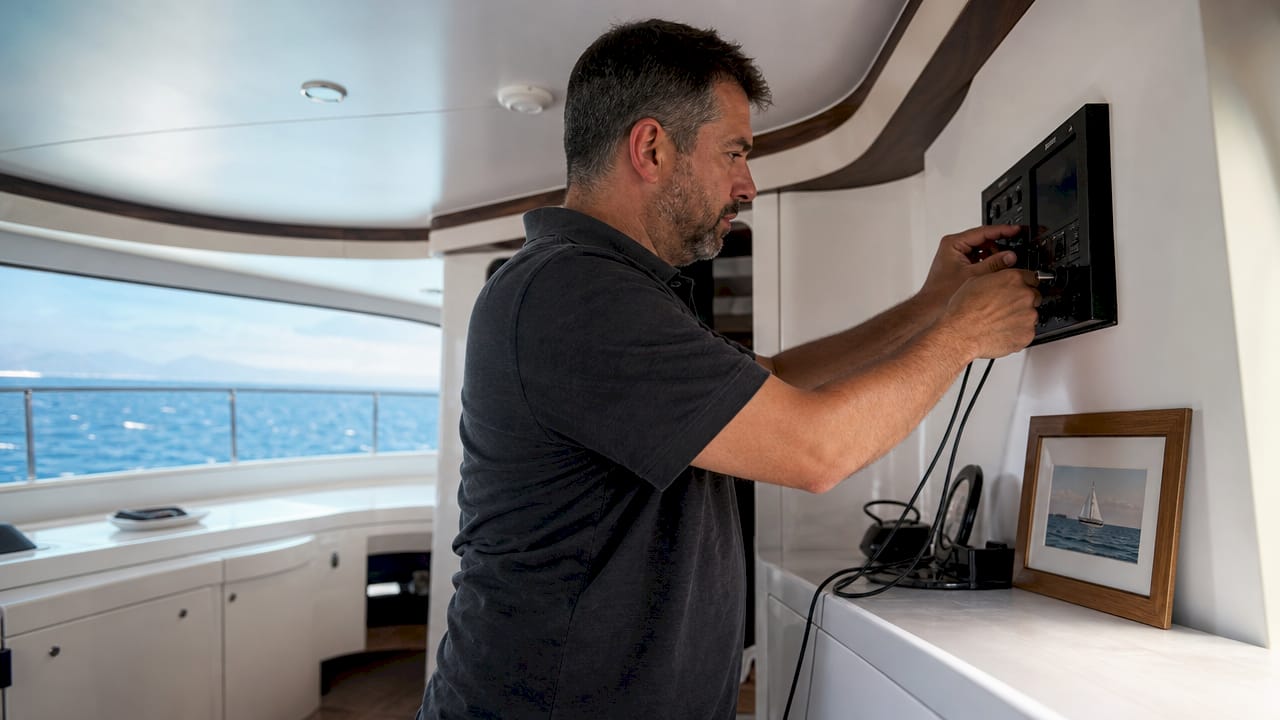
Cellular networks (4G/5G) cover the nearshore range cost-effectively. Dedicated maritime routers and high-gain antennas extend cellular signals up to 20 miles offshore, well beyond what a standard phone can reach. This makes cellular the practical workhorse when you are approaching a port or anchored in a bay.
Marina Wi-Fi is best treated as a bonus rather than a primary connection. Wi-Fi boosters can improve patchy marina reception, but the reliability is inconsistent and speeds vary widely between marinas. It works well for large software updates or media downloads when docked, but it is not a foundation for daily operations.
Legacy geostationary satellites remain available but are increasingly outclassed by LEO systems on every metric that matters: speed, latency, and cost per megabyte.
| Technology | Speed | Coverage | Latency | Relative Cost |
|---|---|---|---|---|
| LEO Satellite (Starlink) | 100+ Mbps | Global offshore | Low | Medium to high |
| 4G/5G Cellular | Up to 100 Mbps | Up to 20 miles offshore | Very low | Low to medium |
| Marina Wi-Fi | Variable | Dockside only | Low | Low or free |
| Geostationary Satellite | 5–30 Mbps | Global | High | High |
How does system design shape onboard internet performance?
Choosing the right satellite plan is only half the work. Most connectivity failures stem from poor system integration, not from the limits of the satellite or cellular technology itself. Antenna placement, router configuration, and indoor Wi-Fi coverage all determine whether guests experience a fast, reliable connection or a frustrating one.
The most capable yachts today use redundant architectures. Explorer yacht Nasiba is a clear example: its system integrates dual Starlink terminals, multiple LEO antennas, and 5G/4G links, all routed through a central Peplink Balance router using SpeedFusion technology for automatic failover. When one connection degrades, traffic shifts to another without any interruption the guest would notice. That is the standard serious owners are now building toward.
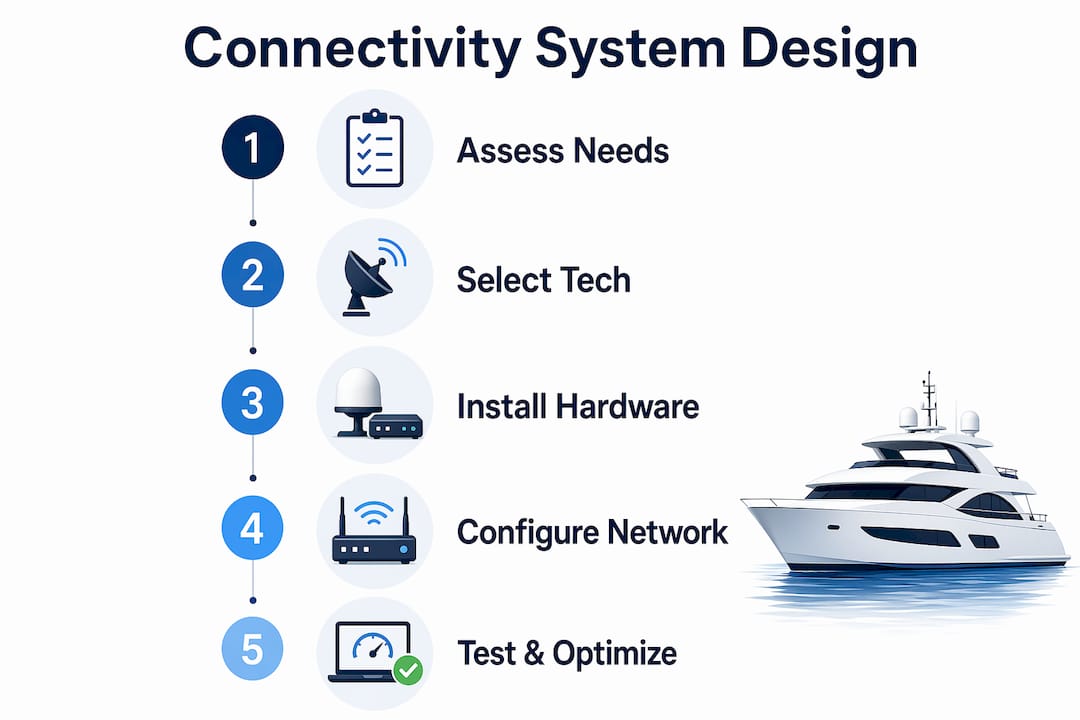
Onboard Wi-Fi coverage deserves the same attention as the WAN connection. Even high-speed satellite can feel slow if the interior Wi-Fi has coverage gaps or roaming issues between access points. Enterprise-grade access points, properly placed and configured, are not a luxury on a well-appointed yacht. They are a requirement.
Key principles for strong system design:
- Place satellite antennas with clear sky views and physical separation to reduce interference
- Use a multi-WAN router (such as Peplink or Cradlepoint) to manage traffic across multiple connections
- Deploy enterprise-grade access points throughout the vessel for consistent indoor coverage
- Separate guest, crew, and operational traffic using VLANs for both security and performance
- Test the full system at sea before guests board, not at the dock
Pro Tip: Commission a professional marine network engineer before installation, not after. Retrofitting a poorly designed system costs significantly more than getting it right the first time.
What are the security considerations for yacht internet connectivity?
Public marina Wi-Fi and foreign cellular networks carry real security risks. Connecting to them without protection exposes passwords, banking credentials, and private communications to interception.
VPNs provide encrypted tunnels that shield sensitive data from middle-man attacks and prevent ISP traffic throttling. Every yacht with guests or crew conducting financial transactions or video calls should run a VPN at the router level, not just on individual devices. Router-level VPN means every device on the network is protected automatically.
Network segmentation is equally important. VLAN-based segmentation separates guest, crew, and operational traffic, limiting the damage if any single device is compromised. A guest’s streaming device should never share a network segment with the vessel’s navigation or engine monitoring systems.
Steps every owner should take:
- Install a VPN at the router level, covering all onboard devices by default
- Create separate VLANs for guests, crew, and vessel operations
- Change default router passwords and disable remote management ports
- Keep all firmware and software updated on a regular schedule
- Audit connected devices periodically and remove any that are unrecognized
Pro Tip: When operating in international waters, check maritime compliance requirements for data privacy and network security. Some jurisdictions impose specific obligations on vessels operating under their flag.
How do guest expectations shape connectivity investment decisions?
Connectivity has become a baseline specification on luxury and charter yachts. Guests now expect reliable high-speed internet for video calls, entertainment streaming, and constant communication. This is not a preference. It is a booking criterion. A yacht without dependable internet loses charter inquiries to one that has it.
The rise of remote work has deepened this demand. Owners and guests who work while traveling need consistent offshore performance, not just dockside access. A week-long Mediterranean passage is no longer a digital blackout for a busy executive. With Starlink aboard, it is a productive week with a spectacular backdrop.
The impact of internet on yachting now extends to market positioning. Yachts listed with documented, high-performance connectivity systems attract more qualified buyers and command stronger charter rates. Brokers increasingly treat connectivity specifications as a key selling point alongside engine hours and refit history.
What owners and charter guests consistently prioritize:
- Video conferencing quality for business calls and family communication
- Streaming services without buffering across multiple devices simultaneously
- Real-time weather and routing data for navigation decisions
- Remote vessel monitoring and security system access from shore
- Social media and content sharing from remote anchorages
The captain’s role has also evolved. The captain now acts as the vessel’s de facto internet service provider, responsible for coverage planning, bandwidth management, and troubleshooting. That is a significant operational responsibility that owners should factor into crew training and system documentation.
Key Takeaways
Effective yacht internet connectivity requires a complete system approach: the right technologies, professional engineering, strong security, and alignment with guest expectations.
| Point | Details |
|---|---|
| LEO satellites lead offshore | Starlink and OneWeb deliver 100+ Mbps mid-ocean, replacing slow legacy VSAT systems. |
| System design determines performance | Most failures come from poor integration, not hardware limits. Invest in professional installation. |
| Hybrid architectures add resilience | Combining LEO satellite, 5G cellular, and marina Wi-Fi with automatic failover prevents downtime. |
| Security requires active management | VPNs, VLAN segmentation, and firmware updates protect guests, crew, and vessel systems. |
| Connectivity drives charter value | Reliable internet is now a baseline expectation that directly influences bookings and resale price. |
What I have learned about marine connectivity after years in the yacht market
The conversation around marine connectivity has shifted dramatically in the past few years. When I first started working with yacht buyers and sellers, internet at sea was a nice-to-have. Today, it is one of the first technical questions serious buyers ask. That tells you everything about where the market has moved.
What I find most interesting is how often connectivity problems are blamed on the technology when the real issue is the installation. I have seen Starlink systems on beautiful yachts that performed terribly because the antenna had a partial obstruction or the router was never configured properly. The hardware was fine. The engineering was not. That gap between hardware potential and real-world performance is where owners lose money and guests lose patience.
The Nasiba case study stays with me because it represents what a properly engineered system actually looks like. Dual terminals, physical redundancy, intelligent traffic routing. It is not cheap, but it is the difference between a yacht that works and one that disappoints. For owners who want to understand modern yacht technology at this level, the investment in professional system design pays back every season.
My honest advice: budget for the engineer as seriously as you budget for the hardware. And treat security as a permanent maintenance task, not a one-time setup. The sea is constant. Your network management should be too.
— Jason
How Yachts-bysteve helps you find the right connected yacht
At Yachts-bysteve, we understand that connectivity specifications now sit alongside hull condition and engine hours as core purchase criteria. Our brokers know which vessels carry professionally engineered marine networks and which ones carry the promise of one. That distinction matters when you are making a significant investment. Whether you are buying your first luxury yacht or adding to an existing fleet, working with a broker who understands how to choose a yacht broker for your specific technical and lifestyle needs makes the difference between a satisfying purchase and a costly lesson. Reach out to the Yachts-bysteve team to discuss listings that meet your connectivity standards from day one.
FAQ
What is the best internet option for offshore yachts?
LEO satellite systems like Starlink are the leading offshore option, delivering 100+ Mbps with low latency far from shore. Most serious offshore yachts pair Starlink with a 4G/5G cellular backup for nearshore coverage.
Why does yacht Wi-Fi often feel slow even with a fast satellite connection?
Poor onboard Wi-Fi design is the most common cause. Coverage gaps, roaming issues between access points, and under-powered hardware all limit the user experience regardless of WAN speed.
How do I protect my data on marina Wi-Fi?
Run a VPN at the router level to encrypt all traffic from every device on the network. This protects against middle-man attacks and prevents ISP throttling on public or foreign networks.
Does internet connectivity affect a yacht’s resale or charter value?
Connectivity has become a baseline specification that directly influences charter bookings and buyer interest. Yachts with documented, high-performance systems attract stronger offers and higher charter rates.
What is VLAN segmentation and why does it matter on a yacht?
A VLAN (Virtual Local Area Network) separates network traffic into isolated groups, such as guest, crew, and vessel operations. This limits the risk of a compromised device affecting critical navigation or monitoring systems.
Recommended
Featured Listings
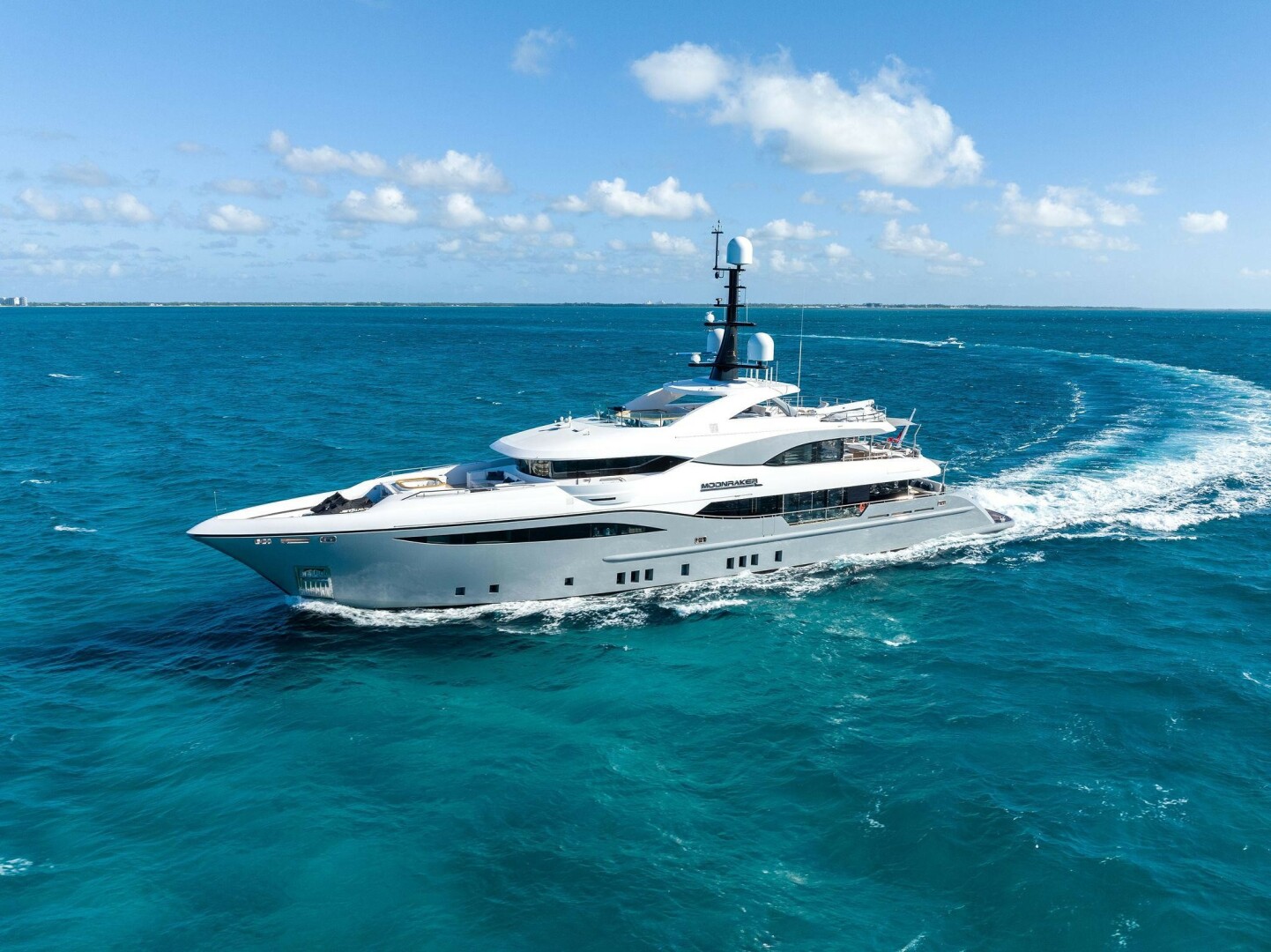
2019 Bilgin MOONRAKER
$20,646,000
156
West Palm Beach Florida

2028 Columbus Yachts
$22,900,008
137
Ancona
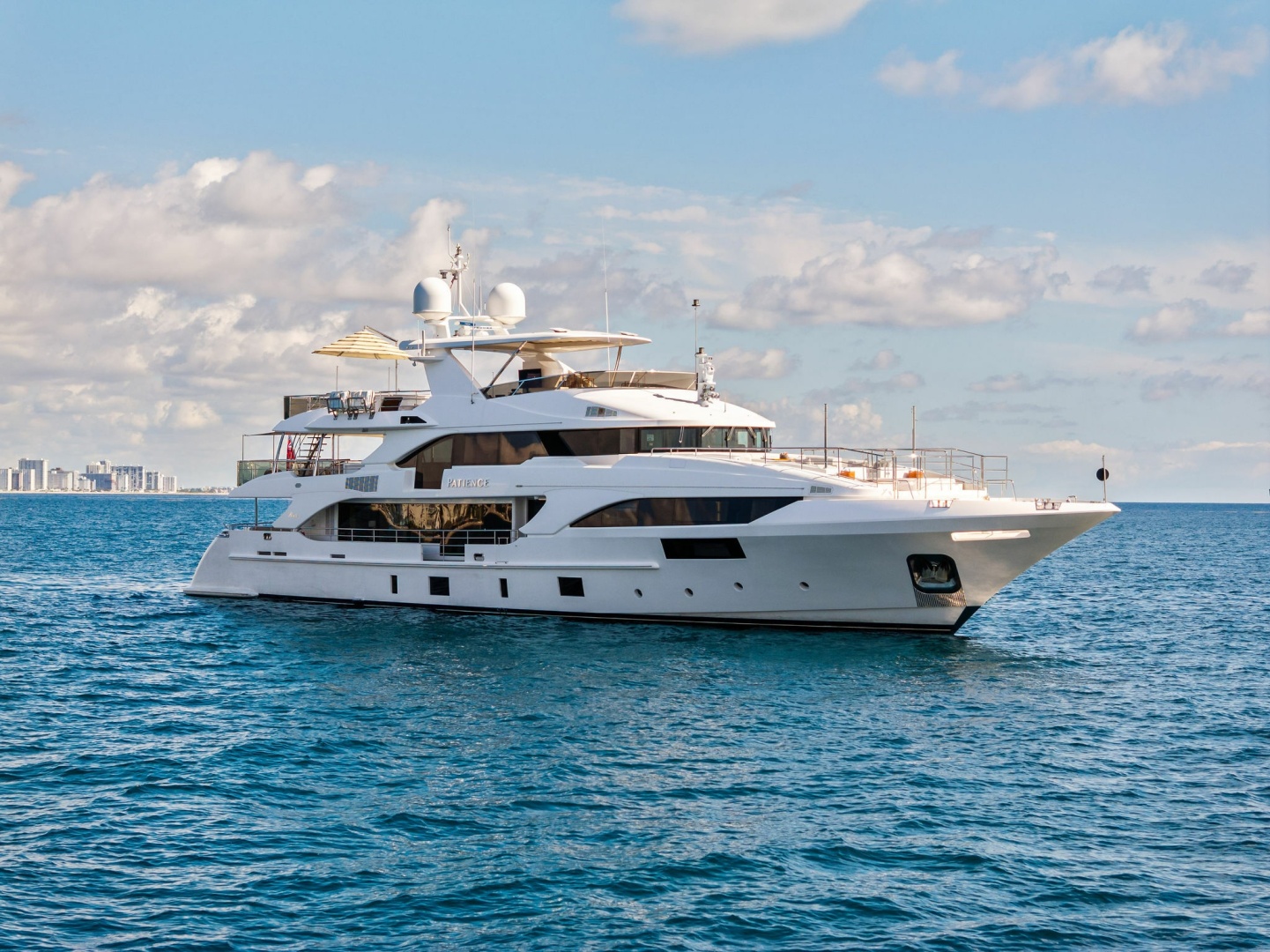
2012 Benetti PATIENCE
$10,975,000
132
Fort Lauderdale Florida
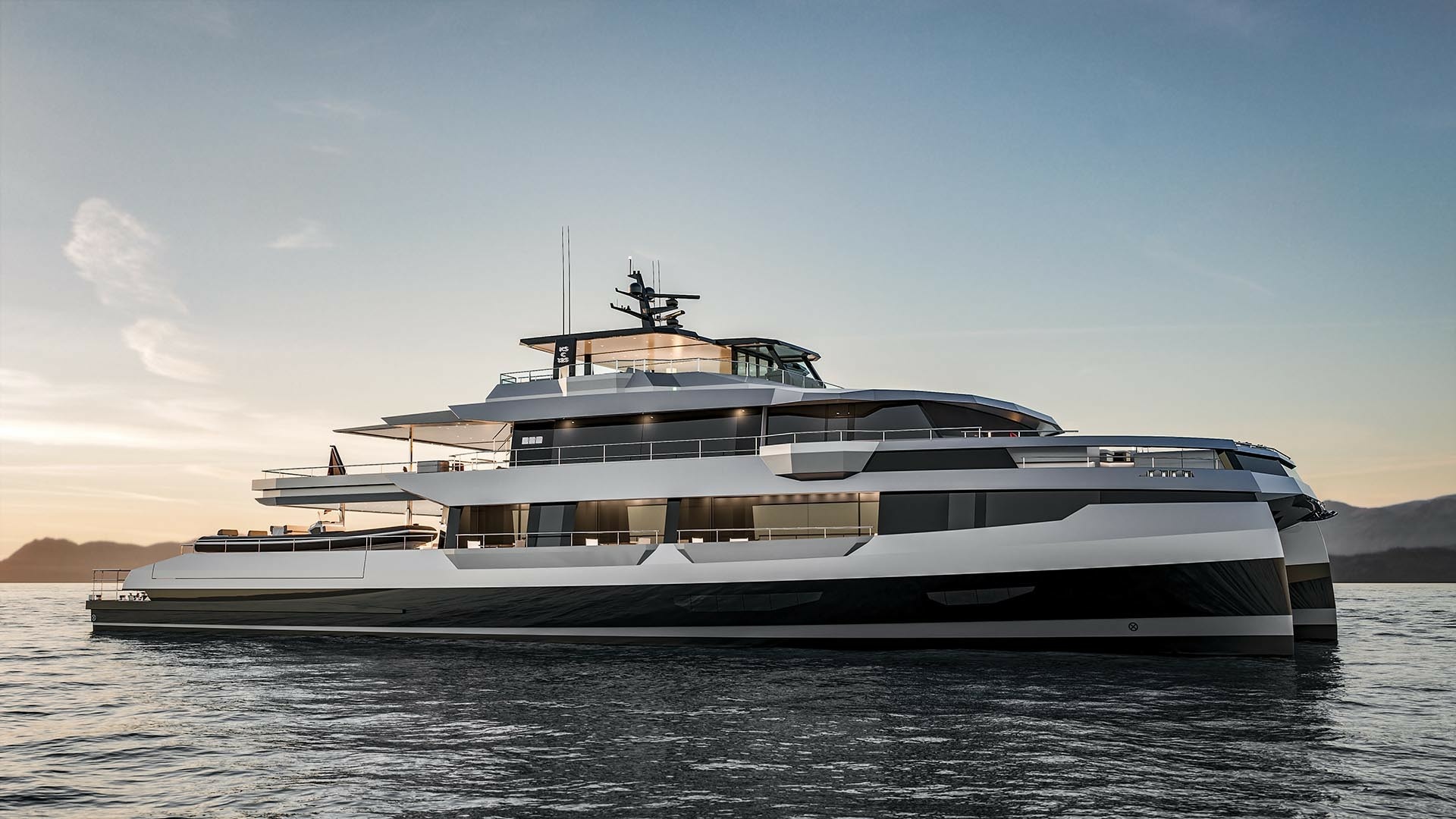
2028 Kingship Kingship
$20,000,000
125
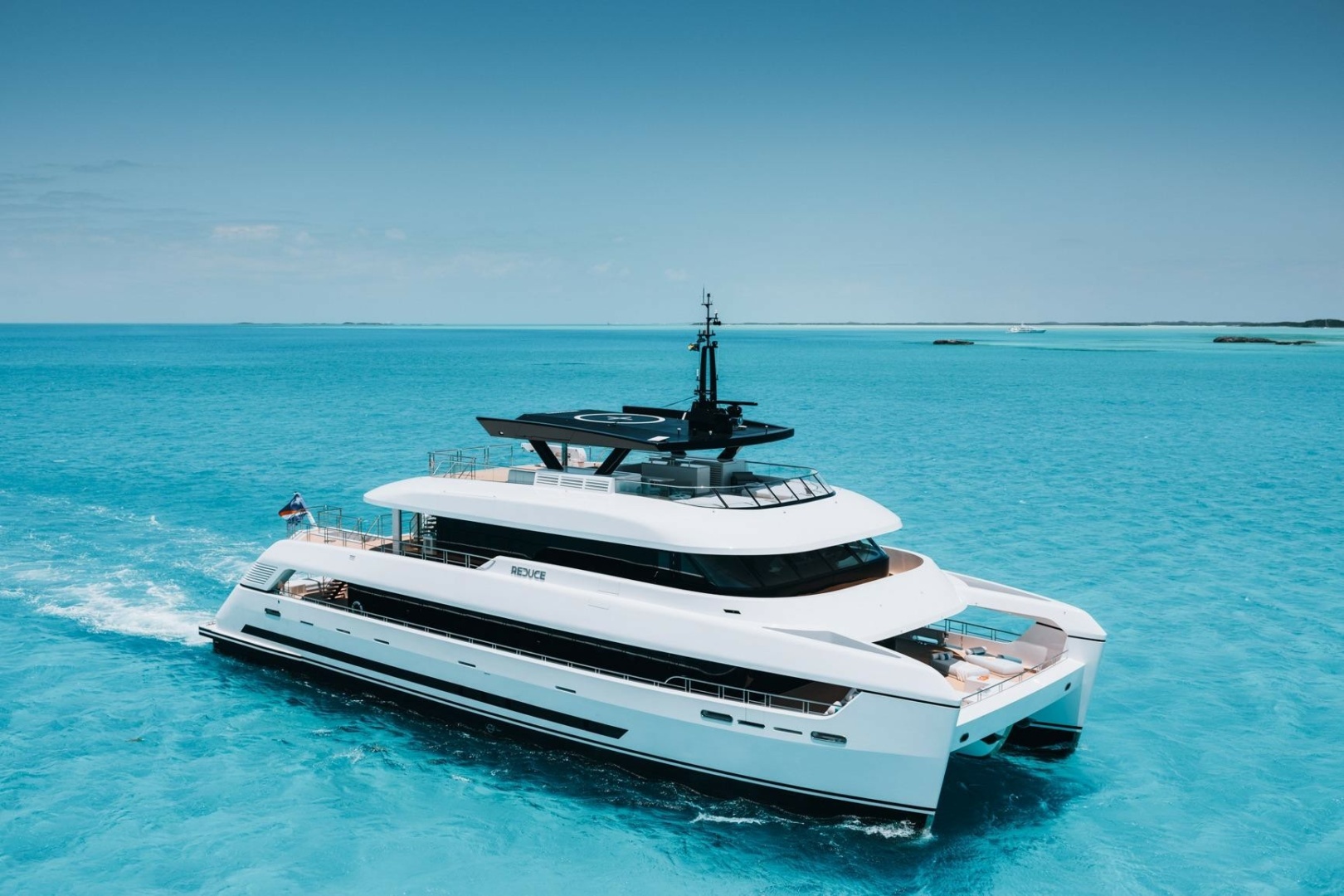
2024 Silver Yachts
$25,400,000
117
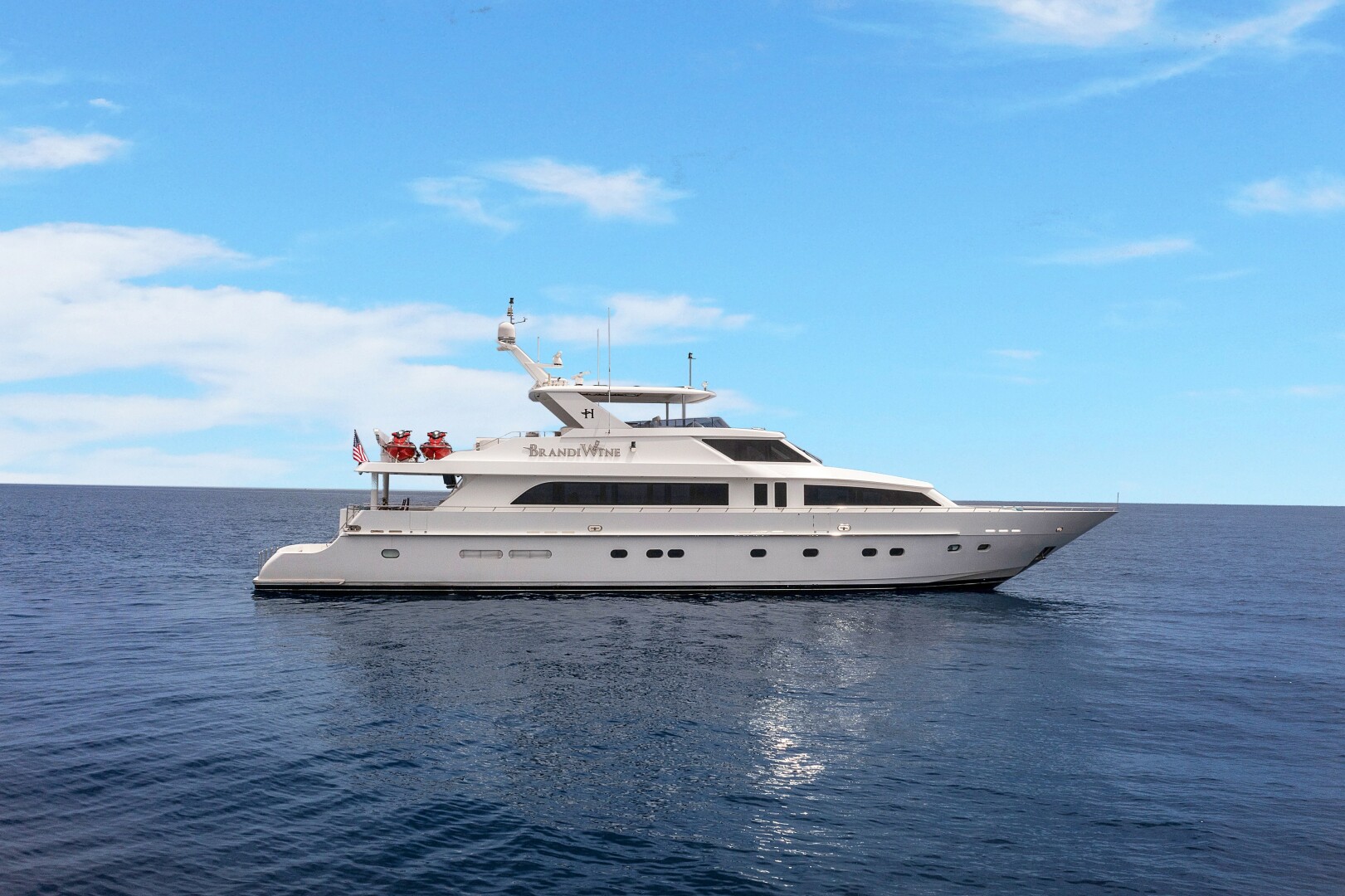
2009 Hargrave BRANDI WINE
$2,500,000
114
Fort Lauderdale Florida

2028 Extra Yachts
$20,646,000
100
Ancona
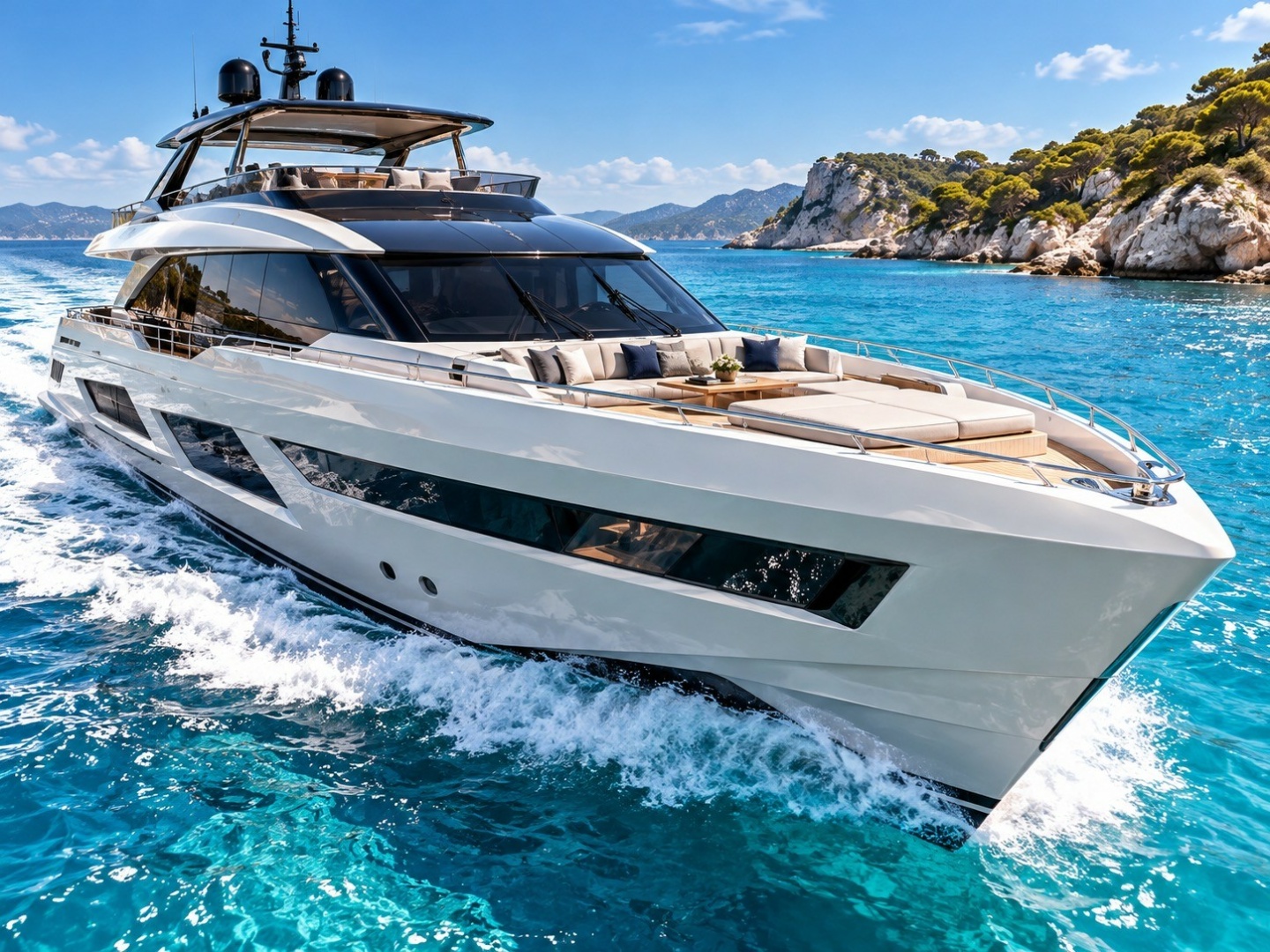
2028 Alpha
100
Ft Lauderdale Florida

2028 Extra Yachts Extra 96
$9,495,000
96
Ancona
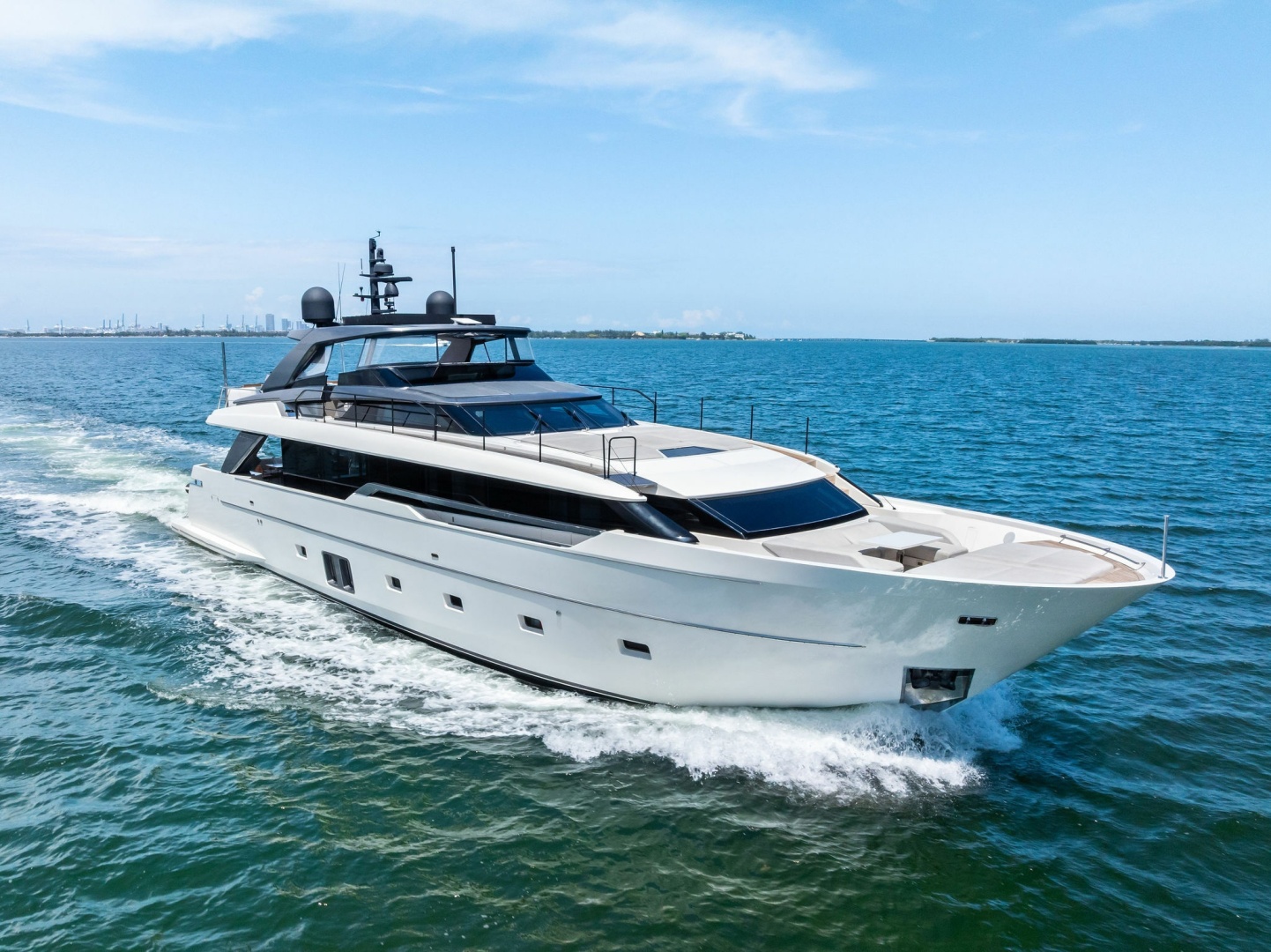
2021 Sanlorenzo GATSBY
$6,795,000
96
Miami Beach Florida
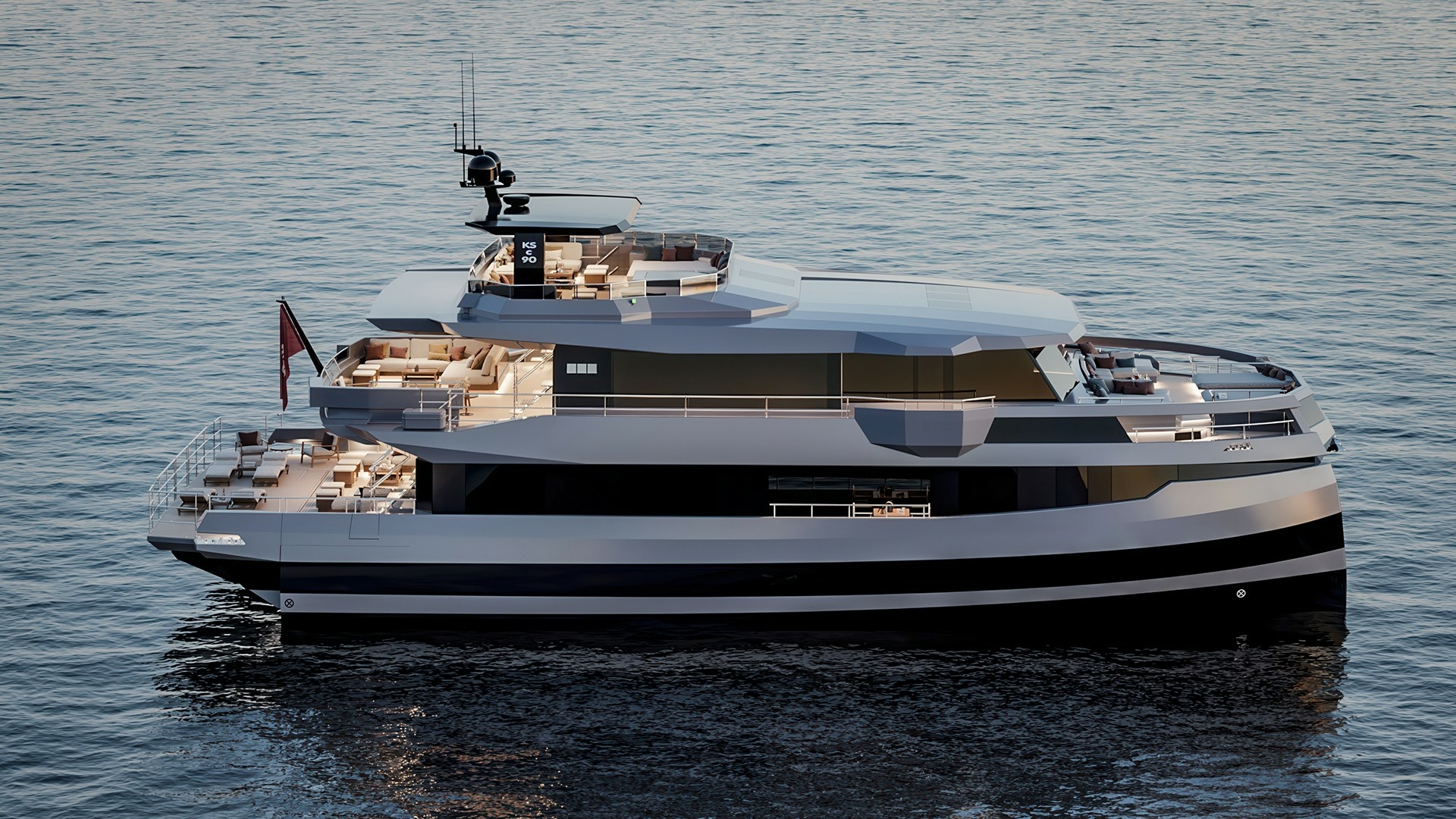
2028 Kingship
90

1999 Northern Marine OFF LINE
$2,495,000
84
Ft Lauderdale Florida
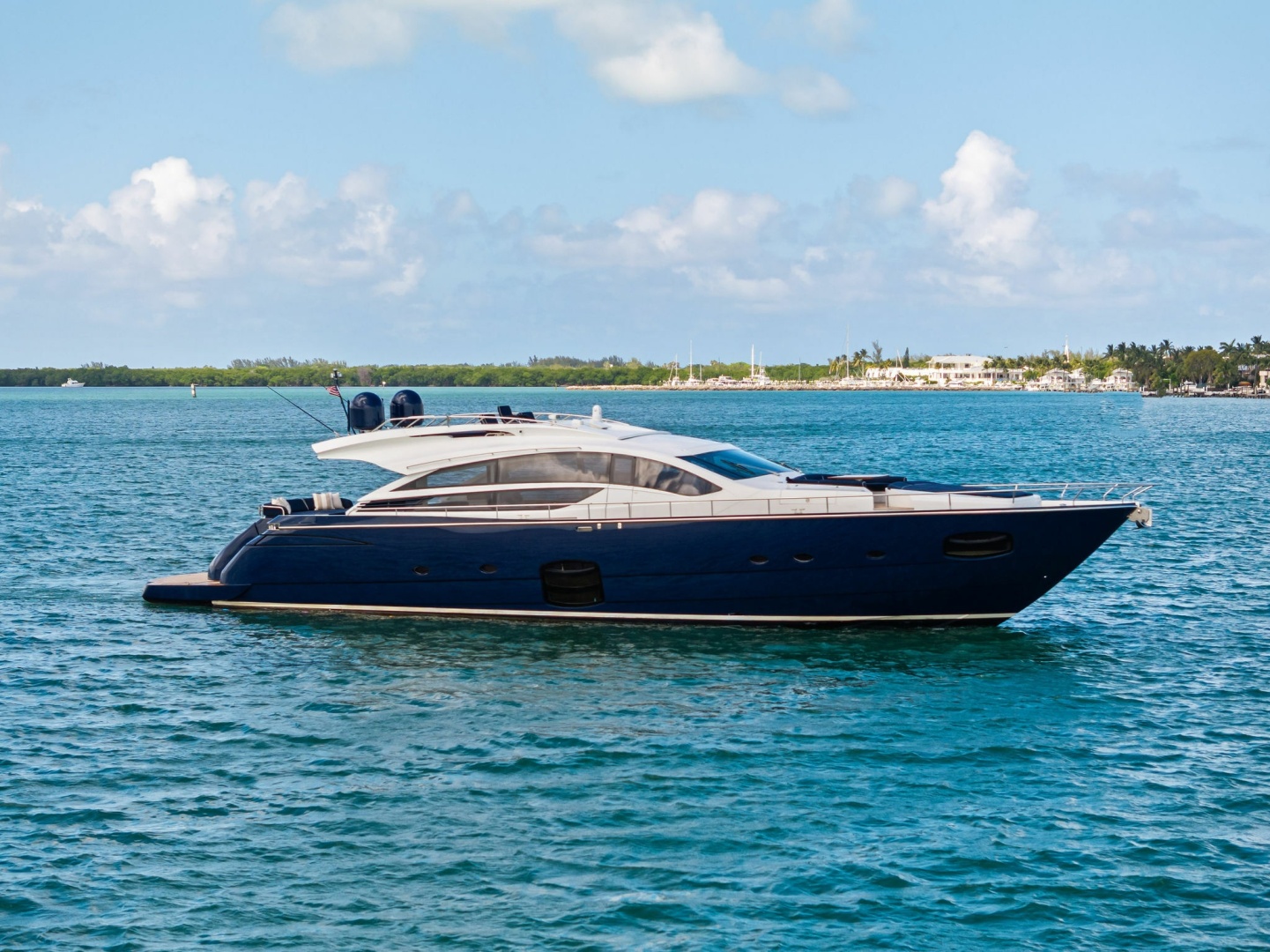
2013 Pershing DOROTHY ANN
$1,550,000
82
Miami Beach Florida

1997 Ferretti Yachts
$825,000
80
La Paz
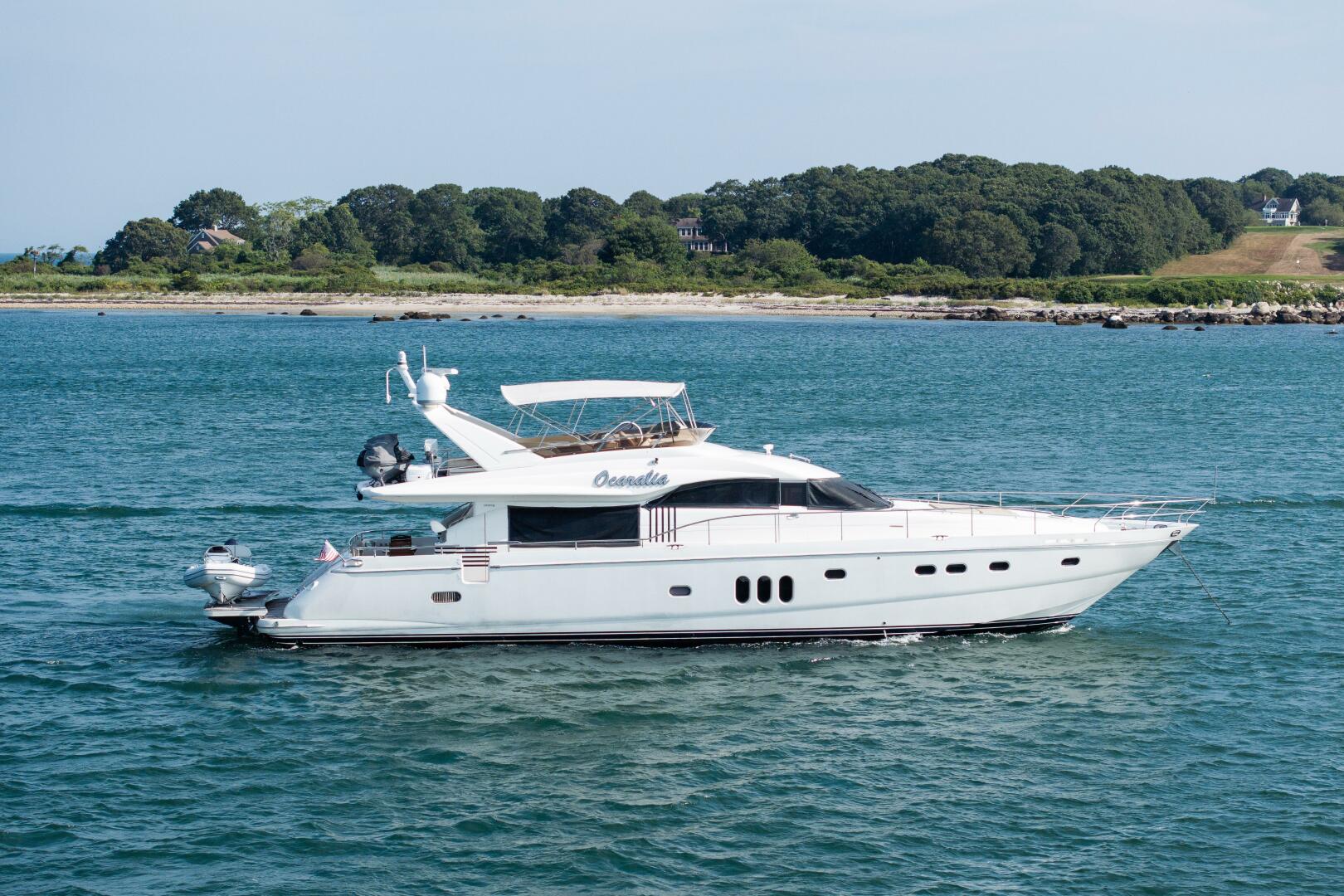
2008 Princess Yachts OCARALIA
$1,095,000
75
Charleston South Carolina
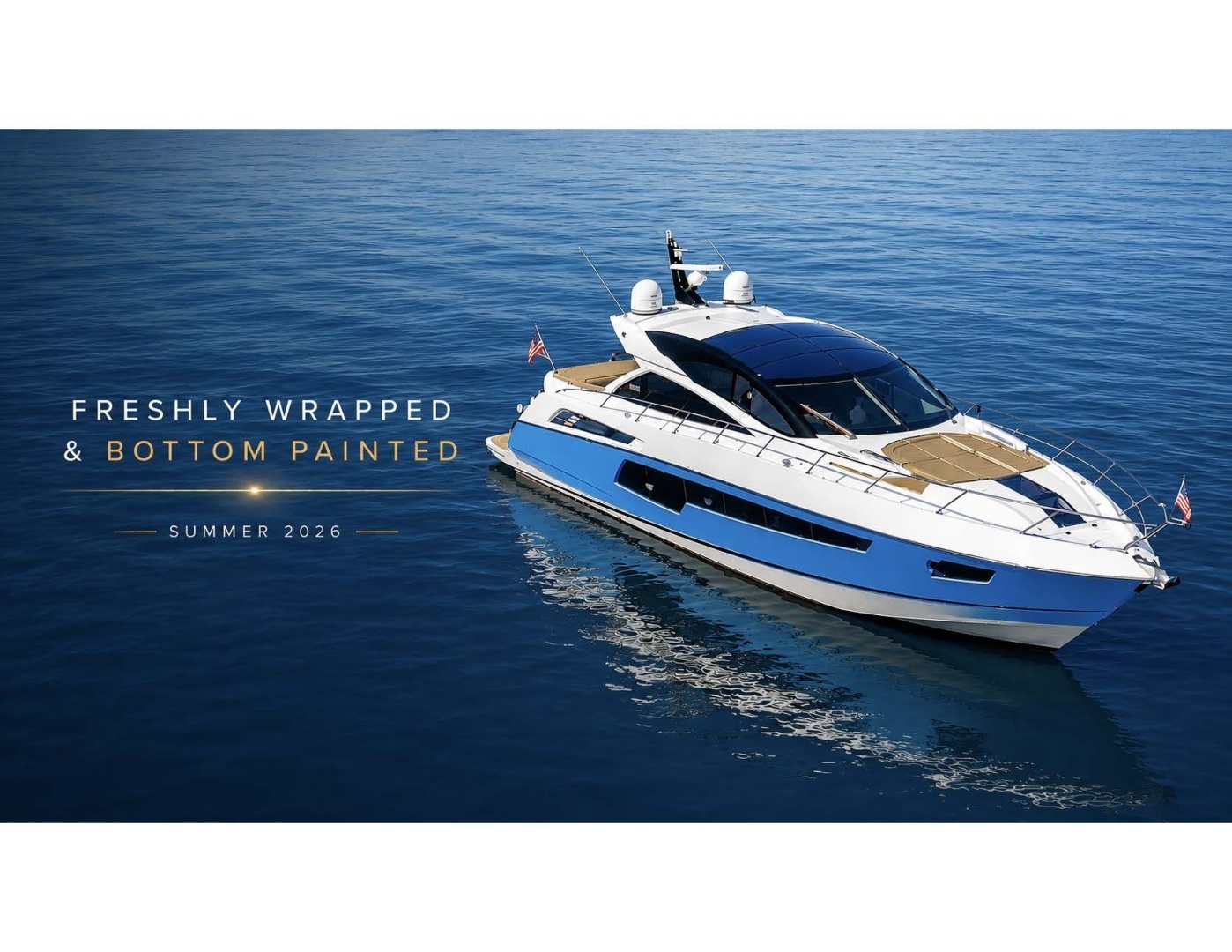
2014 Sunseeker
$1,400,000
68
New York New York

2024 Fairline
$2,750,000
68
Ft. Lauderdale Florida

2024 Sunreef Catallaxi
$3,700,000
60
Newport Rhode Island
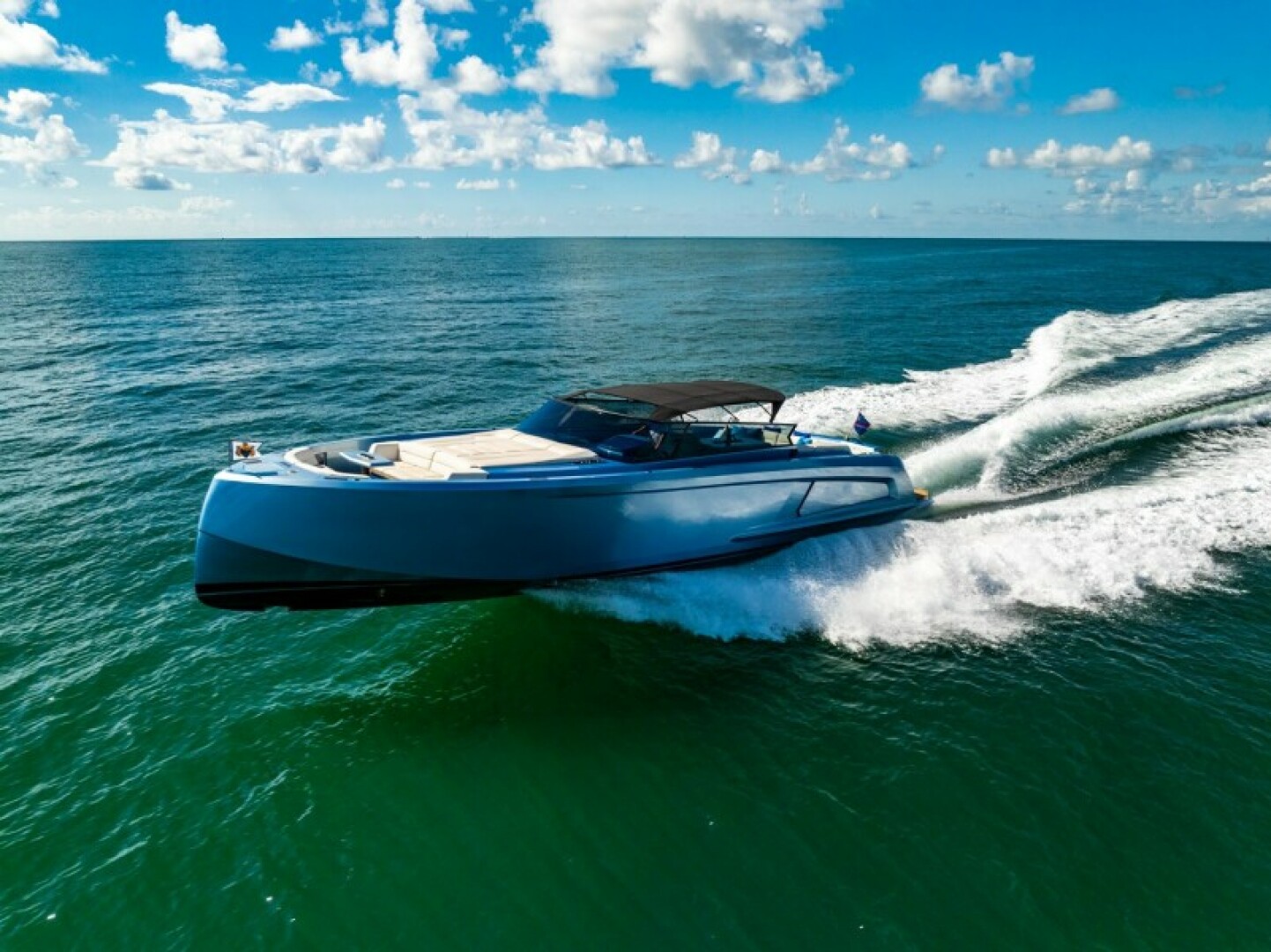
2019 Vanquish Yachts IMPULSIVE
$1,799,000
58
Miami Beach Florida
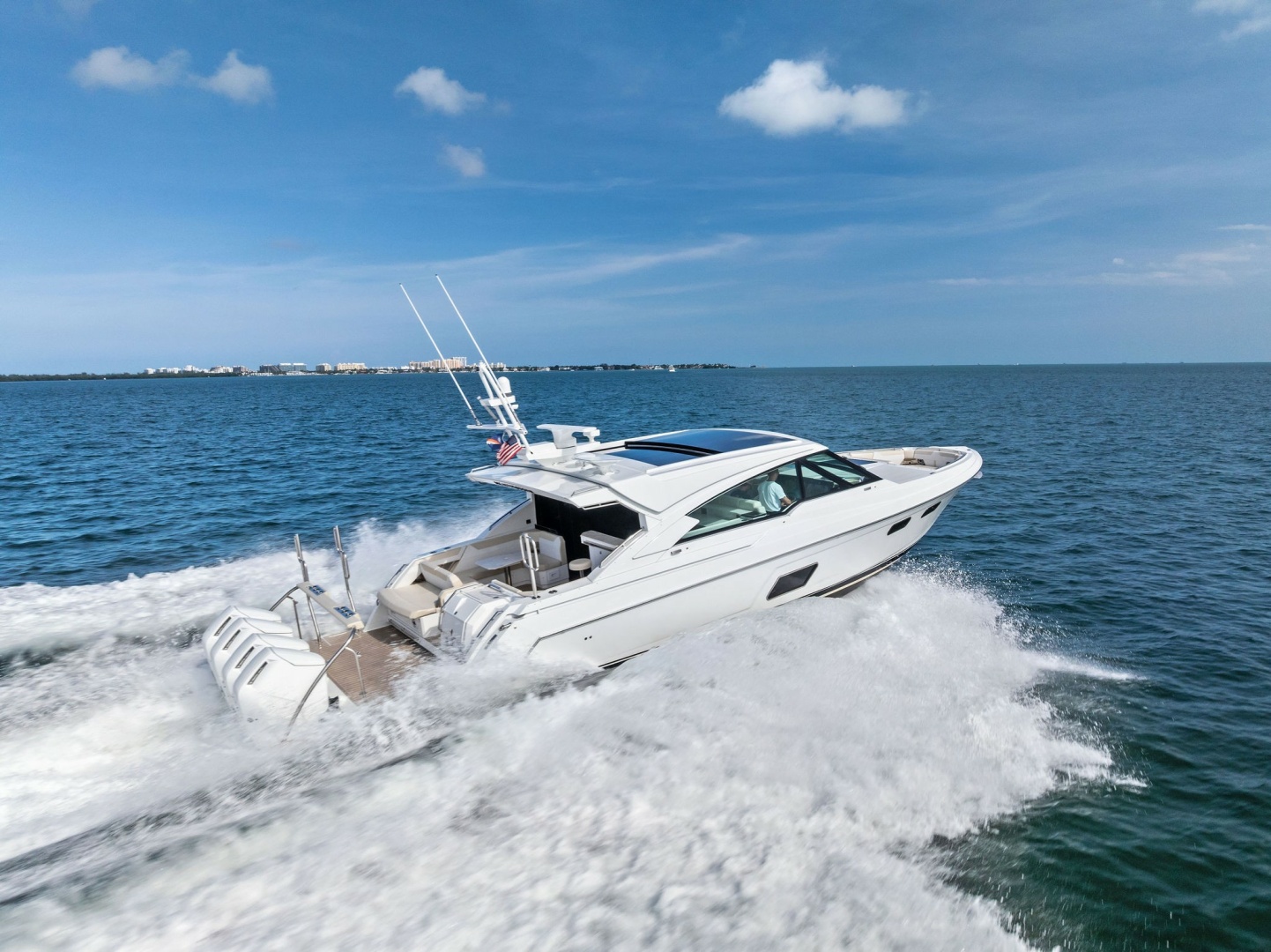
2025 Formula BREAKTHROUGH III
$1,895,000
53
Miami Beach Florida

2023 Fairline
$900,000
45
Fort Lauderdale Florida
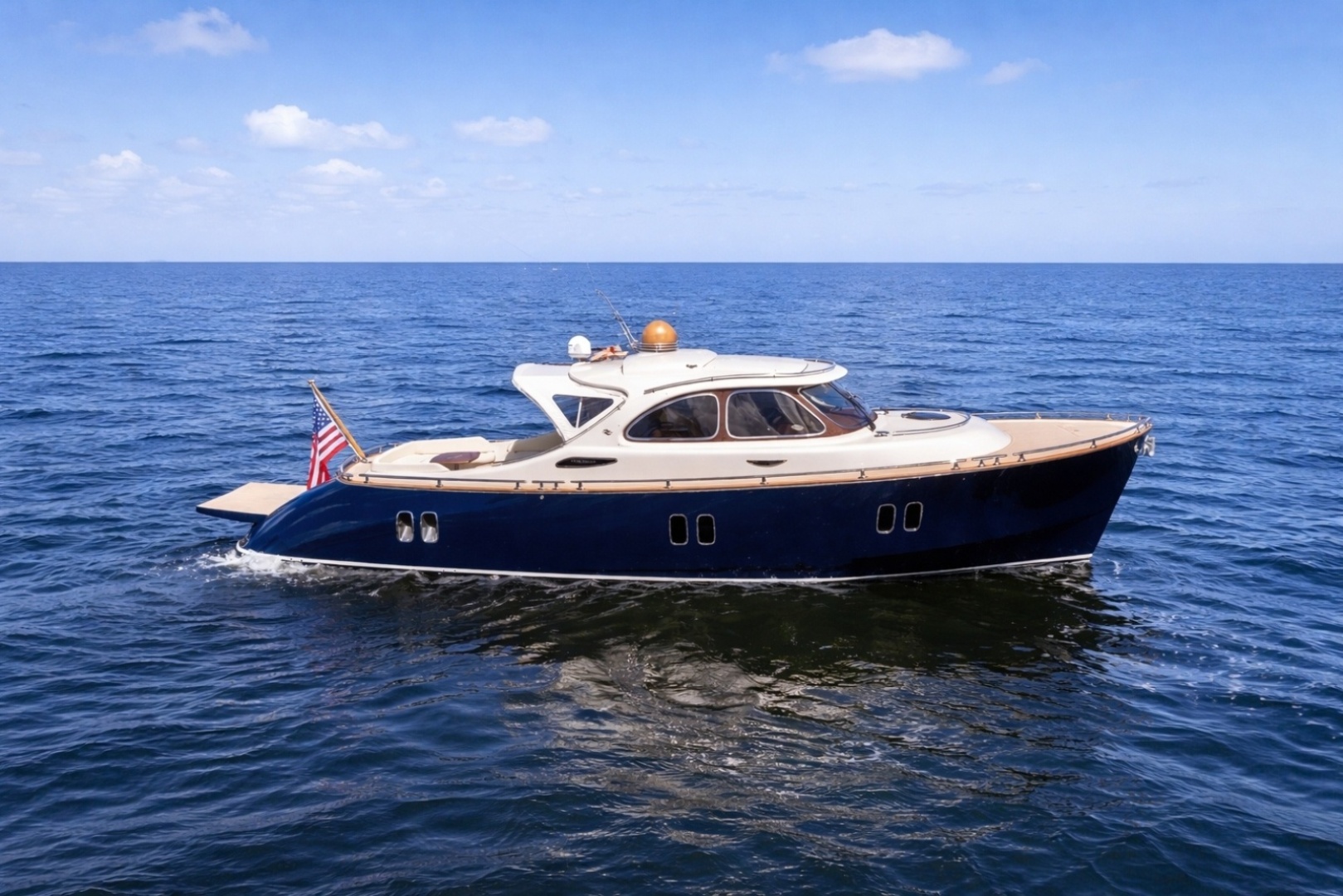
2012 Zeelander Mississippi Queen
$575,000
44
West Palm Beach Florida
2006 Formula
$139,000
37
Newburyport Massachusetts
2019 Bilgin 156'
$20,646,000
2028 Columbus Yachts 137'
$22,900,008
2012 Benetti 132'
$10,975,000
2028 Kingship 125'
$20,000,000
2024 Silver Yachts 117'
$25,400,000
2009 Hargrave 114'
$2,500,000
2028 Extra Yachts 100'
$20,646,000
2028 Alpha 100'
2028 Extra Yachts 96'
$9,495,000
2021 Sanlorenzo 96'
$6,795,000
2028 Kingship 90'
1999 Northern Marine 84'
$2,495,000
2013 Pershing 82'
$1,550,000
1997 Ferretti Yachts 80'
$825,000
2008 Princess Yachts 75'
$1,095,000
2014 Sunseeker 68'
$1,400,000
2024 Fairline 68'
$2,750,000
2024 Sunreef 60'
$3,700,000
2019 Vanquish Yachts 58'
$1,799,000
2025 Formula 53'
$1,895,000
2023 Fairline 45'
$900,000
2012 Zeelander 44'
$575,000
2006 Formula 37'
$139,000