

A yacht tender is defined as the dedicated support vessel that connects your mothership to the world beyond the anchorage. Choosing the right one shapes every guest experience, every shore run, and every watersports afternoon your yacht delivers. The top yacht tender features span hull design, propulsion, safety compliance, and comfort, and getting them right requires more than reading a brochure. At Yachts-bysteve, we work with owners who have learned, sometimes the hard way, that a tender chosen without a clear operational brief is a tender that disappoints. This guide cuts through the noise and gives you the framework that experienced buyers actually use.
1. Top yacht tender features start with hull material
The hull is the single greatest determinant of your guests’ experience on the water. A poor hull choice means a wet, uncomfortable ride regardless of how beautiful the upholstery is. As one industry guide puts it, hull shape physics are key to rough water comfort, not just structural strength.
Hull material choices break down into two main camps:
- Aluminum (marine-grade 5083): 10–20% lighter than fiberglass, making it the preferred choice when davit weight limits are tight. It resists abrasion well and handles hard use without complaint.
- Fiberglass (GRP): Heavier but delivers a smoother, quieter ride. GRP hulls absorb vibration better and lend themselves to refined interior finishes that aluminum cannot match.
- Deep-V hull geometry: A deep-V hull and beam-to-length ratio dictate ride comfort in choppy conditions far more than engine power alone. Owners who skip this detail regret it on the first rough crossing.
- Beam and length proportions: A wider beam improves stability at rest and during boarding, which matters when guests in resort wear are stepping aboard from a swim platform.
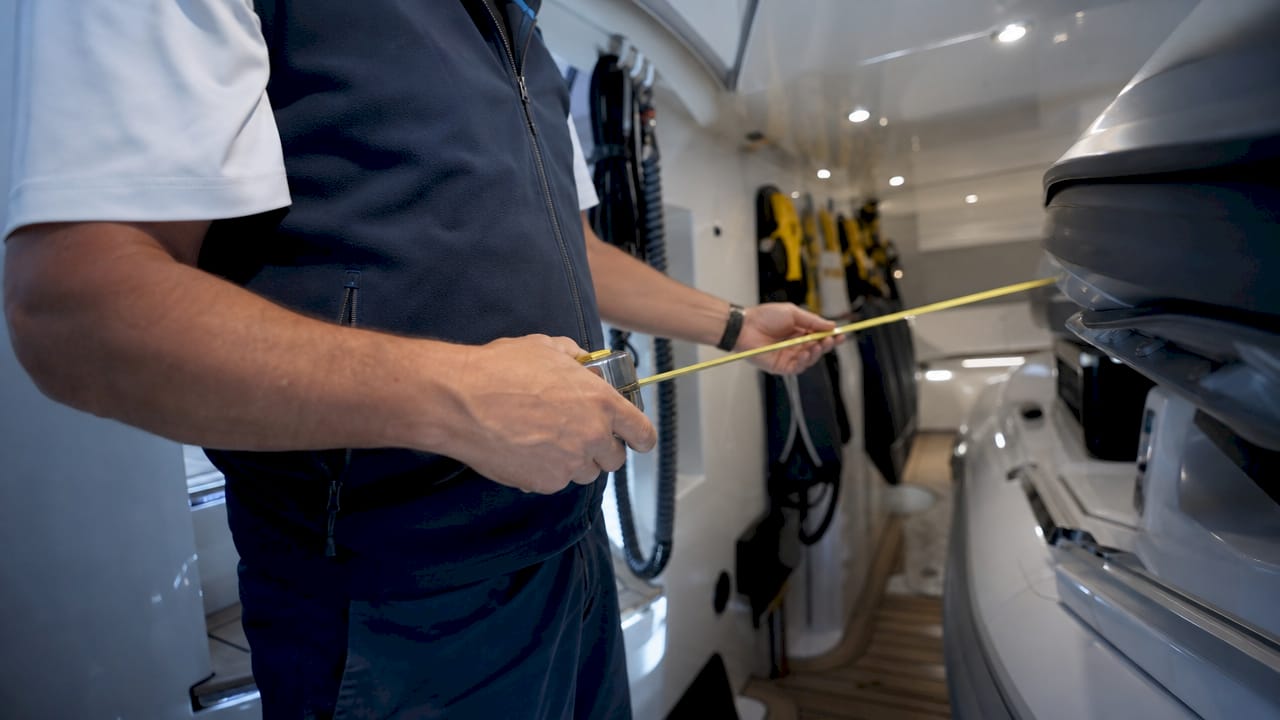
Pro Tip: Before finalizing hull dimensions, measure your garage envelope with the crane and cradle in place. A 150mm clearance is the recommended minimum safety buffer for safe launching and retrieval. Tighter than that and you are creating a daily operational hazard.
2. Propulsion technologies that define tender performance
Propulsion is where operational reality meets owner expectation. The right system depends on your garage height, your noise tolerance, your range requirements, and your environmental values.
- Diesel jet drives: These remain the default for flush-garage tenders because they eliminate protruding lower units and rudders. They run quietly, fit within tight height constraints, and suit yachts where the garage ceiling leaves little room for a conventional outboard.
- Electric and hybrid propulsion: Clean propulsion alternatives now achieve 30–50 nautical miles at 20 knots, making them genuinely viable for most tender missions. The quiet operation is a real luxury benefit, particularly when guests are swimming nearby. Owners interested in this direction will find useful context in Yachts-bysteve’s overview of hybrid propulsion benefits.
- Outboard engines: Simpler to maintain and easier to service in remote anchorages. The trade-off is garage height clearance and a slightly louder acoustic profile.
- Sterndrive systems: A middle ground between outboard convenience and inboard refinement, though they add complexity to maintenance schedules.
One fact that owners consistently underestimate: underpowered tenders plow rather than plane, worsening fuel consumption and degrading the guest experience. Adequate horsepower is not a luxury. It is the baseline for a tender that actually works.
3. Comfort and luxury features guests will notice immediately
The tender is the first and last vessel your guests board on any excursion. Its comfort level sets the tone for the entire day. Owners who treat the tender as an afterthought find that guests remember the uncomfortable ride more than the idyllic anchorage.
Key comfort features to prioritize:
- Seating capacity and layout: Ergonomic, forward-facing seating with proper back support makes a meaningful difference on runs longer than ten minutes. Walkaround deck layouts allow guests to move freely and make boarding from a dinghy dock far more graceful.
- Weather protection: Retractable shades, full enclosures, and Bimini tops extend the tender’s usable hours across seasons and climates. Climate control is increasingly available on larger day-tender formats.
- Bespoke upholstery and finishes: Teak decks, custom upholstery in UV-stable marine fabrics, integrated sound systems, and LED lighting packages transform a functional boat into an extension of the yacht’s interior aesthetic. Exploring luxury boat experiences in destinations like Phuket illustrates how much the tender’s ambiance contributes to the overall charter impression.
- Luggage and gear storage: Dedicated, waterproof storage compartments keep shore bags, snorkeling gear, and provisions organized and dry.
The walkaround deck layout deserves special mention. It is the detail that separates a well-designed tender from one that looks good in photographs but frustrates guests the moment they try to board with shopping bags in hand.
4. Safety and regulatory compliance features
Safety compliance is not optional, and it is not a box-ticking exercise. For yachts over 500 GT, SOLAS life-saving equipment requirements directly shape tender fleet specifications. This means your tender may need to carry specific flares, life rings, and emergency signaling equipment as part of the mothership’s safety plan.
Practical safety features to evaluate:
- Dedicated safety gear storage: Accessible, clearly labeled compartments for flares, first aid kits, and throwable flotation devices.
- Launching and recovery systems: The tender’s weight, combined with fuel, batteries, and equipment, determines crane and davit requirements. Calculating dry weight alone is insufficient. Total wet weight including fuel, battery packs, and all onboard equipment must guide davit and crane capacity decisions.
- Structural integrity ratings: Tenders used in an emergency support role need structural ratings appropriate to the sea states they may encounter.
- Navigation lighting and electronics: Proper nav lights, a VHF radio, and a GPS unit are baseline requirements for any tender operating beyond the immediate vicinity of the mothership.
Understanding how your tender fits into the broader safety framework of your yacht is part of responsible ownership. Yachts-bysteve’s guide to yacht storage solutions covers garage envelope and crane capacity considerations in useful detail.
5. Customization and adaptability for modern tender missions
The modern superyacht tender is no longer a single-purpose shuttle. Owners expect one vessel to handle guest transport, watersports towing, crew utility runs, and occasionally serve as a floating platform for sundowners at anchor.
- Transformer tender layouts: Fold-out decks and convertible seating configurations allow a single tender to shift from a passenger ferry to a watersports platform within minutes.
- Color-matched hulls and branding: Bespoke hull colors matched to the mothership’s livery, along with custom graphics and interior materials, create a cohesive visual identity across the fleet.
- Smart navigation and semi-autonomous systems: Joystick docking, integrated chartplotters, and autopilot-assisted navigation reduce crew workload and make the tender accessible to a wider range of operators.
- Multi-purpose utility: Dedicated watersports equipment racks, ski tow points, and wakeboard pylons built into the tender’s structure eliminate the need for improvised rigging.
Custom tenders carry a price premium of 30%–60% over production models. That premium is justified when the mission demands a precise garage fit, a specific weight target, or feature integration that no production boat delivers. For owners whose operational needs are straightforward, a well-specified production tender often represents better value.
Key takeaways
The most effective approach to selecting a yacht tender is defining your operational envelope first, then matching hull material, propulsion, safety compliance, and comfort features to that brief.
| Point | Details |
|---|---|
| Define your operational envelope | Clarify range, capacity, sea state, and garage dimensions before evaluating any tender. |
| Hull material drives guest experience | Choose aluminum for weight savings or GRP for ride comfort, based on your davit limits and usage profile. |
| Propulsion must match garage constraints | Diesel jet drives suit flush garages; electric and hybrid systems suit owners prioritizing quiet and clean operation. |
| SOLAS compliance shapes fleet planning | Yachts over 500 GT face mandatory safety equipment requirements that directly affect tender specifications. |
| Custom premiums are sometimes worth it | A 30%–60% price increase over production models is justified when garage fit and mission demands require it. |
What I have learned about choosing the right tender
A perspective from Jason at Yachts-bysteve
After working with yacht owners across a wide range of vessel sizes and cruising programs, one pattern stands out clearly. Buyers spend months deliberating over the mothership and then choose the tender in an afternoon. That imbalance costs them.
The most common mistake I see is fixating on brochure top speed rather than operational reliability. A tender that hits 40 knots in flat water but struggles to plane with six guests and a full fuel load is a liability, not an asset. Underpowered tenders are false economy, full stop.
The second mistake is ignoring wet weight. Owners approve a tender based on the dry weight specification, then discover the davit is undersized once fuel, batteries, and safety gear are loaded. That is an expensive correction to make after delivery.
My honest recommendation: write a one-page operational brief before you speak to a single tender builder or broker. Define your typical passenger count, your longest likely shore run, the sea states you cruise in, and your garage dimensions. Every feature decision flows from that document. The tender that fits your brief, even if it lacks a few aesthetic flourishes, will serve you better than the one that photographs beautifully but fights you every day.
— Jason
Working with Yachts-bysteve on your tender selection
Selecting a tender is one piece of a larger acquisition picture, and it deserves the same expert attention as the mothership itself. Yachts-bysteve works with buyers at every stage of the process, from initial specification through to final delivery, ensuring that every vessel in your fleet serves its purpose with confidence. If you are earlier in the process and still evaluating your primary vessel, our guide on how to choose a yacht broker outlines exactly what to look for in a brokerage partner. For owners ready to go deeper on the full acquisition framework, Yachts-bysteve’s yacht brokerage services connect you with specialists who understand both the technical and lifestyle dimensions of luxury yacht ownership.
FAQ
What are the most important features to consider in yacht tenders?
Hull material, propulsion type, garage envelope compatibility, and SOLAS safety compliance are the four most critical features. Comfort and customization follow once those fundamentals are confirmed.
How do I choose between aluminum and fiberglass for a tender hull?
Choose aluminum when davit weight limits are tight, since it runs 10–20% lighter than fiberglass. Choose GRP when ride comfort and interior finish quality are the priority.
What does SOLAS compliance mean for yacht tender specifications?
SOLAS regulations mandate specific life-saving equipment on yachts over 500 GT, which directly affects what safety gear the tender must carry and how it must be configured for emergency support roles.
Is electric propulsion a practical option for yacht tenders in 2026?
Electric and hybrid systems now achieve 30–50 nautical miles at 20 knots, making them viable for most tender missions. They also deliver quiet operation, which is a genuine comfort advantage near the mothership.
When does a custom tender justify its price premium over a production model?
A custom tender justifies a 30%–60% price premium when the garage envelope requires a precise fit, the mission demands specific weight targets, or no production model integrates the required features without compromise.
Recommended
Featured Listings

2028 Columbus Yachts
$22,900,008
137
Ancona

2012 Benetti PATIENCE
$10,975,000
132
Fort Lauderdale Florida

2028 Kingship Kingship
$20,350,000
125

2024 Silver Yachts
$25,400,000
117

2009 Hargrave BRANDI WINE
$2,500,000
114
Fort Lauderdale Florida

2028 Extra Yachts
$20,350,000
100
Ancona

2028 Alpha
$12,100,000
100
Ft Lauderdale Florida

2028 Extra Yachts Extra 96
$9,495,000
96
Ancona

2021 Sanlorenzo GATSBY
$6,795,000
96
Fort Lauderdale Florida

2028 Kingship
$11,990,000
90

2028 Alpha
$9,894,500
90
Fano

2023 Azimut COMPASS
$7,950,000
88
Miami Beach Florida

1999 Northern Marine OFF LINE
$2,495,000
84
Ft Lauderdale Florida

2013 Pershing DOROTHY ANN
$1,375,000
82
Fort Lauderdale Florida

1997 Ferretti Yachts
$825,000
80
La Paz

2008 Princess Yachts OCARALIA
$1,095,000
75
Charleston South Carolina

2014 Sunseeker
$1,400,000
68
New York New York

2024 Fairline
$2,750,000
68
Ft. Lauderdale Florida

2019 Vanquish Yachts IMPULSIVE
$1,799,000
58
Miami Beach Florida

2021 Ferretti Yachts HAVEN
$1,595,000
57
Fort Lauderdale Florida

2025 Formula BREAKTHROUGH III
$1,895,000
53
Miami Beach Florida

2023 Fairline
$900,000
45
Fort Lauderdale Florida

2012 Zeelander Mississippi Queen
$575,000
44
West Palm Beach Florida
2028 Columbus Yachts 137'
$22,900,008
2012 Benetti 132'
$10,975,000
2028 Kingship 125'
$20,350,000
2024 Silver Yachts 117'
$25,400,000
2009 Hargrave 114'
$2,500,000
2028 Extra Yachts 100'
$20,350,000
2028 Alpha 100'
$12,100,000
2028 Extra Yachts 96'
$9,495,000
2021 Sanlorenzo 96'
$6,795,000
2028 Kingship 90'
$11,990,000
2028 Alpha 90'
$9,894,500
2023 Azimut 88'
$7,950,000
1999 Northern Marine 84'
$2,495,000
2013 Pershing 82'
$1,375,000
1997 Ferretti Yachts 80'
$825,000
2008 Princess Yachts 75'
$1,095,000
2014 Sunseeker 68'
$1,400,000
2024 Fairline 68'
$2,750,000
2019 Vanquish Yachts 58'
$1,799,000
2021 Ferretti Yachts 57'
$1,595,000
2025 Formula 53'
$1,895,000
2023 Fairline 45'
$900,000
2012 Zeelander 44'
$575,000