

Overview: chartering before you buy is the single most reliable way to pressure-test what a brochure and a broker’s pitch cannot tell you: how a yacht actually feels at anchor, how a crew actually runs a week, and what a “week on the water” actually costs once every add-on lands on the invoice. If you’re weighing a purchase, the immediate move is simple. Book a representative charter that matches the hull type, size, and crew model you’re actually considering, and bring a preference sheet along with a short testing checklist.
Here’s why this works better than another round of yacht show walkthroughs:
- Layout, motion, and noise reveal themselves only after 48 hours aboard, not during a dockside tour.
- Crew dynamics and provisioning flow expose whether you want an owner-operator lifestyle or a fully crewed one.
- Real charter invoices, not brochure rates, show you what ownership will actually cost to run.
Key Takeaways
Chartering a representative yacht before buying converts a vacation into structured due diligence that reveals layout, cost, and crew fit no brochure can show.
| Point | Details |
|---|---|
| Match the charter to your purchase | Choose hull type, size, guest count, and crew model that mirror the yacht you’re actually shopping for. |
| Budget beyond the base rate | Plan for roughly 25–40% above the headline charter fee once APA, gratuity, fuel, and marina fees are included. |
| Record everything in real time | Log time, activity, issue, and severity daily, backed by photos, to build a defensible buyer brief. |
| Chartering supplements, not replaces, survey | Use charter evidence to prioritize what a formal sea trial and marine survey should investigate. |
| Let a broker close the loop | Yachts-bysteve translates charter findings into buyer briefs, coordinates inspections, and negotiates using documented evidence. |
Where to Read More on Contracts and Booking Terms
For deeper reading on MYBA contracts, preference sheets, and booking mechanics, start with Condé Nast Traveler’s beginner’s guide and Yachtsforkings’ step-by-step breakdown, both of which cover deposit structures and preference sheet timing in detail. The Seafarer’s beginner guide is the clearest source on realistic all-in cost planning.
- MYBA contract terms and preference sheet deadlines: Condé Nast Traveler and Yachtsforkings
- All-in cost planning and sample budgets: The Seafarer
- Charter as purchase due diligence: GetBoat and Frontier Yachting
Table of Contents
- Why Chartering Before You Buy Actually Works
- What Should You Test During the Charter?
- Which Charter Type Reveals the Right Buying Signals?
- What Does a Week of Chartering Really Cost?
- Broker or Online Platform: How Should You Book?
- Turning Charter Notes Into a Buyer Brief
- How a Broker Turns Charter Findings Into Leverage
- What Legal and Insurance Details Matter During a Charter?
- How Do You Judge a Yacht’s Condition While Chartering?
- What Can Chartering Teach You About Depreciation and Resale?
- Should You Charter More Than One Yacht Before Buying?
- What Comes After the Charter: Inspection, Survey, and Sea Trial
- Ready to Turn Charter Notes Into a Purchase?
- Frequently Asked Questions
- Sources
Why Chartering Before You Buy Actually Works
Buying a yacht off a spec sheet is a little like buying a house from drone footage. The pros of chartering first are concrete and specific to your decision, not generic travel perks. You get to test the layout under real conditions, feel whether you actually want a crew managing your galley and guest flow or would rather run the boat yourself, and see actual running costs itemized on a real invoice instead of estimated on a spreadsheet. You also get a preview of the cruising grounds you’re likely to frequent and whether your guest list, family included, actually enjoys the rhythm of a week at sea.
The downside is just as real. A single charter can mislead you if the yacht isn’t a fair stand-in for what you intend to buy. Chartering a 100 foot crewed motor yacht in the Bahamas tells you very little about owning a 45 foot sailing catamaran you plan to sail yourself in New England. Headline charter rates also tend to understate the total bill, which can leave a false impression of what ownership costs look like on a proportional basis.
- Match the hull type (monohull, catamaran, motor yacht) to your intended purchase category.
- Match guest count and cabin configuration to your actual family or entertaining needs.
- Match the crew model (bareboat, skippered, fully crewed) to how you intend to operate the boat you buy.
Pro Tip: Before booking, write down the exact yacht specs you’re shopping for, then find a charter that matches at least three of them. A close match turns a vacation into a genuine yacht rental before purchase trial run.
What Should You Test During the Charter?
Treat the week like a working audit, not a vacation. The goal is to gather evidence you can hand to a broker or surveyor later, not just memories.
Run through this checklist daily, ideally at the same time each day so conditions are comparable:
- Cabin privacy, mattress comfort, and closet or drawer storage relative to how much luggage you actually packed.
- Galley flow during meal prep for the full guest count, not just coffee for two.
- Head access and ventilation, especially in guest cabins farthest from the main saloon.
- Ladder and step safety getting on and off the swim platform or tender.
- Tender launch time and noise, plus engine or generator vibration at anchor and underway.
- Motion comfort in a moderate chop, since this varies enormously between hull types.
Pay equal attention to how the boat is run day to day. Watch how the crew handles provisioning, turnaround between excursions, and routine maintenance, because that workload lands on you directly if you’re considering an owner-operated purchase. GetBoat’s guidance on chartering before you buy makes the same point: pick a charter that matches your intended cruising conditions and operating style, then use it to build a scorecard.
Pro Tip: Keep a simple running log: time, activity, issue, severity, one line each. Snap a photo or short video clip tied to every entry. Two minutes of effort each time saves hours of guesswork later.
Which Charter Type Reveals the Right Buying Signals?
Not every charter format teaches you the same lesson, so picking the right one matters as much as picking the right yacht.
- Bareboat charters put you at the helm with no crew, which is the only way to genuinely test owner-operation workload, systems accessibility, and real handling if you plan to captain your own purchase.
- Skippered charters add one professional to the mix, revealing how a single hire integrates with an involved owner and offering a preview of instruction and handoff dynamics.
- Crewed charters are the format to book if you’re shopping for a crewed yacht, since they show you hospitality standards, service rhythm, and the full-service expectations that come with staffing a boat.
- Cabin charters and superyacht sampling let you experience a higher service tier, but they rarely answer layout or systems questions tied to the specific vessel category you intend to buy.
- If you’re buying to sail yourself, book bareboat or skippered.
- If you’re buying a crewed yacht, book crewed and pay close attention to crew tenure and communication style.
What Does a Week of Chartering Really Cost?
The number on a charter listing is a starting point, not the total. Base charter fees typically exclude the Advance Provisioning Allowance (APA), fuel, marina fees, gratuity, and VAT in applicable jurisdictions, and those extras add up fast.
Industry guidance is consistent on the rough math. Condé Nast Traveler puts APA and typical extras at 25 to 35% on top of the base fee, with a separate 10 to 15% gratuity guideline for crew after a strong week. The Seafarer’s charter guide recommends budgeting a full 30 to 40% over the base rate once fuel, marina fees, VAT, and provisioning are folded in, and offers a useful illustration: a $200,000 weekly charter rate can land closer to $315,000 to $360,000 all-in by the time the invoice settles.
| Cost Component | Typical Range | What It Reflects |
|---|---|---|
| Base charter fee | 100% (baseline) | Yacht and standard crew for the week |
| APA / provisioning | 25–35% of base fee | Fuel, food, drinks, dockage during the trip |
| Crew gratuity | 10–15% of base fee | Discretionary, tied to service quality |
| Total realistic uplift | 30–40% over base fee | All-in budget for planning purposes |
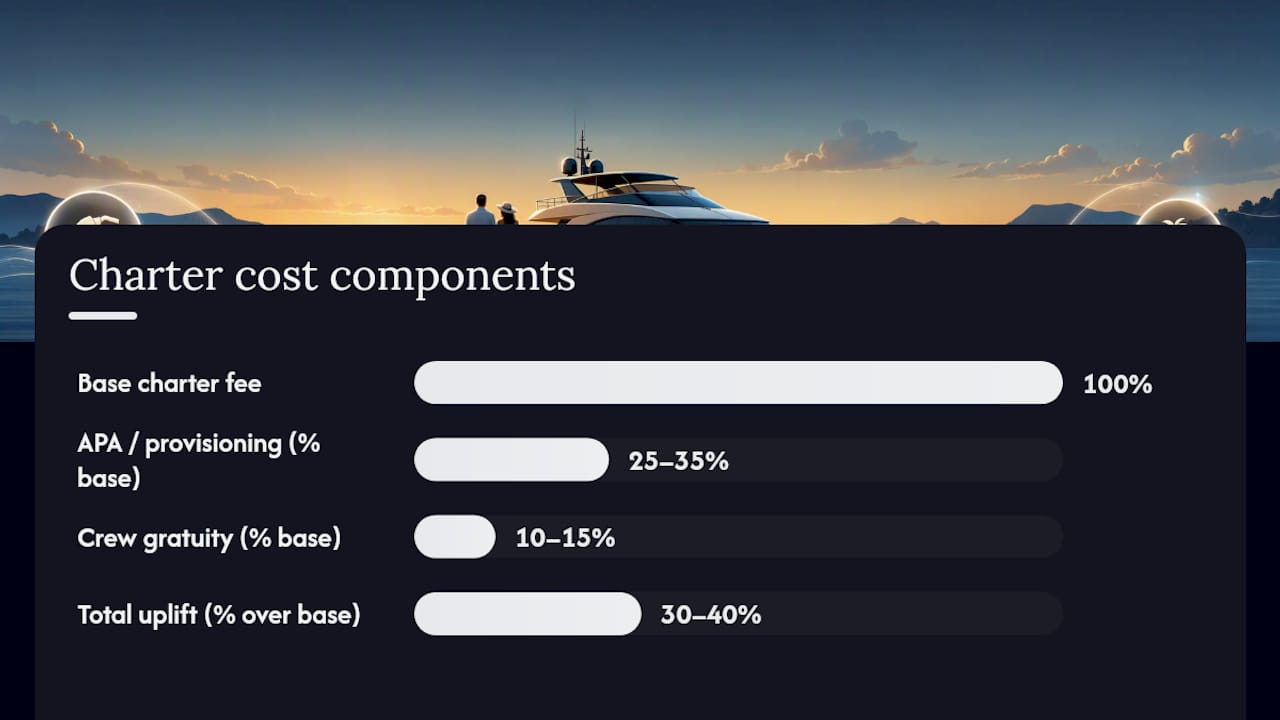
It’s a rough proxy for what ownership overhead looks like relative to a yacht’s headline value, since fuel intensity, provisioning habits, and marina costs scale similarly whether you’re renting the boat for a week or writing the checks as the owner. If you want a deeper breakdown of where that money actually goes, how much yacht rentals really cost walks through each line item, and Golden Water Sports’ 2026 rental pricing guide offers a useful outside look at how base rates get built.
Broker or Online Platform: How Should You Book?
For a first charter meant to inform a purchase, a broker earns their commission. Brokers match yacht and crew to your actual criteria, prepare contracts, often using the MYBA standard form, and coordinate the preference sheet that tells the crew what you need before you even step aboard, according to Condé Nast Traveler’s charter guide. Online platforms work fine for straightforward bareboat bookings where you already know exactly what you want, but a first-time crewed or superyacht charter benefits from a broker who knows which captains and boats actually deliver.
- Confirm lead time: Yachtsforkings notes 6 to 12 months for peak season, 3 to 6 months for shoulder season, and as little as four weeks if you catch a last-minute opening.
- Expect a deposit structure of roughly 50% at signing, with the balance due 30 to 60 days before departure.
- Submit your preference sheet 2 to 3 weeks ahead, since late submissions are a common source of avoidable provisioning mistakes.
- Review the contract for APA handling, VAT treatment, cancellation terms, and security deposit pre-authorizations before you sign.
- Ask whether the booking uses a MYBA contract, the industry standard that protects both charterer and owner.
- Confirm cruising grounds and season align with proven infrastructure. Condé Nast Traveler points to the Mediterranean from May through October and the Caribbean from December through April as reliable first-charter windows.
- If you’re still narrowing down where to go, choosing the right yacht destination is worth a read before you lock in dates.
Turning Charter Notes Into a Buyer Brief
The charter itself is only half the job. The value comes from converting daily field notes into a document you can actually hand to a broker or seller.
Break your notes into four buckets. Must-haves are non-negotiable, like a minimum of four guest cabins or a specific noise threshold at anchor. Nice-to-haves matter but won’t kill a deal, like a dedicated crew mess or a particular tender brand. Tolerables are things you noticed but can live with, like a slightly cramped owner’s head. Deal-breakers are anything that would make you walk away, like inadequate freshwater capacity for your intended guest count.
- Rank each item by how strongly the charter evidence supports it, using dated notes and photos rather than memory.
- Translate vague impressions into specific technical questions: not “the engine room seemed loud” but “measured noise at cruising RPM exceeded comfort in the aft cabin.”
- Bring this ranked list to any seller conversation and use it to shape survey priorities.
When you sit down with a seller or broker, ask about systems history and whether major components have documented maintenance records. Ask about noise and vibration complaints from prior charter guests if the yacht has been in charter service. Ask about refit history, including dates and scope, and ask about crew turnover if you’re buying a boat that comes with staff, since high turnover often signals deeper operational issues. Frontier Yachting is blunt about the limits here: a charter defines your preferences and expectations, but it does not replace a purchase sea trial or formal survey. Use the charter evidence to prioritize what the survey should focus on, not to skip the survey altogether. For help narrowing the shortlist itself, Yachts-bysteve’s guide to choosing the right yacht walks through matching specs to lifestyle.
How a Broker Turns Charter Findings Into Leverage
A good broker doesn’t just find listings. Ask them to build a documented shortlist against your buyer brief, run background checks on any captain or crew coming with a crewed listing, and coordinate site visits, survey appointments, and sea trials around your schedule.
The real value shows up at the negotiating table. A broker who knows your charter found inconsistent generator maintenance records can push for a pre-purchase engine survey contingency or a price adjustment, rather than letting that detail get lost in a stack of paperwork.
A buyer brief built from real charter observations gives a broker specific, defensible negotiation points instead of vague preferences. That’s the difference between “I’d like a quiet boat” and “the generator exceeded acceptable noise thresholds at cruising RPM during a documented charter, and that needs addressing before closing.”
- Request a documented candidate shortlist tied directly to your buyer brief, not a generic list of available listings.
- Ask for crew CV verification if the purchase includes staff.
- Have your broker coordinate the survey and sea trial handoff so nothing from your charter notes gets lost in translation. Yachts-bysteve’s guide to choosing a broker covers what to look for in that relationship.
What Legal and Insurance Details Matter During a Charter?
Chartering exposes you to a set of legal and insurance realities that carry directly into how you should think about ownership. Every legitimate charter contract, whether it uses the MYBA standard or an equivalent, should spell out liability coverage, security deposit terms, and what happens if weather or mechanical failure disrupts the trip. Read that section closely, not because you’re likely to need it, but because the same categories of risk (liability, hull damage, third-party injury) apply once you own the boat.
Charter operators typically carry their own hull and liability insurance, and the charter fee generally builds in coverage for the vessel itself during your trip. As an owner, you’ll be sourcing and paying for that coverage yourself, and premiums vary significantly based on cruising grounds, yacht age, and whether the boat will enter charter service after you buy it. If you’re considering offsetting ownership costs by chartering your own future yacht, ask charter brokers now about how insurers treat charter-use vessels differently from private-use ones. That distinction affects both premiums and what maintenance documentation insurers will require.
Security deposits and pre-authorizations during a charter are also worth watching closely. The way a charter company handles a damage dispute, whether they’re transparent, fair, and quick to resolve, tells you something about industry norms you’ll want your own future charter guests (if you plan to offset costs) or insurer to follow. Ask your charter broker directly how disputes were historically resolved on the yacht you’re testing, since that history often surfaces in conversation even when it’s not in writing.
How Do You Judge a Yacht’s Condition While Chartering?
You won’t get a survey report during a charter, but you’ll gather more real signal than most buyers realize. Pay attention to how systems perform under actual use rather than at idle. Does the air conditioning keep up during a hot afternoon with all cabins occupied? Does the watermaker keep pace with a full guest load? Does the generator cycle on and off more than seems reasonable?
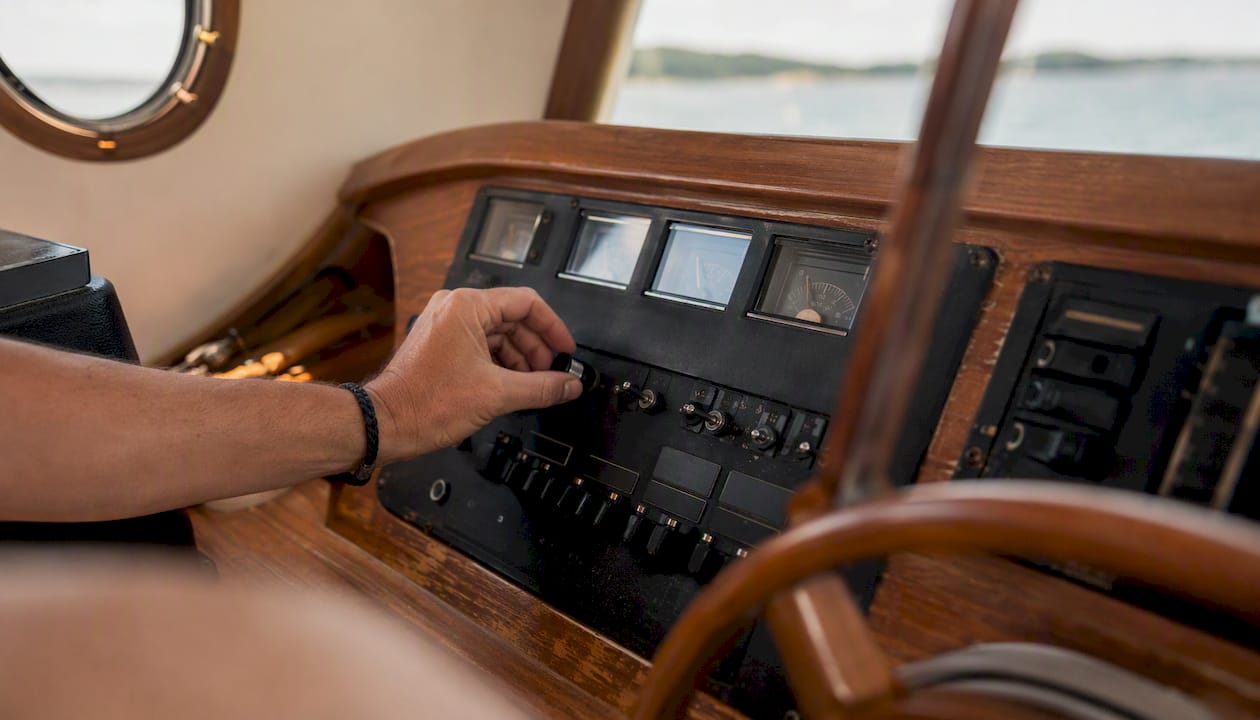
Ask the crew directly about the maintenance schedule, and don’t be shy about it. Crew members who work aboard day in and day out usually know exactly when the engines were last serviced, whether the boat has had recent electrical issues, and how the current owner treats upkeep. A crew that answers vaguely or seems uncomfortable with the question is itself a data point.
Look for wear patterns that suggest heavy charter use versus light private use. Charter yachts often show more wear on upholstery, deck hardware, and galley equipment because of higher guest turnover, and that wear can be a legitimate negotiating factor if you’re considering purchasing that specific vessel or one in the same fleet. Photograph anything that looks inconsistent with the yacht’s stated age, from corrosion on deck fittings to discoloration around seals and gaskets.
None of this replaces a marine survey, but it builds a documented case for what the survey should focus on, which saves time and money once you’re in formal due diligence with a specific vessel.
What Can Chartering Teach You About Depreciation and Resale?
Time aboard a chartered yacht offers an underused window into how different models hold value. Ask the crew or charter company how long the yacht has been in service, whether it’s been part of an active charter fleet, and how demand for that model has trended. Charter operators track booking patterns closely, and a model that stays consistently booked season after season is usually one holding resale value better than a model that struggles to fill weeks.
Fleet composition tells its own story. If a charter company keeps renewing its fleet with the same builder or hull type every few years, that’s a signal the model performs well financially, both in charter revenue and in resale when the operator moves it along. Conversely, a model that’s been quietly phased out of major charter fleets is worth a second look before you commit to buying one.
Pay attention, too, to how the specific yacht you’re chartering compares to newer releases from the same builder. Features that once felt current can age quickly in a category where naval architecture and onboard technology move fast. A five-year-old flybridge layout that already feels dated compared to current models is a preview of how your own purchase might depreciate. For a broader read on how models are trending in the current market, Yachts-bysteve’s guide to industry trends for 2026 buyers is a useful companion to what you observe firsthand.
Should You Charter More Than One Yacht Before Buying?
One charter teaches you a lot. Two or three, spaced out over several months, teaches you what actually matters versus what was a fluke of one particular week, crew, or destination.
Scheduling multiple charters against different hull types or builders lets you build a genuine comparison rather than relying on a single data point. Charter a monohull one trip and a catamaran the next if you’re genuinely torn between the two. Book a bareboat week to test your own handling skills, then a crewed week on a similar size vessel to compare the experience of being fully served versus running things yourself. The contrast is often more instructive than either charter alone.
Space the charters across different seasons or cruising grounds if your budget allows. A yacht that feels perfect in calm Caribbean waters in February might handle very differently in a choppier Mediterranean afternoon in July. If long-range cruising is part of your eventual plan, testing a yacht’s motion and systems in varied conditions matters more than testing it once in ideal weather.
Keep your field notes format identical across every charter so the comparisons are apples to apples. Same checklist, same rating scale, same categories for cabin comfort, galley flow, and crew interaction. By the third charter, patterns emerge that a single trip could never reveal, and those patterns are exactly what should shape your final buyer brief before you start seriously shopping listings.
What Comes After the Charter: Inspection, Survey, and Sea Trial
Chartering builds the case; it doesn’t close it. Once you’ve narrowed your search to a specific yacht or a short list of candidates, the next steps are formal and non-negotiable regardless of how thorough your charter research was.
Schedule an in-person inspection first, ideally with your broker present, to walk the boat against the priorities your charter notes identified. Then bring in a qualified marine surveyor to conduct a formal survey covering hull integrity, mechanical systems, electrical systems, and safety equipment. This is where the noise complaint you logged on day three of your charter, or the generator cycling issue you noticed at anchor, becomes a specific line item the surveyor investigates rather than a vague impression.
The sea trial is your chance to confirm handling characteristics under way, not just at the dock. Bring your charter notes and specifically test the conditions that concerned you: motion in a moderate chop if that bothered you during your charter, tender launch operation if that felt clunky, or engine response if you noticed hesitation during your test week. A charter defines what you’re looking for; a sea trial and survey confirm whether the specific vessel you’re buying actually delivers it.
One Charter, One Storage Surprise
On a charter meant to mirror a planned catamaran purchase, a buyer discovered the galley storage couldn’t handle a full week’s provisioning for six guests. Drawers ran out by day three. That single finding shifted the buyer’s search toward a layout with a dedicated pantry, something no brochure measurement had flagged.
The lesson: load the boat the way you actually would and launch the tender under real time pressure. Brochures don’t test either.
Ready to Turn Charter Notes Into a Purchase?
Chartering answers the “do I actually like this lifestyle” question. Converting that answer into a signed purchase is a different skill, and it’s the one Yachts-bysteve specializes in. Where a broker directory or booking platform stops at finding you a boat to rent, Yachts-bysteve picks up exactly where your charter notes leave off, translating field observations into a technical buyer brief, coordinating inspections and survey scheduling, and using documented charter evidence as real negotiation leverage rather than vague preference.
Before reaching out, gather what you collected on the water: dated field notes, photos or video clips tied to specific concerns, and your completed preference sheet if the charter used one. That material becomes the backbone of your buyer brief. If you’re ready to move from testing to buying, connect with a yacht broker who can build your shortlist and walk you through inspection, survey, and negotiation with your charter findings already in hand.
Frequently Asked Questions
Is chartering a yacht before buying actually worth the cost?
Yes, for most prospective buyers. A week’s charter typically costs a fraction of a single year’s ownership overhead, and it surfaces preference and lifestyle issues that are far more expensive to discover after closing on a purchase.
How long should I charter before I feel confident buying?
One representative charter is a solid start, but two or three charters across different hull types or seasons give you a genuinely comparative picture rather than a single data point that might be skewed by one crew or one week’s weather.
Does a good charter experience mean the yacht is well maintained?
Not necessarily. A charter shows you how a boat performs in daily use and gives you real signals about systems and crew, but it does not replace a formal survey. Treat charter observations as a way to prioritize what a surveyor should examine closely.
What’s the difference between a bareboat and crewed charter for buying research?
A bareboat charter tests your own handling skills and the yacht’s systems accessibility, which matters if you plan to operate the boat yourself. A crewed charter tests hospitality standards and service levels, which matters if you’re shopping for a crewed vessel.
Should I use a broker or book a charter online?
A broker is worth the investment for first-time or crewed charters, especially when you’re using the trip as purchase research, since they handle MYBA contracts, preference sheets, and can match you to a genuinely representative yacht. Online platforms work well for straightforward bareboat bookings once you already know your specifications.
Sources
- How to Charter a Yacht for the First Time: A Beginner’s Guide | Condé Nast Traveler
- Charter before you buy: turn a holiday into useful due diligence | GetBoat Advice
- How to Charter a Yacht for the First Time: A Step-by-Step | Yachtsforkings
- Your First Yacht Charter: What You Actually Need to Know | Frontier Yachting
Recommended
Featured Listings

2028 Columbus Yachts
$22,900,008
137
Ancona

2012 Benetti PATIENCE
$10,975,000
132
Fort Lauderdale Florida

2028 Kingship Kingship
$20,350,000
125

2024 Silver Yachts
$25,400,000
117

2009 Hargrave BRANDI WINE
$2,500,000
114
Fort Lauderdale Florida

2028 Extra Yachts
$20,350,000
100
Ancona

2028 Alpha
$12,100,000
100
Ft Lauderdale Florida

2028 Extra Yachts Extra 96
$9,495,000
96
Ancona

2021 Sanlorenzo GATSBY
$6,795,000
96
Fort Lauderdale Florida

2028 Kingship
$11,990,000
90

2028 Alpha
$9,894,500
90
Fano

2023 Azimut COMPASS
$7,950,000
88
Miami Beach Florida

1999 Northern Marine OFF LINE
$2,495,000
84
Ft Lauderdale Florida

2013 Pershing DOROTHY ANN
$1,375,000
82
Fort Lauderdale Florida

1997 Ferretti Yachts
$825,000
80
La Paz

2008 Princess Yachts OCARALIA
$1,095,000
75
Charleston South Carolina

2014 Sunseeker
$1,400,000
68
New York New York

2024 Fairline
$2,750,000
68
Ft. Lauderdale Florida

2019 Vanquish Yachts IMPULSIVE
$1,799,000
58
Miami Beach Florida

2021 Ferretti Yachts HAVEN
$1,595,000
57
Fort Lauderdale Florida

2025 Formula BREAKTHROUGH III
$1,895,000
53
Miami Beach Florida

2023 Fairline
$900,000
45
Fort Lauderdale Florida

2012 Zeelander Mississippi Queen
$575,000
44
West Palm Beach Florida
2028 Columbus Yachts 137'
$22,900,008
2012 Benetti 132'
$10,975,000
2028 Kingship 125'
$20,350,000
2024 Silver Yachts 117'
$25,400,000
2009 Hargrave 114'
$2,500,000
2028 Extra Yachts 100'
$20,350,000
2028 Alpha 100'
$12,100,000
2028 Extra Yachts 96'
$9,495,000
2021 Sanlorenzo 96'
$6,795,000
2028 Kingship 90'
$11,990,000
2028 Alpha 90'
$9,894,500
2023 Azimut 88'
$7,950,000
1999 Northern Marine 84'
$2,495,000
2013 Pershing 82'
$1,375,000
1997 Ferretti Yachts 80'
$825,000
2008 Princess Yachts 75'
$1,095,000
2014 Sunseeker 68'
$1,400,000
2024 Fairline 68'
$2,750,000
2019 Vanquish Yachts 58'
$1,799,000
2021 Ferretti Yachts 57'
$1,595,000
2025 Formula 53'
$1,895,000
2023 Fairline 45'
$900,000
2012 Zeelander 44'
$575,000