

A yacht chase boat is an independent, high-speed support vessel, not a garage tender, and you only need one when your program demands speed, range, or a platform that runs separately from the mothership. If your onboard tender already handles fishing, watersports, and shuttle runs without straining its fuel or sea-keeping limits, you likely don’t need one. If you’re chartering in remote cruising grounds, hosting anglers, or running security details, you probably do.
- Definition: a chase boat travels alongside your yacht as its own vessel, with its own crew, fuel, and classification.
- Decision test: ask whether your mission needs speed above 25 knots, range beyond a day trip, or independent deployment while the yacht stays anchored.
- Next step: buy a purpose-built chase boat, charter one seasonally, or upgrade your primary tender, depending on how often you’ll actually use it.
Key Takeaways
A chase boat earns its place in a fleet only when mission speed, range, or independent deployment genuinely exceed what an upgraded tender can deliver.
| Point | Details |
|---|---|
| Definition matters | A chase boat is independently crewed and fueled, unlike a garage-stowed tender, which changes its classification and cost. |
| Size drives budget | Compact 8–11 m chase boats start around €350,000, while 15–20 m builds can run into the millions. |
| Range beats top speed | Prioritize range at mothership cruise speed over headline top-speed figures when specifying a build. |
| Towing has real limits | Insurance policies often cap towing distance and sea state, so confirm coverage before planning deployment. |
| Broker-guided sourcing works | Yachts-bysteve translates mission requirements into build specifications and coordinates sourcing across new, stock, and charter options. |
Table of Contents
- What Is a Yacht Chase Boat, Really?
- How Big Should a Chase Boat Be, and What Does It Cost?
- What Missions Actually Justify Buying One?
- What Speed and Range Should You Specify?
- What Does Owning a Chase Boat Actually Cost You Every Year?
- Should You Buy, Charter, or Just Upsize Your Tender?
- Should You Tow It, Run It Independently, or Ship It?
- Which Chase Boat Models Do Owners Actually Buy?
- What Safety Gear and Protocols Does a Chase Boat Need?
- What Materials Hold Up Best for Chase-Boat Duty?
- What Licenses and Regulations Apply to Chase-Boat Operation?
- How Does a Brokerage Actually Handle a Chase-Boat Brief?
- How Yachts by Steve Helps You Specify and Source the Right Chase Boat
- Primary Sources and Further Reading
- Sources
What Is a Yacht Chase Boat, Really?
Charter brokers and captains use a simple test to sort a chase boat from a tender: does it fit in the garage? If the answer is no, you’re looking at a chase boat, a fully independent day boat that travels alongside a superyacht to extend its operating envelope rather than living inside it. That single distinction changes everything downstream, from crewing to fuel budgeting to how the vessel gets classified.
A tender is stowed, launched, and recovered by the mothership’s crew and systems. A chase boat runs on its own schedule, often with a dedicated skipper, its own fuel tank, and its own registration and insurance paperwork. Owners who blur that line tend to pay for it twice: once in wasted garage geometry sized for a boat that was never going to fit, and again in budget overruns when they realize the “tender” they specified needs a captain’s license and a berth of its own.
- A chase boat needs its own crew certification, not a share of the yacht’s watch schedule.
- It carries independent fuel reserves, which changes bunkering and range planning.
- Misclassifying one as a tender during the build brief wastes both money and design time.
How Big Should a Chase Boat Be, and What Does It Cost?
Chase boats generally fall into three practical size bands, and each one carries a different price conversation with your builder or broker. Industry guides put the overall range at roughly 8 to 20 meters, with new-build pricing scaling steeply as length and finish level rise.
- Compact day chase (8–11 m): twin outboard power in the 300 to 600 horsepower range, seating for 6 to 10 guests, and new-build pricing starting around €350,000 for a well-equipped hull.
- Mid chase (11–15 m): stern drives or triple/quad outboards, more deck space for toys and tackle, and a price band that climbs into the low millions depending on outfitting.
- Large chase (15–20 m): cabin accommodation for overnight crew, inboard or surface-drive propulsion, and bespoke builds that can run into several million euros.
The used market softens these numbers considerably, and a five-year-old mid-size chase boat can trade at a real discount to new-build pricing, provided the engines and drivelines have been maintained on schedule. Budget for a proper survey either way. A chase boat’s value lives in its mechanical condition far more than its cosmetics.
What Missions Actually Justify Buying One?
Five operational reasons come up again and again when owners explain why they added a chase boat to their fleet, and matching your intent to one of these missions is the fastest way to avoid over- or under-specifying the boat.
- Sport-fishing. A dedicated fishing chase boat carries outriggers, live wells, and rod storage that would compromise a general-purpose tender’s deck layout.
- Watersports and toys. Wakeboarding, foiling, and towable inflatables need a proper tow point, a winch, and deck space that a crowded tender garage rarely allows.
- Guest shuttle and charter overflow. Large charter groups often exceed a single tender’s capacity, and a chase boat lets you run parallel guest transfers without delay.
- Provisioning and crew logistics. Someone has to run to the marina for fresh fish, spare parts, or a forgotten generator belt, often at odd hours and in weather the yacht itself would rather avoid.
- Scouting, medical response, and security. A chase boat can run ahead to check an anchorage’s depth and swell, respond faster than the mothership in a medical situation, or hold a security perimeter during high-profile stops.
Pro Tip: Before you brief a builder, rank these five missions by how often you’ll actually use them in a season. A boat optimized for fishing three weekends a year is a very different spec than one built to run guest shuttles every charter week.
What Speed and Range Should You Specify?
The single most common specification mistake is chasing top speed instead of matching cruise speed to the mothership. A chase boat should comfortably keep pace with a yacht cruising at 12 to 16 knots while running its own transit at a faster clip when needed, which usually means targeting cruise speeds in the 25 to 35 knot range with a genuine top-end margin above that.
Range matters more than raw speed for real-world usefulness. Some purpose-built chase boats post range figures between 400 and 850 nautical miles at efficient cruise, numbers that matter far more than a headline top speed once you’re actually planning a season’s itinerary.
- Cruise speed should clear the mothership’s transit speed by a comfortable margin, not just match it.
- Range at cruise, not top speed, determines whether the boat can genuinely operate independently for a full day.
- Driveline choice shapes both towing compatibility and independent handling: outboards trim up easily for towing, sterndrives offer efficient cruise, and surface drives suit high-speed, shallow-draft work.
- AIS, redundant VHF, and radar are close to mandatory for any chase boat running scouting or security missions out of visual range.
Range at cruise speed, not top speed, is the number that determines whether a chase boat can actually do its job on a given itinerary.
What Does Owning a Chase Boat Actually Cost You Every Year?
A chase boat adds a genuine second layer of operating overhead, and owners who skip this math end up surprised by the annual bill. Crew is usually the biggest line: a chase boat captain, sometimes paired with a mate, needs certification appropriate to the vessel’s tonnage and the broader crew structure already running your yacht.
- Fuel, maintenance, and haul-outs run as a distinct budget line from the mothership’s own upkeep.
- Berthing costs depend on whether the boat travels by tow or keeps its own slip in home waters.
- Insurance underwriters frequently cap towing distance and sea state in the policy wording, so read that section before assuming you can tow in anything.
- Annual costs scale with size, but a mid-size chase boat commonly runs a meaningful percentage of the purchase price each year once crew and berthing are included.
Should You Buy, Charter, or Just Upsize Your Tender?
Run this quick math before committing to a purchase.
- Count your actual mission days per year. Fewer than two or three weeks of genuine chase-boat use argues against ownership.
- Check your crew headroom. If your current crew is already stretched, adding a chase boat means adding a dedicated skipper, not borrowing one.
- Weigh resale against seasonal charter. In popular cruising grounds, chartering a local chase boat or hiring one for a season can beat the depreciation and berthing costs of ownership.
- Consider a bigger primary tender instead. If your missions are mild, watersports and occasional fishing, an upgraded tender with better sea-keeping may solve the problem without adding a second vessel to your fleet.
Should You Tow It, Run It Independently, or Ship It?
Towing saves fuel and crew workload but caps the mothership’s transit speed and introduces real risk: bridle chafe, bridge slap in a following sea, and gear that fails at the worst moment. Towing distance and sea state are exactly what insurers tend to restrict in the fine print, so check the policy before you plan a season around towing.
- Running independently costs more in fuel and crew hours but gives full flexibility on timing and routing.
- Shipping as deck cargo makes sense for trans-ocean repositioning where towing simply isn’t practical.
- Always confirm insurance terms on towing distance and sea-state limits before finalizing a deployment plan.
Which Chase Boat Models Do Owners Actually Buy?
You’ll run into a handful of names repeatedly once you start shopping listings and builder catalogs, and each one tends to map to a specific use case.
- Vandal builds toward the adventure and large-chase end, aimed at owners who want expedition range paired with real speed.
- Wajer produces family-oriented day boats that double as capable chase platforms for owners who prioritize comfort alongside performance.
- LEKKER 38 and 45 models are built with towing and offshore capability in mind, a common pick for owners who want to alternate between tow and independent running.
- Anvera 48 and 58 examples lean toward the larger, more expedition-capable end of the spectrum.
- Stratos, built by Dutch Built, markets its platforms around independent range and CE-A seaworthiness, positioning them at the high-capability end of the category.
Confirm US dealer support and parts availability before committing to any of these, since transatlantic warranty and service logistics vary considerably by builder.
What Safety Gear and Protocols Does a Chase Boat Need?
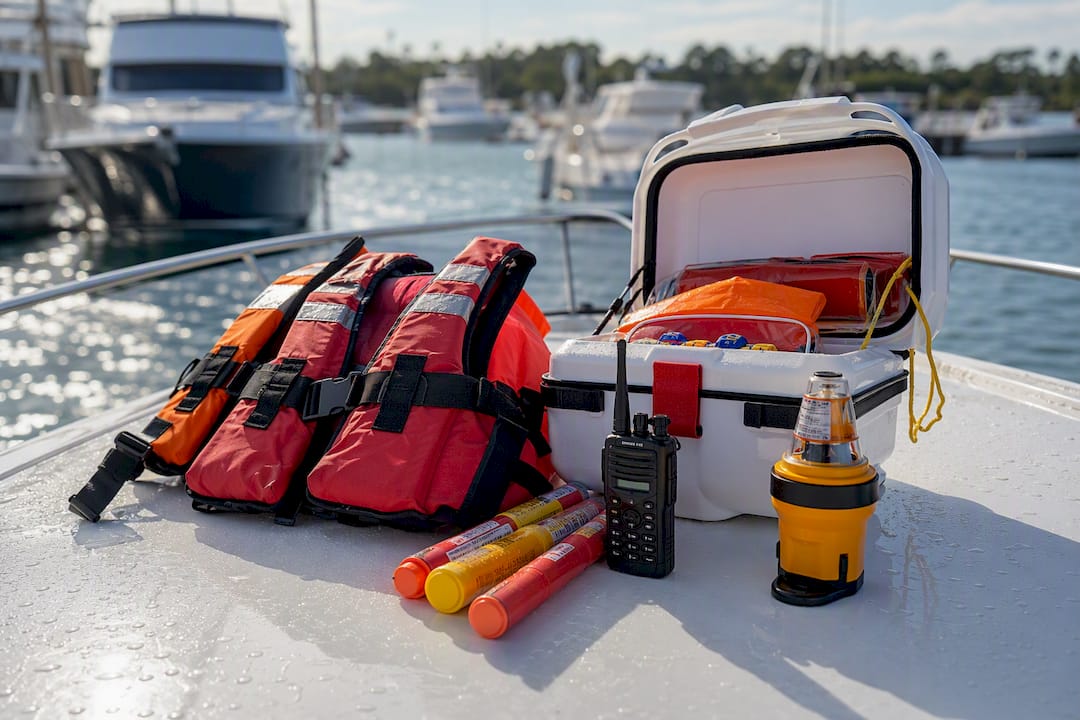
Because a chase boat operates independently of the mothership, its safety equipment has to stand on its own rather than borrow from the yacht’s systems. That starts with the basics: enough life jackets and a life raft sized for the vessel’s full guest and crew capacity, not just the crew running it that day, plus flares, an EPIRB, and a first-aid kit rated for open-water response rather than a coastal day trip.
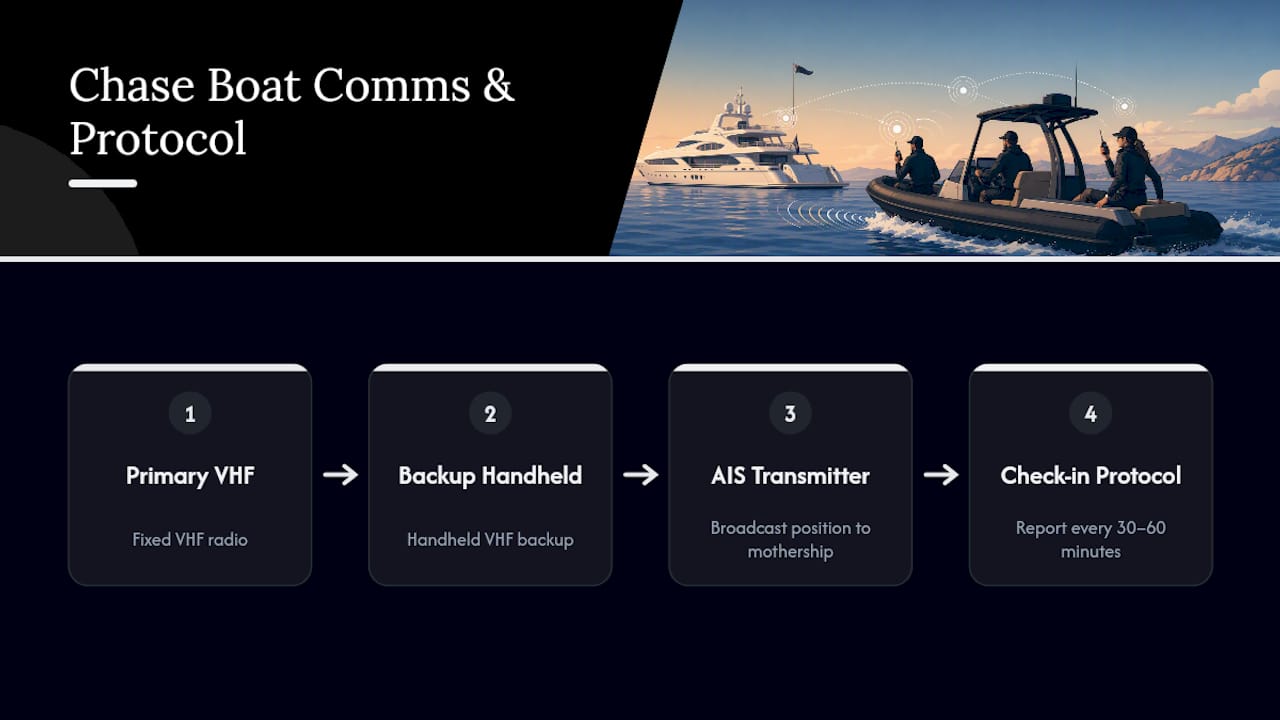
Communication redundancy matters more here than on most recreational boats. A chase boat running scouting, medical, or security missions needs a primary VHF, a backup handheld, and AIS transmission so the mothership’s bridge always knows its position, even well beyond visual range. Many captains also standardize a check-in interval, radioing position and status every 30 to 60 minutes during extended independent runs, so a gap in communication triggers a response protocol rather than going unnoticed for hours.
Fire suppression and bilge pumping systems need to match the boat’s fuel capacity and engine configuration, and crew should drill man-overboard recovery specifically on the chase boat’s own deck layout, which is usually lower and faster-moving than the mothership’s. If the boat handles fishing or watersports, add a kill-switch lanyard requirement for anyone at the helm during towing, since a chase boat pulling a wakeboarder at speed carries very different risk than one running flat-out to scout an anchorage. Insurance underwriters increasingly ask for documented safety drills before extending towing or high-sea-state coverage, so keeping a simple drill log pays off at renewal time.
What Materials Hold Up Best for Chase-Boat Duty?
Hull material shapes everything about how a chase boat performs and how much it costs to keep running. Fiberglass remains the default for compact and mid-size chase boats because it balances build cost, repairability, and weight reasonably well, though it does add mass compared to lighter alternatives at the same length.
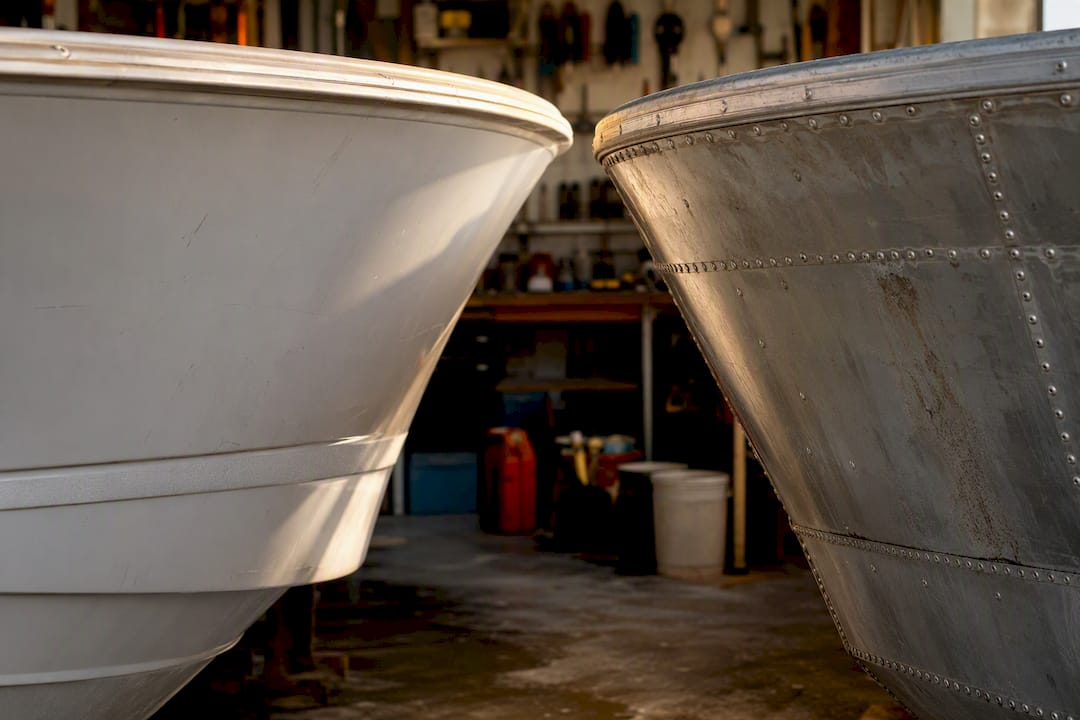
Aluminum shows up frequently on larger, expedition-oriented chase boats because it tolerates the abuse of frequent beaching, tender-to-shore work, and rough-water running better than fiberglass without cracking. It’s also easier to weld-repair in a remote boatyard than to properly patch a fiberglass hull, which matters if your cruising grounds are far from a major service center. The tradeoff is a higher build cost and, in some configurations, a rougher ride in a head sea compared to a well-designed fiberglass hull.
Carbon fiber and advanced composites appear on the performance end of the category, where builders are chasing top speed and fuel efficiency by cutting weight aggressively. That comes at a real cost premium, and repair work typically requires a specialist yard rather than a general boatbuilder, which is worth weighing if your chase boat will spend real time away from major service hubs.
Deck hardware and towing points deserve their own material scrutiny regardless of hull choice. Stainless steel cleats and tow points rated well above the boat’s actual towing load are cheap insurance against a failure at the worst possible moment, and marine-grade fittings throughout the deck reduce the corrosion-driven maintenance that otherwise creeps up fast on a boat running in salt water year-round.
What Licenses and Regulations Apply to Chase-Boat Operation?
Running a chase boat independently means it needs its own registration and, in most jurisdictions, its own classification separate from the mothership. In the United States, that typically means state or federal documentation depending on size and use, alongside a hull identification number and appropriate safety equipment certification for its size class.
Crew licensing follows the vessel’s tonnage and operating area rather than the mothership’s crew credentials. A captain running a chase boat commercially, including charter guest transport, generally needs a US Coast Guard captain’s license appropriate to the vessel’s gross tonnage and route, even if that same person also holds a role aboard the primary yacht. This is a detail owners frequently miss during the build brief, assuming existing crew certifications simply transfer over.
International operation adds another layer. A chase boat crossing between jurisdictions during a cruising season may need to comply with each country’s local vessel registration and safety inspection requirements, and insurance coverage territory needs to match the actual cruising plan rather than a generic global policy that quietly excludes certain waters. Towing regulations also vary by jurisdiction, with some ports and waterways imposing speed limits or requiring specific towing configurations that a captain unfamiliar with local rules can easily miss. Building a habit of checking local maritime authority requirements before entering a new cruising ground saves real headaches, particularly for owners running charter operations where regulatory compliance carries direct liability exposure.
How Does a Brokerage Actually Handle a Chase-Boat Brief?
A proper chase-boat brief starts with translating your actual missions, fishing, security, guest volume, into hard specification numbers rather than vague preferences. From there, sourcing splits three ways: new build, vetted stock boats, or local charter pools for seasonal use. Delivery gets coordinated directly with your captain and the yard, so the boat arrives ready to integrate with existing crew and berthing plans.
— Jason
How Yachts by Steve Helps You Specify and Source the Right Chase Boat
Getting a chase-boat brief wrong costs real money, whether that’s an oversized garage nobody needed or a boat that can’t keep pace with your cruising plans. Yachts-bysteve works through that brief with you directly: translating your actual missions into a written specification, then sourcing across new-build yards, vetted stock inventory, and local charter pools rather than pushing you toward whichever option is easiest to sell. Negotiation and delivery coordination happen alongside your captain, so the boat that shows up actually fits the crew and berthing plan you already have.
If you’re weighing whether to buy, charter, or upgrade an existing tender, that’s exactly the kind of decision a broker should walk through with you before money changes hands. Start by reaching out through Yachts by Steve’s brokerage consultation page to get a specification conversation on the calendar.
Primary Sources and Further Reading
- What Is a Chase Boat? covers the core definition and garage test.
- Chase Boats Explained details size bands, pricing, and use cases.
- Chase Tenders & Toys profiles builder examples across the category.
- Drive System and Engine Type guidance explains towing-compatible driveline choices.
Sources
- What Is a Chase Boat? | Chase Boats
- Chase Boats Explained: Sizes, Costs & Use Cases
- What is the role of a chase boat in superyacht operations? – Stratos
Recommended
Featured Listings

2028 Columbus Yachts
$22,900,008
137
Ancona

2012 Benetti PATIENCE
$10,975,000
132
Fort Lauderdale Florida

2028 Kingship Kingship
$20,350,000
125

2024 Silver Yachts
$25,400,000
117

2009 Hargrave BRANDI WINE
$2,500,000
114
Fort Lauderdale Florida

2028 Extra Yachts
$20,350,000
100
Ancona

2028 Alpha
$12,100,000
100
Ft Lauderdale Florida

2028 Extra Yachts Extra 96
$9,495,000
96
Ancona

2021 Sanlorenzo GATSBY
$6,795,000
96
Fort Lauderdale Florida

2028 Kingship
$11,990,000
90

2028 Alpha
$9,894,500
90
Fano

2023 Azimut COMPASS
$7,950,000
88
Miami Beach Florida

1999 Northern Marine OFF LINE
$2,495,000
84
Ft Lauderdale Florida

2013 Pershing DOROTHY ANN
$1,375,000
82
Fort Lauderdale Florida

1997 Ferretti Yachts
$825,000
80
La Paz

2008 Princess Yachts OCARALIA
$1,095,000
75
Charleston South Carolina

2014 Sunseeker
$1,400,000
68
New York New York

2024 Fairline
$2,750,000
68
Ft. Lauderdale Florida

2019 Vanquish Yachts IMPULSIVE
$1,799,000
58
Miami Beach Florida

2021 Ferretti Yachts HAVEN
$1,595,000
57
Fort Lauderdale Florida

2025 Formula BREAKTHROUGH III
$1,895,000
53
Miami Beach Florida

2023 Fairline
$900,000
45
Fort Lauderdale Florida

2012 Zeelander Mississippi Queen
$575,000
44
West Palm Beach Florida
2028 Columbus Yachts 137'
$22,900,008
2012 Benetti 132'
$10,975,000
2028 Kingship 125'
$20,350,000
2024 Silver Yachts 117'
$25,400,000
2009 Hargrave 114'
$2,500,000
2028 Extra Yachts 100'
$20,350,000
2028 Alpha 100'
$12,100,000
2028 Extra Yachts 96'
$9,495,000
2021 Sanlorenzo 96'
$6,795,000
2028 Kingship 90'
$11,990,000
2028 Alpha 90'
$9,894,500
2023 Azimut 88'
$7,950,000
1999 Northern Marine 84'
$2,495,000
2013 Pershing 82'
$1,375,000
1997 Ferretti Yachts 80'
$825,000
2008 Princess Yachts 75'
$1,095,000
2014 Sunseeker 68'
$1,400,000
2024 Fairline 68'
$2,750,000
2019 Vanquish Yachts 58'
$1,799,000
2021 Ferretti Yachts 57'
$1,595,000
2025 Formula 53'
$1,895,000
2023 Fairline 45'
$900,000
2012 Zeelander 44'
$575,000