

Yacht dry docking is defined as the controlled removal of a vessel from water so that the hull and all underwater components become fully accessible for inspection, cleaning, and repair. This process is the foundation of responsible yacht ownership. No amount of in-water maintenance can replicate what a proper haul-out achieves. Whether you own a 50-foot sailing yacht or a 150-foot superyacht, dry docking is the single most thorough maintenance event in a vessel’s lifecycle, touching everything from hull coatings to propulsion systems to structural integrity.
What is yacht dry docking, and why does it matter?
Dry docking is the only time a vessel is fully accessible for structural inspection, underwater repairs, propulsion maintenance, and class compliance checks. That fact alone explains why the marine industry treats it as far more than routine upkeep. It is a complete reset for your yacht’s condition, safety, and performance.
The process works by moving the yacht into a specialized facility where water is removed from around the hull. In a graving dry dock, the vessel floats in through open gates, the gates close, and pumps remove the water until the yacht rests on pre-positioned keel blocks. Floating dry docks work differently: the dock itself submerges, the yacht floats over it, and the dock rises to lift the vessel clear of the water. Smaller yachts often use slipways or marine railways, which haul the vessel up a ramp on a cradle.
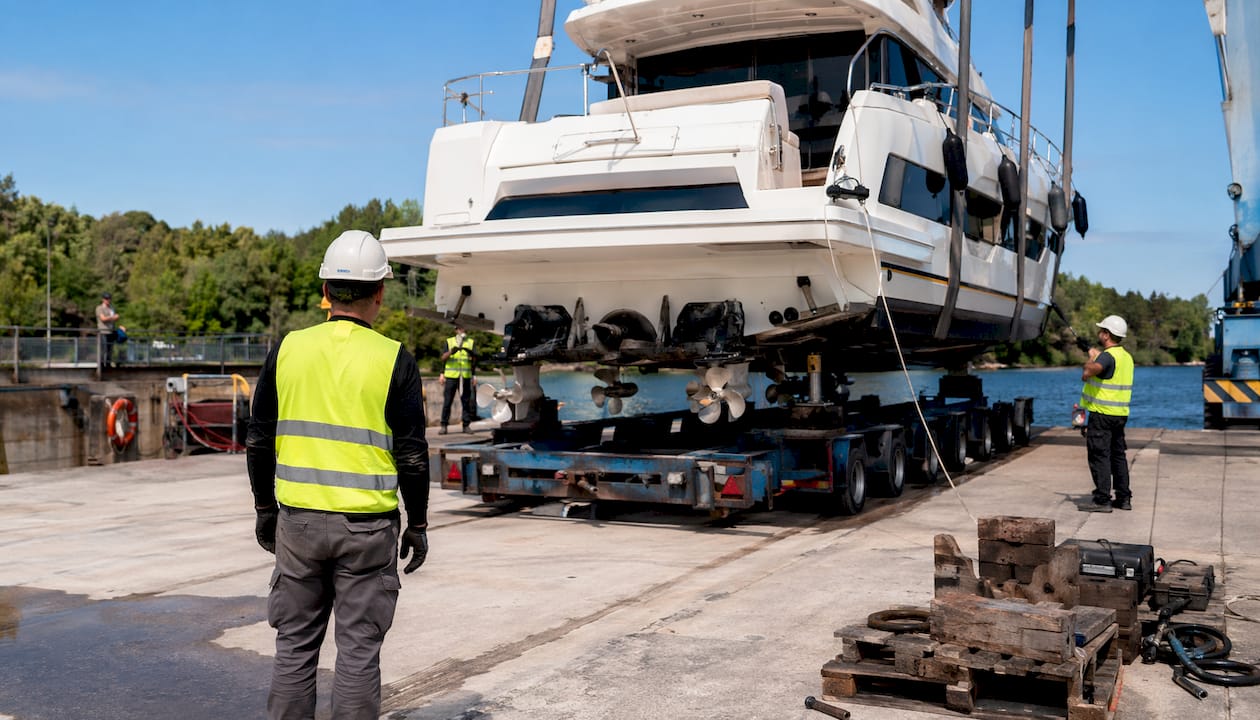
Each method serves a different vessel size and facility type. Graving docks handle the largest superyachts and commercial vessels. Floating dry docks offer flexibility in locations without fixed infrastructure. Slipways and marine railways suit mid-size and smaller recreational yachts, offering faster turnaround and lower cost. Choosing the right facility depends on your yacht’s length, draft, and displacement.
| Dry dock type | Best for | Key advantage | Limitation |
|---|---|---|---|
| Graving dock | Large superyachts and commercial vessels | Maximum capacity and stability | High cost, limited locations |
| Floating dry dock | Mid to large yachts | Flexible deployment | Weather-sensitive operations |
| Marine railway | Mid-size yachts | Fast haul-out, lower cost | Weight and size limits |
| Slipway | Smaller recreational yachts | Simple, widely available | Not suited for deep-draft vessels |
Pro Tip: Share any recent hull damage or known structural concerns with the yard before arrival. Block placement is calculated from your vessel’s drawings and condition report. Last-minute surprises during dewatering can force costly changes to the support plan.
How does the dry docking process work, step by step?
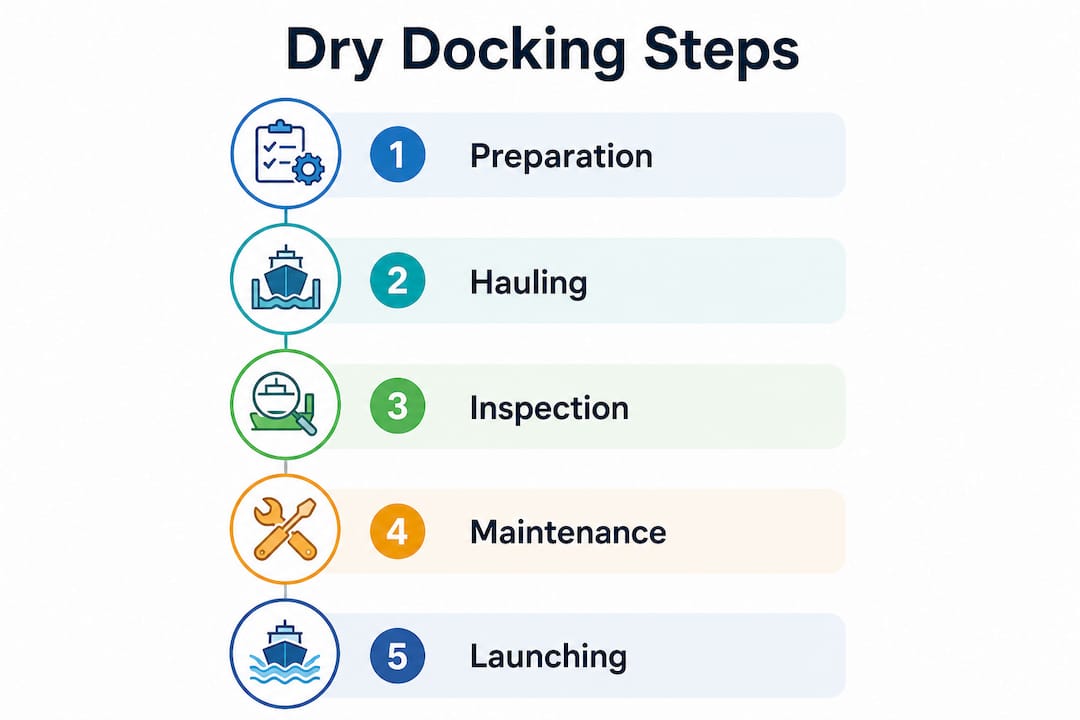
Planning a dry dock event is a project in itself. Preparation typically begins 6–12 months before the yard arrival date, covering scope definition, technical documentation, and surveyor scheduling. Waiting until the last moment creates pressure that leads to poor decisions and inflated costs.
The process follows a clear sequence from first contact with the yard to the moment your yacht returns to the water.
-
Define the scope of work. List every job you want completed, from hull cleaning and antifouling to shaft seal replacement and seacock inspection. A detailed scope prevents scope creep and gives the yard what it needs to quote accurately.
-
Submit technical documentation. Yards require stability plans, hull drawings, and tank arrangements to calculate block placement. Documentation submissions for berth allocation often happen 30–60 days before arrival. Pre-position spares and consumables before you arrive.
-
Coordinate class and flag surveys. If your yacht is classed, surveyors from the relevant classification body must be scheduled in advance. Missing this step can delay the entire dock period.
-
Enter the dry dock. The yacht is maneuvered into position with precision. Dock masters guide the vessel over the keel blocks, and dewatering begins. The yacht lands progressively on blocks as water levels drop, with load distribution monitored throughout.
-
Verify support and begin work. Once the dock is dry, engineers confirm that the hull rests correctly on every block before any work starts. This verification step is mandatory, not optional.
-
Complete hull and underwater maintenance. This is the heart of the dry dock period. Work includes hull cleaning, antifouling paint application, propeller polishing or replacement, shaft seal inspection, anode replacement, and seacock servicing. Even a simple antifouling job typically triggers additional inspections of seacocks, shafts, and anode condition that are difficult or impossible to perform afloat.
-
Conduct inspections and surveys. Surveyors inspect the hull plating, welds, through-hull fittings, and any structural areas flagged during planning. Findings are documented in inspection reports that feed directly into your next maintenance cycle.
-
Re-flood and re-float. Water is carefully reintroduced to the dock. Internal and external water levels are balanced before the vessel lifts off the blocks. Rushing this phase risks hull stress.
-
Sea trials. The yacht returns to open water for trials that confirm all systems function correctly after the work period.
Maintaining clear documentation throughout each phase, including job reports, survey certificates, and inspection records, makes future maintenance planning far easier and simplifies audits with classification or flag authorities.
What are the real benefits of yacht dry docking?
The benefits of yacht dry docking reach well beyond a clean hull. Access to underwater areas is the most obvious gain, but the downstream effects on performance, safety, and long-term value are equally significant.
- Performance restoration. Marine growth on the hull creates drag. Removing it and applying fresh antifouling paint restores fuel efficiency and top speed. For a yacht that spends significant time at sea, this translates directly into lower operating costs.
- Corrosion prevention. Sacrificial anodes protect metal underwater components from galvanic corrosion. Replacing them on schedule during dry docking prevents far more expensive structural damage later.
- Structural integrity. Hull plating, welds, and keel attachments can only be properly inspected out of water. Catching a stress crack or osmotic blister early costs a fraction of what a delayed repair demands.
- Regulatory compliance. Many vessels require dry docking every 2–5 years depending on type and classification requirements, often aligned with class survey cycles. Staying on schedule keeps your yacht legally operable and insurable.
- Resale value. A yacht with complete dry dock records commands buyer confidence. Gaps in maintenance history raise questions that suppress offers.
Just as preserving a luxury timepiece requires periodic servicing that goes deeper than surface cleaning, a yacht demands the same disciplined approach to care beneath the waterline.
Pro Tip: Prepare a detailed pre-dock punch list at least three months before arrival. Grouping related jobs, such as shaft work and stern tube inspection, reduces time on blocks and keeps the yard working efficiently rather than waiting for decisions.
Understanding yacht classification requirements helps you align your dry dock schedule with mandatory survey cycles, which prevents last-minute scrambles and unnecessary costs.
What does dry docking cost, and how do you control the budget?
Cost is where many yacht owners get an unpleasant surprise. Direct dry docking costs for commercial vessels range from $500,000 to $3,000,000 or more, with off-hire costs running $20,000–$50,000 per day. Recreational yacht costs scale by size and scope, but the financial logic is identical: the real pain comes from delays, not yard charges.
The main cost components for yacht owners include:
- Haul-out and launch fees. Charged per foot of vessel length or as a flat rate depending on the facility.
- Blocking and support. Setting up the keel block arrangement for your specific hull form carries its own labor cost.
- Hull cleaning and antifouling. Paint quality, hull area, and number of coats drive this line item significantly.
- Repair and refit work. Any findings from inspection, from osmotic blisters to propeller damage, add to the scope and cost.
- Survey fees. Class surveyors, flag state inspectors, and independent marine surveyors all charge separately.
- Downtime. Every day beyond the planned schedule carries an opportunity cost and, for charter yachts, direct revenue loss.
Change orders mid-dock are 2–3 times more expensive than items tendered before the work begins. That single fact is the strongest argument for thorough pre-dock planning.
Scheduling discipline matters as much as budget discipline. Effective dry dock scheduling relies on careful project management, including sequencing, documentation, and coordination of simultaneous inspections. Owners who treat the dry dock as a managed project, rather than a series of ad hoc decisions, consistently finish on time and within budget.
For context on how planning timelines work across major yacht projects, the same principles that govern yacht build timelines apply directly to dry dock scheduling: early commitment, clear documentation, and disciplined scope control.
Key Takeaways
Yacht dry docking is the only maintenance event that gives full access to the hull and underwater systems, making it the most critical procedure in a yacht owner’s care calendar.
| Point | Details |
|---|---|
| Definition and purpose | Dry docking removes a yacht from water to inspect, clean, and repair the hull and underwater components. |
| Planning lead time | Begin planning 6–12 months before yard arrival to define scope, submit documentation, and schedule surveyors. |
| Cost control | Tender all work before arrival; mid-dock change orders cost 2–3 times more than pre-planned items. |
| Frequency | Most yachts require dry docking every 2–5 years, aligned with classification survey cycles. |
| Documentation | Maintain complete inspection records during every dock period to support future maintenance and audits. |
What I’ve learned from watching owners get dry docking wrong
The most common mistake I see is treating dry docking as a reactive event rather than a planned one. An owner notices something wrong, calls a yard in a hurry, and arrives without a scope, without pre-ordered spares, and without a surveyor booked. The yard charges premium rates for the urgency, the work takes twice as long, and the owner leaves frustrated. Every single part of that outcome was avoidable.
The second mistake is underestimating what the yard will find. The underwater hull is a place most owners never see. When it finally comes into view, there are almost always surprises: blistering, worn anodes, a propeller with minor damage that has been vibrating for months. Owners who budget only for the planned work get rattled by findings. Owners who build a contingency into the budget treat findings as information, not disasters.
What I genuinely respect about the owners who handle dry docking well is their relationship with their marine surveyor. They bring the surveyor in early, share the scope, and ask for an independent view on what the hull might need. That relationship, built over time, is worth more than any single inspection report. A good surveyor knows your yacht’s history and can spot a trend before it becomes a structural problem.
Dry docking also reveals the character of a yacht’s previous care. A well-maintained vessel comes out of the water looking like a vessel that has been loved. A neglected one tells a different story. For anyone considering a purchase, yacht surveys conducted during or just before a dry dock period give the clearest possible picture of what you are buying.
— Jason
How Yachts-bysteve can support your ownership experience
Owning a luxury yacht means understanding every dimension of its care, from the idyllic days at anchor to the practical realities of maintenance cycles. Yachts-bysteve works with discerning buyers and sellers who take that responsibility seriously. Whether you are purchasing a vessel with a dry dock history you want to evaluate, or preparing a yacht for sale and want to present its maintenance record with confidence, expert brokerage guidance makes the difference. Connect with the Yachts-bysteve team through our yacht brokerage services to get advice grounded in real experience. For owners ready to sell, understanding how to choose a yacht broker ensures your vessel reaches the right buyers at the right value.
FAQ
What is yacht dry docking in simple terms?
Yacht dry docking is the process of removing a vessel from the water in a controlled facility so the hull and underwater components can be inspected, cleaned, and repaired. It is the most thorough maintenance event available to yacht owners.
How often should a yacht be dry docked?
Most yachts require dry docking every 2–5 years, depending on vessel type and classification requirements. Owners should consult a marine surveyor and their classification body to confirm the correct interval for their specific vessel.
How long does a typical dry dock period last?
Dry dock periods typically last 5–21 days depending on vessel size and the scope of work planned. Delays from unplanned findings or change orders are the most common cause of overruns.
What maintenance work happens during dry docking?
Standard dry dock work includes hull cleaning, antifouling paint application, propeller and shaft inspection, anode replacement, seacock servicing, and structural surveys. Additional repairs are added based on inspection findings.
Does dry docking affect a yacht’s resale value?
A complete and current dry dock record increases buyer confidence and supports a stronger asking price. Gaps in maintenance history, particularly missing dry dock records, raise concerns that typically suppress offers during the sales process.
Recommended
Featured Listings

2028 Columbus Yachts
$22,900,008
137
Ancona

2012 Benetti PATIENCE
$10,975,000
132
Fort Lauderdale Florida

2028 Kingship Kingship
$20,350,000
125

2024 Silver Yachts
$25,400,000
117

2009 Hargrave BRANDI WINE
$2,500,000
114
Fort Lauderdale Florida

2028 Extra Yachts
$20,350,000
100
Ancona

2028 Alpha
$12,100,000
100
Ft Lauderdale Florida

2028 Extra Yachts Extra 96
$9,495,000
96
Ancona

2021 Sanlorenzo GATSBY
$6,795,000
96
Fort Lauderdale Florida

2028 Kingship
$11,990,000
90

2028 Alpha
$9,894,500
90
Fano

2023 Azimut COMPASS
$7,950,000
88
Miami Beach Florida

1999 Northern Marine OFF LINE
$2,495,000
84
Ft Lauderdale Florida

2013 Pershing DOROTHY ANN
$1,375,000
82
Fort Lauderdale Florida

1997 Ferretti Yachts
$825,000
80
La Paz

2008 Princess Yachts OCARALIA
$1,095,000
75
Charleston South Carolina

2014 Sunseeker
$1,400,000
68
New York New York

2024 Fairline
$2,750,000
68
Ft. Lauderdale Florida

2019 Vanquish Yachts IMPULSIVE
$1,799,000
58
Miami Beach Florida

2021 Ferretti Yachts HAVEN
$1,595,000
57
Fort Lauderdale Florida

2025 Formula BREAKTHROUGH III
$1,895,000
53
Miami Beach Florida

2023 Fairline
$900,000
45
Fort Lauderdale Florida

2012 Zeelander Mississippi Queen
$575,000
44
West Palm Beach Florida
2028 Columbus Yachts 137'
$22,900,008
2012 Benetti 132'
$10,975,000
2028 Kingship 125'
$20,350,000
2024 Silver Yachts 117'
$25,400,000
2009 Hargrave 114'
$2,500,000
2028 Extra Yachts 100'
$20,350,000
2028 Alpha 100'
$12,100,000
2028 Extra Yachts 96'
$9,495,000
2021 Sanlorenzo 96'
$6,795,000
2028 Kingship 90'
$11,990,000
2028 Alpha 90'
$9,894,500
2023 Azimut 88'
$7,950,000
1999 Northern Marine 84'
$2,495,000
2013 Pershing 82'
$1,375,000
1997 Ferretti Yachts 80'
$825,000
2008 Princess Yachts 75'
$1,095,000
2014 Sunseeker 68'
$1,400,000
2024 Fairline 68'
$2,750,000
2019 Vanquish Yachts 58'
$1,799,000
2021 Ferretti Yachts 57'
$1,595,000
2025 Formula 53'
$1,895,000
2023 Fairline 45'
$900,000
2012 Zeelander 44'
$575,000