

A small motor yacht typically covers 200 to 400 nautical miles on a tank, a mid-size cruiser stretches to 500 or 1,000, and a true superyacht can log 1,000 to 3,000-plus nautical miles between fills, according to industry range benchmarks. The math behind every one of those numbers is the same: usable fuel divided by your engine’s gallons per hour, multiplied by your cruising speed. Build in a reserve, and you have a plan instead of a guess.
TL;DR:
- Real-world yacht fuel range can differ significantly from specs due to hull design, load, and navigation discipline, making accurate planning essential.
- Speed non-linearly impacts fuel consumption; finding a boat’s optimal RPM band can substantially extend cruising distance.
- Regular hull cleaning, prop maintenance, and proper trimming improve fuel efficiency and help achieve closer to calculated range.
- Proper voyage planning includes realistic reserves, mapped refueling options, and adjusting speed to conserve fuel during unexpected conditions.
- Confirm sea-trial data and logged burn rates before trusting a range estimate, as brochure figures are usually based on ideal and unrealistic conditions.
Table of Contents
- What is yacht fuel range and why do the numbers vary so much?
- What factors actually change your yacht’s fuel range?
- How do you calculate your yacht’s fuel range?
- Practical ways to extend your yacht’s cruising range
- Planning a safe voyage: reserves, refueling, and contingencies
- What Yachts by Steve looks for before trusting a fuel range number
- Why the “sticker range” on a yacht is often fiction
- Sources
What is yacht fuel range and why do the numbers vary so much?
Yacht fuel range is simply how far a vessel can travel on its available fuel at a given cruising speed, and the honest answer is that it varies more than most brochures let on. Two boats with identical tanks can have wildly different real-world ranges depending on hull shape, load, and how disciplined the person at the helm is with the throttle. That’s the piece most first-time owners miss: the tank capacity printed in a spec sheet tells you almost nothing until you pair it with an actual burn rate at your intended speed.
Here’s how the bands typically shake out by class, based on efficient cruising in calm conditions:
- Small motor yachts (30 to 50 feet): 200 to 400 nautical miles, with tanks generally in the 200 to 600 gallon range and cruising speeds around 20 to 25 knots.
- Mid-size yachts (50 to 80 feet): 500 to 1,000 nautical miles, tanks often between 1,000 and 3,000 gallons, cruising in the mid-teens to low twenties.
- Large yachts and superyachts (80 to 200-plus feet): 1,000 to 3,000-plus nautical miles, with tank capacities that can exceed 10,000 gallons and displacement-hull cruising speeds often in the 10 to 14 knot band, according to published fuel-capacity data.
- Expedition vessels: 3,000 to 6,000-plus nautical miles, built specifically for ocean crossings and long stretches without a fuel dock in sight.
- Sailing yachts under power: Range varies widely since sails handle most propulsion, but motoring range for auxiliary engines often falls in line with small to mid-size motor yacht figures.
The hull type underneath those numbers matters as much as the tank size. Displacement hulls, common on trawlers and larger yachts, push through the water rather than over it, and they sip fuel efficiently at modest speeds but gain little by going faster. Planing hulls behave the opposite way: they’re thirsty at low speed but become notably more efficient once the boat climbs onto plane, which is why a 45-foot express cruiser might actually get better range at 24 knots than at 12.
What factors actually change your yacht’s fuel range?
Speed greatly affects fuel consumption, and the relationship is non-linear; increasing throttle beyond an efficient range can significantly increase fuel burn relative to speed gained. Every hull has a sweet spot where knots per gallon peaks, and finding it is worth more than almost any hardware upgrade.
Beyond throttle position, several other variables separate the range you calculated from the range you actually get:
- Hull and engine configuration: Displacement hulls favor slow, steady cruising; planing hulls reward finding the right RPM band. Twin-engine setups add redundancy but often burn more than a well-matched single or hybrid configuration.
- Weight and load: Full water tanks, provisioning for a long charter, extra crew, and gear all add drag and consumption.
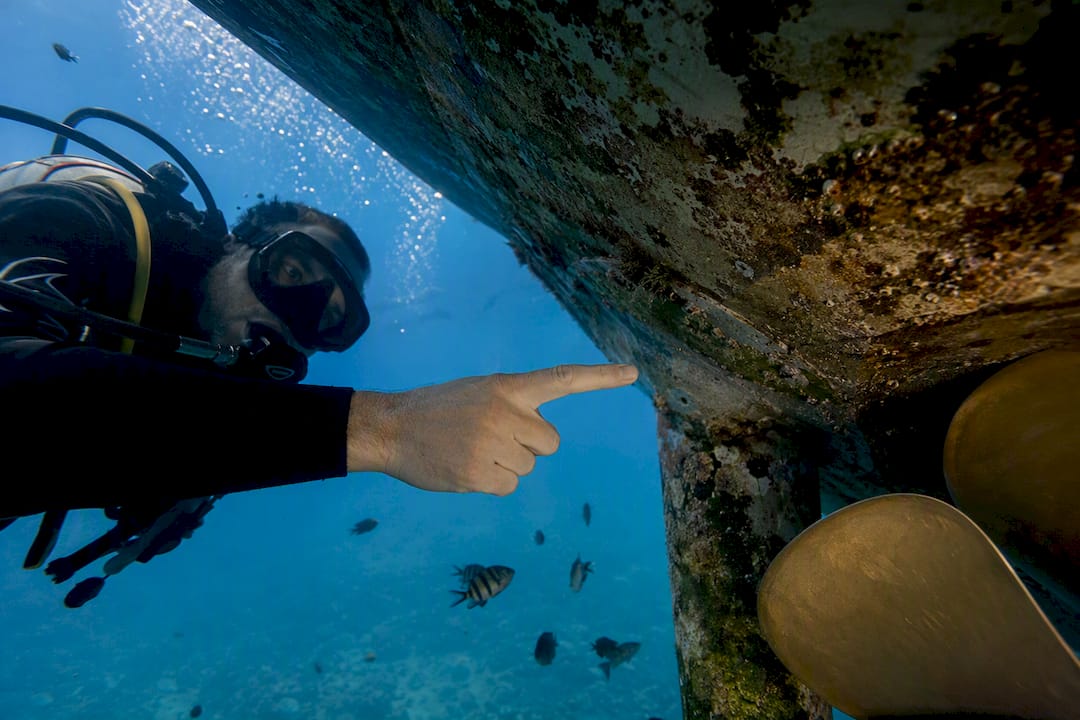
- Fouling and prop condition: A fouled hull or nicked propeller can quietly inflate fuel burn well before you notice a performance change.
- Generator and hotel load: Air conditioning, entertainment systems, and galley equipment draw fuel even at anchor, which eats into your total reserve on longer trips.
- Weather and current: A two-knot headwind and opposing current can shave meaningful miles off your realistic range compared to flat, calm water.
Weather-aware routing isn’t a luxury feature reserved for expedition boats. Research into vessel energy management shows that factoring weather data into voyage planning measurably reduces fuel consumption, particularly on hybrid-capable yachts that can shift between power modes based on conditions and battery state.
Pro Tip: Check your hull and running gear before, not after, a long passage. A fouled bottom or a dinged prop can quietly cost you real range, and you won’t see it until you’re burning more fuel than your plan accounted for.
How do you calculate your yacht’s fuel range?
The formula is straightforward, and every serious captain should know it cold: Usable fuel = Total fuel × (1 − reserve%), then Hours = Usable fuel ÷ GPH, then Range (nautical miles) = Hours × cruising speed in knots. This is the same logic behind most boat fuel range calculators, which build in a reserve percentage before doing anything else with the number.
| Step | Calculation | Result |
|---|---|---|
| Usable fuel | 400 gal × (1 − reserve%) | 360 gallons |
| Endurance | 360 gal ÷ 20 GPH | Hours |
| Range | Hours × 10 knots | 180 nautical miles |
That 180 nautical mile figure is your planning number, not your theoretical maximum. Note that a knot equals roughly 1.15 statute miles, and a gallon converts to about 3.785 liters, conversions worth knowing if you’re comparing a US-built engine’s GPH spec against a European sea-trial logged in liters per hour.
Manufacturer GPH figures are a starting point, not gospel. They’re usually measured in ideal conditions with a clean hull and a light load. The number that actually matters is the one you get from a fuel-flow meter or a logged sea trial at your real cruising RPM, over several hours, in the conditions you’ll actually face.
Practical ways to extend your yacht’s cruising range
Range isn’t fixed once you buy the boat. A handful of habits and upgrades can add meaningful distance to every tank.
- Find your engine’s sweet spot. Run trials at a few different RPM settings and log your actual nautical miles per gallon at each. The efficient band is often narrower than owners expect.
- Trim and ballast properly. A poorly trimmed hull fights the water instead of gliding over it, and correcting that can improve efficiency without touching the throttle.
- Keep the bottom clean. Antifouling coatings and regular hull cleaning are among the highest-return maintenance items for fuel efficiency, according to fuel efficiency research from the marine industry.
- Service the prop and engine on schedule. A tuned engine and a true, undamaged propeller both burn less fuel for the same speed.
- Consider hybrid or electric assistance where available. Energy-management systems that shift between diesel and electric modes based on conditions can meaningfully cut consumption on capable vessels.
- Plan legs around weather, not just distance. Routing around a foul current or headwind can save more fuel than any mechanical tweak.
Pro Tip: Slowing down by just one or two knots into your hull’s efficient RPM band is often the single highest-return move you can make, and it costs nothing but a little patience. Owners considering a hybrid-capable vessel should also look at our guide to yacht engine types to understand which configurations actually deliver that flexibility.
Planning a safe voyage: reserves, refueling, and contingencies
Every fuel plan needs a reserve, and there are two common approaches. The rule of thirds, borrowed from aviation and long popular offshore, allocates one third of fuel for the outbound leg, one third for the return, and one third held back for the unexpected. Longer offshore passages call for the more conservative rule of thirds.
Before committing to a long leg, map your refueling options:
- Fuel docks and marina bunkering along the route, confirmed in advance rather than assumed.
- Fuel barges for remote anchorages where no dock exists.
- A logistics buffer for legs where the nearest fuel stop is genuinely far from your course.
If your numbers start looking tight mid-voyage, reduce speed immediately to stretch your remaining fuel, switch to a more efficient running mode if your vessel supports it, and contact a towing or mariners’ assistance service well before the tank runs critical rather than after. Don’t forget generator and hotel load either. Air conditioning and galley draw at anchor can quietly consume fuel you were counting on for the next leg, so account for it in your reserve, not as an afterthought.
What Yachts by Steve looks for before trusting a fuel range number
Before we sign off on any range figure for a client, we want to see the paperwork behind it: tank specifications from the builder, logged sea-trial burn rates at actual cruising RPM, a recent hull cleaning record, a propeller survey, and generator consumption figures for hotel load. Owners who show up with all five make faster, safer decisions.
Our long-range motor yacht guide walks through what extended-range specifications actually look like on paper, and our broader fuel efficiency overview digs deeper into the maintenance side. If you’re weighing a jet ski or small watercraft alongside a larger purchase, this fuel consumption breakdown for personal watercraft applies the same core planning principles at a smaller scale.
Why the “sticker range” on a yacht is often fiction
The number printed in a listing is a best-case estimate, and treating it as a promise is where most range surprises come from. Manufacturers test in flat water, light load, and a clean hull, conditions almost nobody actually cruises in. The gap between that sticker figure and your real-world range usually comes down to three things: how disciplined you are with throttle, how recently the bottom was cleaned, and whether you actually logged a sea trial instead of trusting a spec sheet.
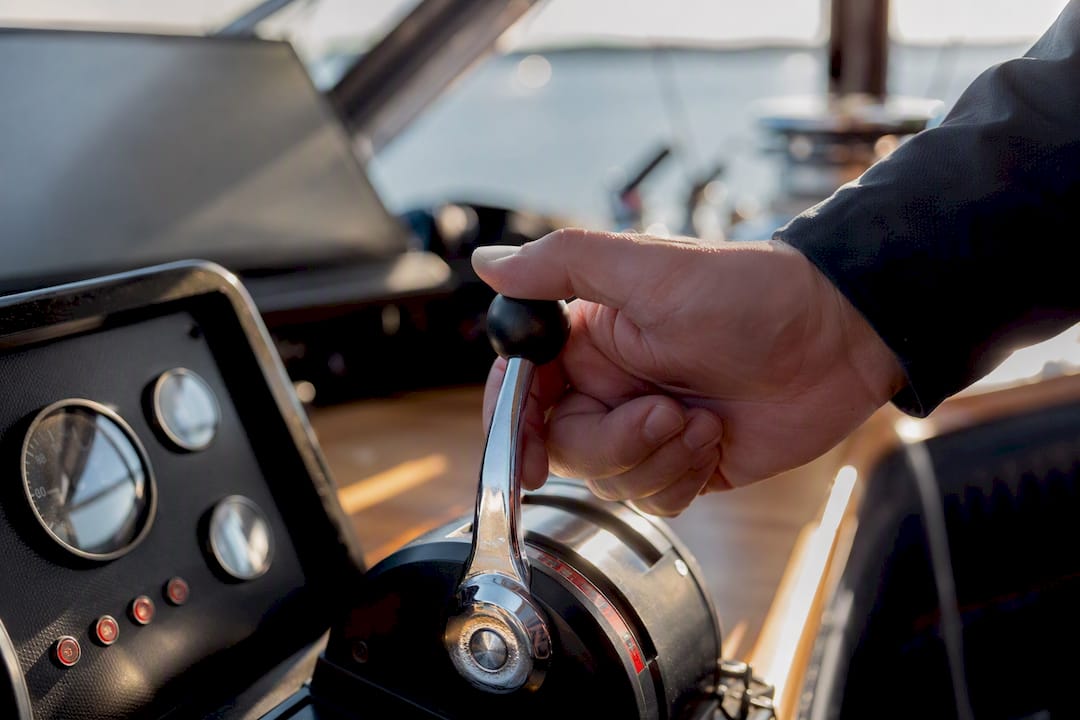
The conventional advice tells owners to “always carry extra fuel,” which is true but incomplete. The bigger lever is speed discipline. Slowing into the efficient RPM band does more for range than any auxiliary tank ever will, and it costs nothing. If there’s one thing I’d tell every prospective buyer, it’s this: ask for the sea-trial log before you ask about range at all. A boat’s real range lives in that log, not in the brochure.
If you’re shopping for a vessel with genuine long-range capability, working with a qualified yacht broker who can verify sea-trial data before you buy will save you from discovering the gap between promise and reality at sea.
— Jason
Sources
- Boat Fuel Range Calculator | Cruising Distance & Endurance – CalculatorLib
- A Mission Management System for minimizing energy use and emissions during vessel operation
- Yacht Fuel Range: 2026’s Top 5 Tips – techno tanks
- Yacht Fuel Capacity and Consumption: What Owners Should Know | The Luxury Playbook
Recommended
Featured Listings

2028 Columbus Yachts
$22,900,008
137
Ancona

2012 Benetti PATIENCE
$10,975,000
132
Fort Lauderdale Florida

2028 Kingship Kingship
$20,350,000
125

2024 Silver Yachts
$25,400,000
117

2009 Hargrave BRANDI WINE
$2,500,000
114
Fort Lauderdale Florida

2028 Extra Yachts
$20,350,000
100
Ancona

2028 Alpha
$12,100,000
100
Ft Lauderdale Florida

2028 Extra Yachts Extra 96
$9,495,000
96
Ancona

2021 Sanlorenzo GATSBY
$6,795,000
96
Fort Lauderdale Florida

2028 Kingship
$11,990,000
90

2028 Alpha
$9,894,500
90
Fano

2023 Azimut COMPASS
$7,950,000
88
Miami Beach Florida

1999 Northern Marine OFF LINE
$2,495,000
84
Ft Lauderdale Florida

2013 Pershing DOROTHY ANN
$1,375,000
82
Fort Lauderdale Florida

1997 Ferretti Yachts
$825,000
80
La Paz

2008 Princess Yachts OCARALIA
$1,095,000
75
Charleston South Carolina

2014 Sunseeker
$1,400,000
68
New York New York

2024 Fairline
$2,750,000
68
Ft. Lauderdale Florida

2019 Vanquish Yachts IMPULSIVE
$1,799,000
58
Miami Beach Florida

2021 Ferretti Yachts HAVEN
$1,595,000
57
Fort Lauderdale Florida

2025 Formula BREAKTHROUGH III
$1,895,000
53
Miami Beach Florida

2023 Fairline
$900,000
45
Fort Lauderdale Florida

2012 Zeelander Mississippi Queen
$575,000
44
West Palm Beach Florida
2028 Columbus Yachts 137'
$22,900,008
2012 Benetti 132'
$10,975,000
2028 Kingship 125'
$20,350,000
2024 Silver Yachts 117'
$25,400,000
2009 Hargrave 114'
$2,500,000
2028 Extra Yachts 100'
$20,350,000
2028 Alpha 100'
$12,100,000
2028 Extra Yachts 96'
$9,495,000
2021 Sanlorenzo 96'
$6,795,000
2028 Kingship 90'
$11,990,000
2028 Alpha 90'
$9,894,500
2023 Azimut 88'
$7,950,000
1999 Northern Marine 84'
$2,495,000
2013 Pershing 82'
$1,375,000
1997 Ferretti Yachts 80'
$825,000
2008 Princess Yachts 75'
$1,095,000
2014 Sunseeker 68'
$1,400,000
2024 Fairline 68'
$2,750,000
2019 Vanquish Yachts 58'
$1,799,000
2021 Ferretti Yachts 57'
$1,595,000
2025 Formula 53'
$1,895,000
2023 Fairline 45'
$900,000
2012 Zeelander 44'
$575,000