

A yacht inspection checklist is the structured framework that guides buyers and owners through a rigorous, multi-phase evaluation of a vessel’s structural integrity, systems functionality, and legal documentation before any transaction or maintenance cycle begins. Think of it as the difference between buying a sanctuary on the water and inheriting someone else’s problems. The formal industry term for this process is a pre-purchase survey, conducted by an accredited marine surveyor aligned with standards set by bodies like the American Bureau of Shipping (ABS), the American Boat and Yacht Council (ABYC), and the U.S. Coast Guard (USCG). Getting this right protects your investment, your safety, and the lifestyle you are building on the water.
What are the core phases in a thorough yacht inspection checklist?
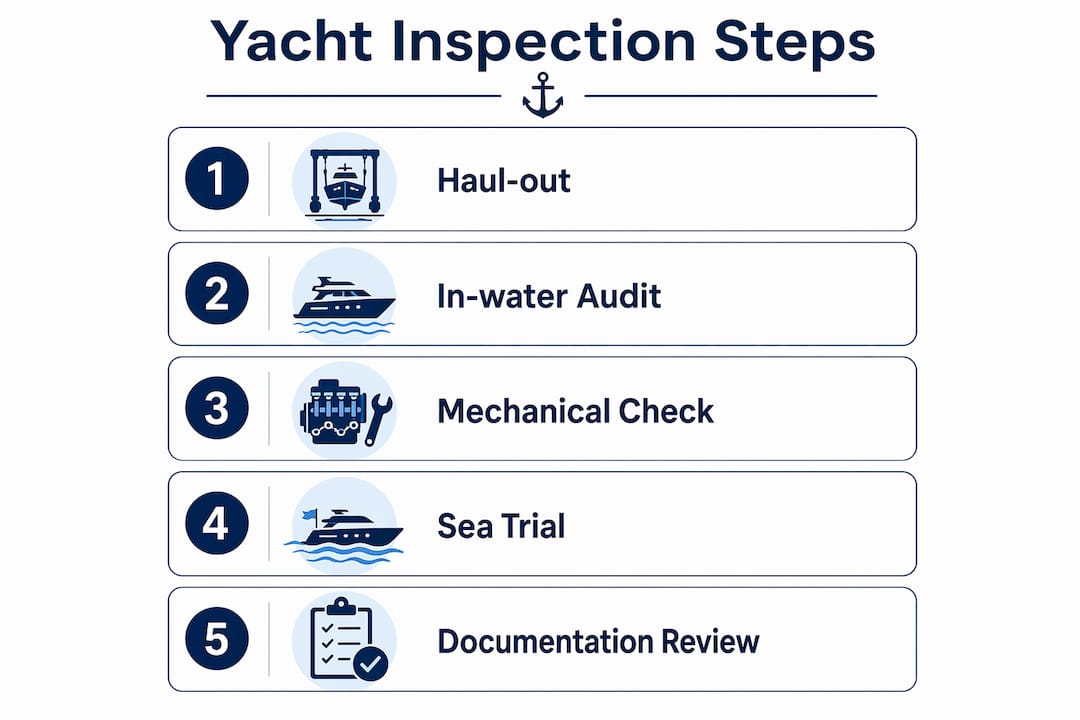
A complete pre-purchase survey consists of three mandatory phases: haul-out for underwater examination, an in-water systems audit, and a sea trial. Each phase reveals a different layer of the vessel’s condition. Skipping any one of them leaves a blind spot that can cost far more than the survey fee.
-
Haul-out inspection. The vessel is lifted from the water so the surveyor can examine the hull below the waterline. This phase covers hull integrity, osmotic blistering, keel attachment bolts, rudder condition, through-hull fittings, and running gear. A moisture meter is used to detect water ingress in fiberglass hulls. Any soft spots or delamination found here signal structural risk that affects both seaworthiness and resale value.
-
In-water systems audit. With the yacht back in the water, the surveyor moves through every onboard system. Electrical wiring, battery banks, charging systems, circuit breakers, bilge pumps, freshwater plumbing, sanitation systems, safety equipment, and accommodation spaces all come under review. This phase is where deferred maintenance tends to surface as a pattern rather than an isolated issue.
-
Sea trial. A sea trial must last at least 60 minutes to be considered valid. This is where the vessel is pushed through real operating conditions. Engine performance, transmission behavior, steering response, vibration levels, and exhaust characteristics are all assessed under load. No dockside inspection can replicate what a sea trial reveals.
Each phase builds on the last. A clean haul-out means little if the electrical system is a fire risk. A flawless systems audit means nothing if the engine seizes at 2,000 RPM offshore.
Pro Tip: Book your surveyor before you make an offer, not after. Knowing the inspection timeline lets you structure your purchase agreement around the survey window from the start.
How to conduct a detailed mechanical and systems inspection
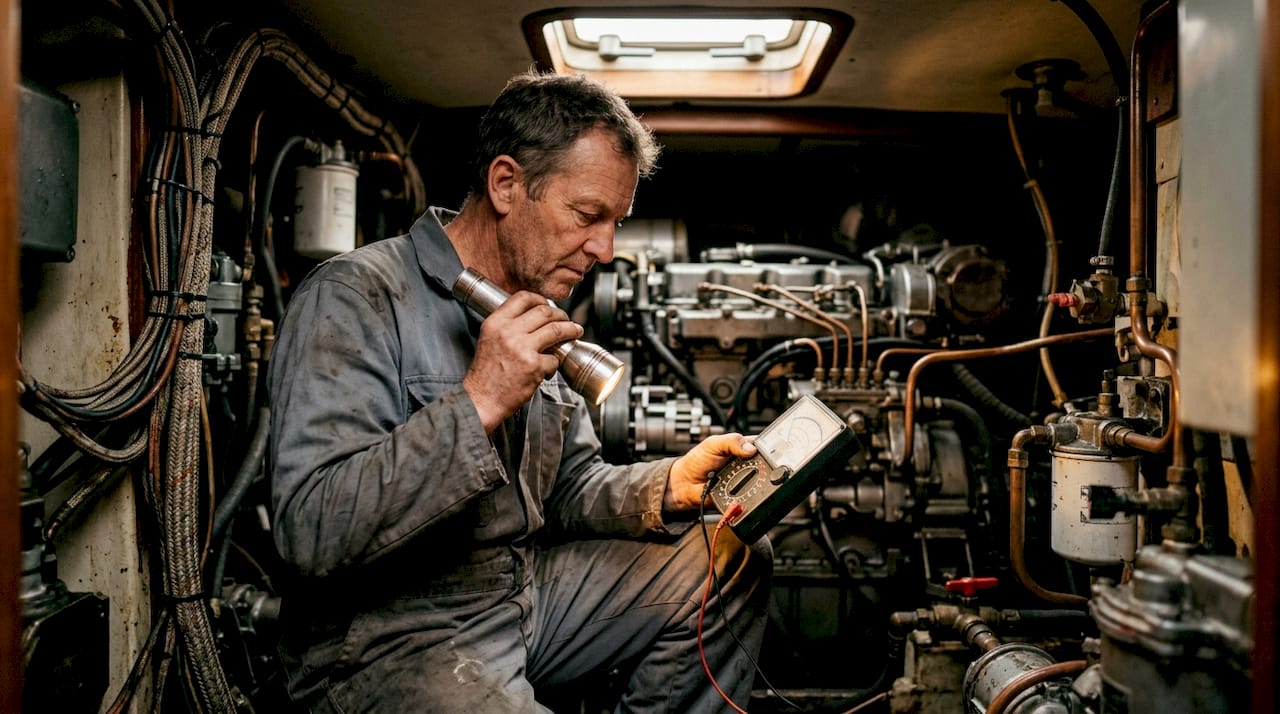
The mechanical inspection is where a yacht’s true age reveals itself. A vessel can look pristine above deck and conceal years of neglect below. A thorough mechanical review covers five core areas:
-
Engine and propulsion. Check oil condition, coolant levels, and belt tension visually first. Then request oil analysis from a certified lab, which identifies metal particles that signal internal wear long before visible symptoms appear. Compression tests on diesel engines confirm cylinder health. Inspect the exhaust system for carbon buildup, water injection points, and hose condition.
-
Shaft and running gear. Shaft alignment is checked with feeler gauges at the coupling. Misalignment causes vibration, bearing wear, and propeller damage over time. Inspect the propeller for dings, cavitation erosion, and pitch consistency. A bent blade that looks minor can create enough vibration to loosen engine mounts.
-
Electrical systems. Wiring age, insulation condition, and proper fusing matter more than most buyers realize. ABYC standards specify wire sizing, color coding, and overcurrent protection requirements. Check battery capacity under load, not just resting voltage. Corroded terminals and undersized wiring are the leading causes of onboard fires.
-
Plumbing and sanitation. Test every through-hull valve for ease of operation. Seacocks that have not moved in years can fail when you need them most. Run the bilge pumps and confirm float switch activation. Inspect holding tanks, macerators, and overboard discharge systems for USCG compliance.
-
Auxiliary systems. Generators, watermakers, air conditioning, and stabilizers each carry their own service histories. Request maintenance logs for each unit and cross-reference service intervals against the manufacturer’s schedule.
Professional survey inspections are non-invasive by design. If the visual inspection raises concerns about hidden mechanical or electrical issues, buyers should request specialized supplemental testing. Oil analysis and thermal imaging are the two most valuable tools here. Thermal imaging of electrical panels and engine compartments reveals hot spots invisible to the naked eye.
Pro Tip: Ask the surveyor to run thermal imaging on the electrical panel and engine room during the in-water phase. The cost is modest. The findings can be decisive.
What documentation and legal compliance items does a yacht inspection checklist cover?
Complete documentation significantly reduces perceived risk and directly supports yacht valuation during purchase. Gaps in paperwork raise red flags that reduce market appeal and can derail ownership transfer entirely. A thorough yacht survey checklist treats documentation with the same rigor as the physical inspection.
Key documents to verify include:
- Hull Identification Number (HIN) and title. The HIN must match the vessel’s registration documents and builder’s certificate. Any discrepancy signals a potential ownership dispute or insurance fraud history.
- CE/RCD compliance certificates. For vessels built after 1998 and sold in markets requiring European Recreational Craft Directive compliance, the CE marking must be present and verifiable.
- Classification society certificates. Vessels classed with Lloyd’s Register, Bureau Veritas, or similar bodies carry documentation that confirms periodic structural and systems surveys have been completed.
- USCG Certificate of Inspection. Required for commercially operated vessels in U.S. waters, this certificate confirms the vessel meets federal safety standards for its intended use.
- Service and maintenance records. A complete service history is a pillar of yacht value. Engine hours, haul-out dates, antifouling records, and major repair invoices tell the story of how the vessel was cared for.
Under MYBA purchase agreements, buyers receive two consecutive seven-day windows after the survey to review findings and negotiate repairs, price adjustments, or deal terms. Understanding this timeline before signing any agreement gives you the leverage to act deliberately rather than reactively. Pair your documentation review with this negotiation window and you hold a strong position.
What is involved in the sea trial phase and why is it critical?
The sea trial is the phase that separates a thorough yacht survey checklist from a superficial one. Many faults only appear under real load and handling conditions, making the sea trial indispensable beyond any pass/fail checklist. A vessel that performs beautifully at the dock can reveal serious problems the moment it meets open water.
A structured sea trial follows this sequence:
- Cold start observation. Note how long the engine takes to start, whether it produces excessive smoke on startup, and how quickly oil pressure stabilizes. A healthy diesel reaches operating oil pressure within seconds.
- Motoring at progressive RPMs. Advance the throttle in stages from idle to cruising RPM to maximum rated RPM. Monitor exhaust color, coolant temperature, oil pressure, and transmission engagement at each stage.
- Handling and maneuverability. Test hard turns in both directions. Assess rudder response, bow thruster performance, and the vessel’s tendency to track straight at cruising speed.
- Vibration and noise assessment. Abnormal vibration at specific RPM ranges points to propeller imbalance, shaft misalignment, or engine mount failure. A surveyor notes the RPM at which vibration peaks and correlates it with known resonance signatures.
- Systems under load. Run the air conditioning, generator, and navigation electronics simultaneously. Voltage drop under combined load reveals undersized wiring or a weak battery bank.
Gearbox slippage and vibration are two faults that remain invisible when the vessel is docked. Both can represent significant repair costs. The sea trial is the only phase where these issues become undeniable.
How to interpret inspection findings and use them for negotiation
Survey findings fall into three categories, and knowing which is which determines your next move. Safety and seaworthiness defects require immediate attention and carry the most negotiating weight. Deferred maintenance items are real costs but predictable ones. Cosmetic issues are rarely grounds for price reduction on a luxury vessel.
- Safety defects. Failed through-hull fittings, compromised structural members, non-compliant electrical wiring, and expired safety equipment fall here. These are non-negotiable. Either the seller rectifies them before closing, or the price adjusts to reflect the full repair cost.
- Deferred maintenance. Worn impellers, aged hoses, tired batteries, and overdue antifouling are expected on any used vessel. Obtain written quotes from specialized marine trades, not estimates from the surveyor. Surveyors rarely provide detailed repair cost estimates due to the variability of labor and parts across different yards.
- Specialist follow-ups. Some findings require a second opinion from a rigger, marine electrician, or diesel engineer. Budget for these before closing, not after.
Pro Tip: Use the survey report as a working document, not a closing formality. Annotate each finding with a repair quote and present it as a unified negotiation package. Sellers respond to specifics, not general concerns.
Insurance companies typically require condition surveys every 3–5 years, with older vessels requiring annual inspections to maintain coverage. The baseline survey you commission today becomes the foundation of your ongoing yacht maintenance checklist for years ahead.
Key Takeaways
A thorough yacht inspection checklist, covering haul-out, systems audit, sea trial, and documentation review, is the most reliable way to protect a luxury yacht investment before purchase or during ownership.
| Point | Details |
|---|---|
| Three mandatory phases | Haul-out, in-water audit, and a 60-minute sea trial each reveal distinct issues. |
| Documentation is as critical as hardware | Missing HIN, CE certificates, or service records can block ownership transfer and insurance. |
| Sea trial reveals hidden faults | Gearbox slippage and vibration only appear under real operating load, not at the dock. |
| Get independent repair quotes | Surveyors identify defects; specialized trades provide the cost estimates you need to negotiate. |
| Survey findings drive maintenance planning | The baseline survey report becomes your long-term yacht maintenance checklist going forward. |
What I have learned from watching buyers skip steps
After years of working alongside buyers in the luxury yacht market, the pattern I see most often is not ignorance. It is impatience. A buyer falls in love with a vessel, the seller sets a tight timeline, and suddenly the sea trial gets shortened to 20 minutes or the documentation review gets delegated to someone who does not know what they are looking at.
The vessels that cause the most heartache after closing are rarely the ones with obvious problems. They are the ones where the inspection was technically completed but not truly conducted. A surveyor who rushes the haul-out because the yard is charging by the hour, or a buyer who skips the oil analysis because the engine “sounds fine,” is setting themselves up for a very expensive lesson.
The detail I find most buyers overlook is the service record gap. A yacht with a five-year gap in maintenance logs is not just a documentation problem. It is a signal that the vessel was either neglected or repaired off the books, neither of which is reassuring. I always tell buyers: treat the paper trail with the same respect you give the hull. Both tell you who this vessel really is.
Hiring an accredited marine surveyor who specializes in the vessel type you are buying is not optional. A surveyor experienced in superyachts brings a different eye than one who primarily works on sailing vessels. Match the expertise to the asset. And when the survey raises questions about specific systems, bring in the specialist. The cost of a diesel engineer for two hours is nothing compared to a gearbox replacement at sea.
— Jason
Yachts-bysteve: expert guidance for confident yacht buyers
Navigating a pre-purchase survey on a luxury vessel is a process where the right guidance makes the difference between a sound acquisition and a costly mistake. Yachts-bysteve works with buyers at every stage, from identifying the right vessel to coordinating surveys and interpreting findings with clarity. The team understands how to choose a yacht broker who brings both market knowledge and inspection experience to the table. Whether you are evaluating your first yacht or adding to an existing fleet, Yachts-bysteve connects you with the expertise and the listings that match your standards. Reach out to begin a conversation built on trust, transparency, and genuine knowledge of the luxury yacht market.
FAQ
What is a pre-purchase yacht survey?
A pre-purchase yacht survey is a formal, multi-phase inspection conducted by an accredited marine surveyor to assess a vessel’s structural condition, systems functionality, and legal compliance before a sale is finalized.
How long does a sea trial need to be?
A sea trial must last at least 60 minutes to be considered valid, as many mechanical faults only become apparent under sustained real-world operating conditions.
What documents should I check on a yacht inspection checklist?
Verify the Hull Identification Number, title, CE/RCD certificates, classification society documents, USCG Certificate of Inspection, and complete service and maintenance records before closing any purchase.
How often should a yacht be surveyed for insurance purposes?
Insurance companies typically require condition surveys every 3–5 years, with older vessels aged 15 years or more often requiring annual inspections to maintain continuous coverage.
Can I use survey findings to negotiate the purchase price?
Survey findings are a recognized negotiation tool under MYBA agreements, which give buyers two consecutive seven-day windows after the survey to review results and negotiate repairs or price adjustments.
Recommended
Featured Listings

2028 Columbus Yachts
$22,900,008
137
Ancona

2012 Benetti PATIENCE
$10,975,000
132
Fort Lauderdale Florida

2028 Kingship Kingship
$20,350,000
125

2024 Silver Yachts
$25,400,000
117

2009 Hargrave BRANDI WINE
$2,500,000
114
Fort Lauderdale Florida

2028 Extra Yachts
$20,350,000
100
Ancona

2028 Alpha
$12,100,000
100
Ft Lauderdale Florida

2028 Extra Yachts Extra 96
$9,495,000
96
Ancona

2021 Sanlorenzo GATSBY
$6,795,000
96
Fort Lauderdale Florida

2028 Kingship
$11,990,000
90

2028 Alpha
$9,894,500
90
Fano

2023 Azimut COMPASS
$7,950,000
88
Miami Beach Florida

1999 Northern Marine OFF LINE
$2,495,000
84
Ft Lauderdale Florida

2013 Pershing DOROTHY ANN
$1,375,000
82
Fort Lauderdale Florida

1997 Ferretti Yachts
$825,000
80
La Paz

2008 Princess Yachts OCARALIA
$1,095,000
75
Charleston South Carolina

2014 Sunseeker
$1,400,000
68
New York New York

2024 Fairline
$2,750,000
68
Ft. Lauderdale Florida

2019 Vanquish Yachts IMPULSIVE
$1,799,000
58
Miami Beach Florida

2021 Ferretti Yachts HAVEN
$1,595,000
57
Fort Lauderdale Florida

2025 Formula BREAKTHROUGH III
$1,895,000
53
Miami Beach Florida

2023 Fairline
$900,000
45
Fort Lauderdale Florida

2012 Zeelander Mississippi Queen
$575,000
44
West Palm Beach Florida
2028 Columbus Yachts 137'
$22,900,008
2012 Benetti 132'
$10,975,000
2028 Kingship 125'
$20,350,000
2024 Silver Yachts 117'
$25,400,000
2009 Hargrave 114'
$2,500,000
2028 Extra Yachts 100'
$20,350,000
2028 Alpha 100'
$12,100,000
2028 Extra Yachts 96'
$9,495,000
2021 Sanlorenzo 96'
$6,795,000
2028 Kingship 90'
$11,990,000
2028 Alpha 90'
$9,894,500
2023 Azimut 88'
$7,950,000
1999 Northern Marine 84'
$2,495,000
2013 Pershing 82'
$1,375,000
1997 Ferretti Yachts 80'
$825,000
2008 Princess Yachts 75'
$1,095,000
2014 Sunseeker 68'
$1,400,000
2024 Fairline 68'
$2,750,000
2019 Vanquish Yachts 58'
$1,799,000
2021 Ferretti Yachts 57'
$1,595,000
2025 Formula 53'
$1,895,000
2023 Fairline 45'
$900,000
2012 Zeelander 44'
$575,000