

Overview: The world’s most talked about yacht owner list includes Mark Zuckerberg (Launchpad), Roman Abramovich (Eclipse), Gabe Newell (Leviathan), Andrey Melnichenko (Sailing Yacht A), Bill Gates (the reported Project 821), Amancio Ortega (Drizzle), Bernard Arnault (Symphony), Lakshmi Mittal (Amevi), Len Blavatnik (Odessa II), and Thierry Stern (Nautilus), each vessel built or reportedly commissioned through yards like Feadship, Oceanco, and Lürssen. These flagship yachts matter to anyone curious about luxury yacht ownership because they set the benchmark for what “top of market” actually looks like, from crew size to running costs that regularly stretch into eight figures a year.
- Zuckerberg — Launchpad — nearly 390 feet, helipad and beach club, reported $30 million annual running cost.
- Newell — Leviathan — 364 feet, crew-first custom design.
- Abramovich — Eclipse — long considered one of the largest private yachts ever built.
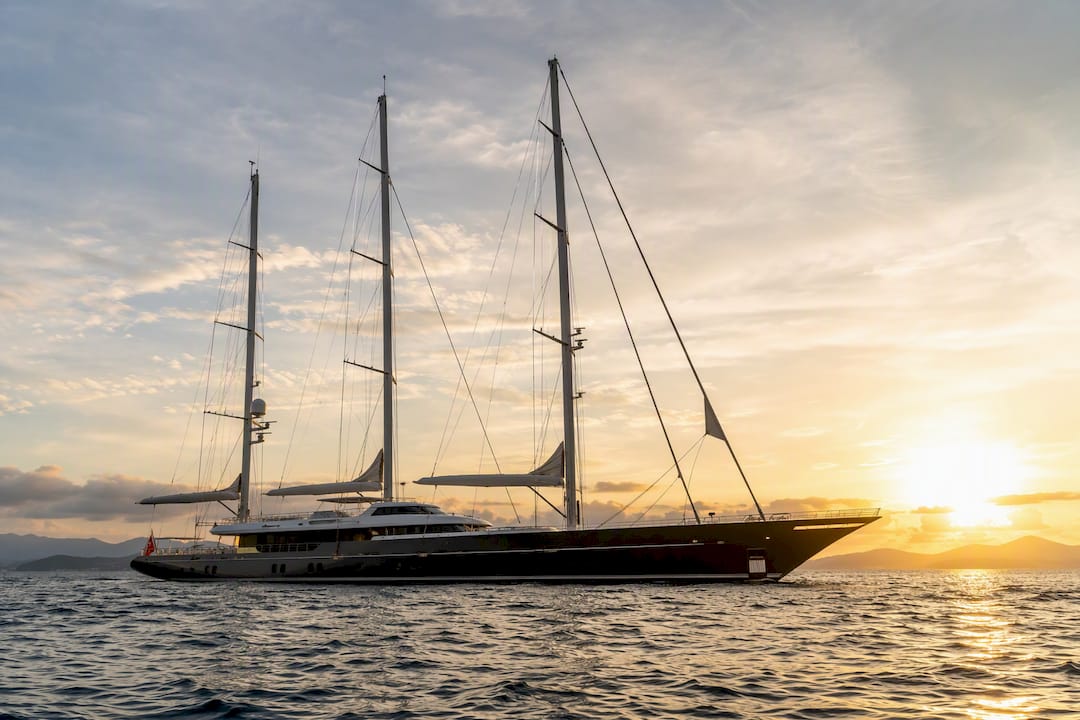
- Melnichenko — Sailing Yacht A — a radical three-masted sailing superyacht.
- Arnault — Symphony — a Feadship flagship known for restrained, ultra-refined interiors.
Key Takeaways
| Point | Details |
|---|---|
| Shortlist matters | Launchpad, Leviathan, Eclipse, and Sailing Yacht A anchor the current billionaire flagship conversation. |
| Verify before trusting specs | Cross-check IMO registries, shipyard press releases, and reputable yacht press before accepting a claim. |
| Budget beyond the sticker price | Annual running costs often reach 6% to 15% of purchase price, driven mostly by crew and refits. |
| The 10% rule is a floor | It works for smaller boats but understates costs on the largest flagship superyachts. |
| Brokers unlock real data | Closed-sale figures and shipyard relationships matter more than public asking prices. |
Table of Contents
- What Makes Someone a Notable Yacht Owner Today
- How Do You Verify Who Actually Owns a Yacht?
- What Does a Superyacht Really Cost Every Year?
- What Today’s Flagship Owners Actually Prioritize
- How a Specialist Yacht Broker Supports Buyers and Owners
- A Broker’s Take on Verifying What a Yacht Really Is
- Frequently Asked Questions
- Sources
What Makes Someone a Notable Yacht Owner Today
A handful of names dominate the conversation because their vessels combine record-setting scale, rare technology, or a design story worth retelling. Reporting from outlets tracking the biggest superyachts owned by billionaires consistently circles back to the same shortlist, and for good reason: these are the yachts that shipyards, brokers, and yacht enthusiasts point to when defining what “flagship” actually means.
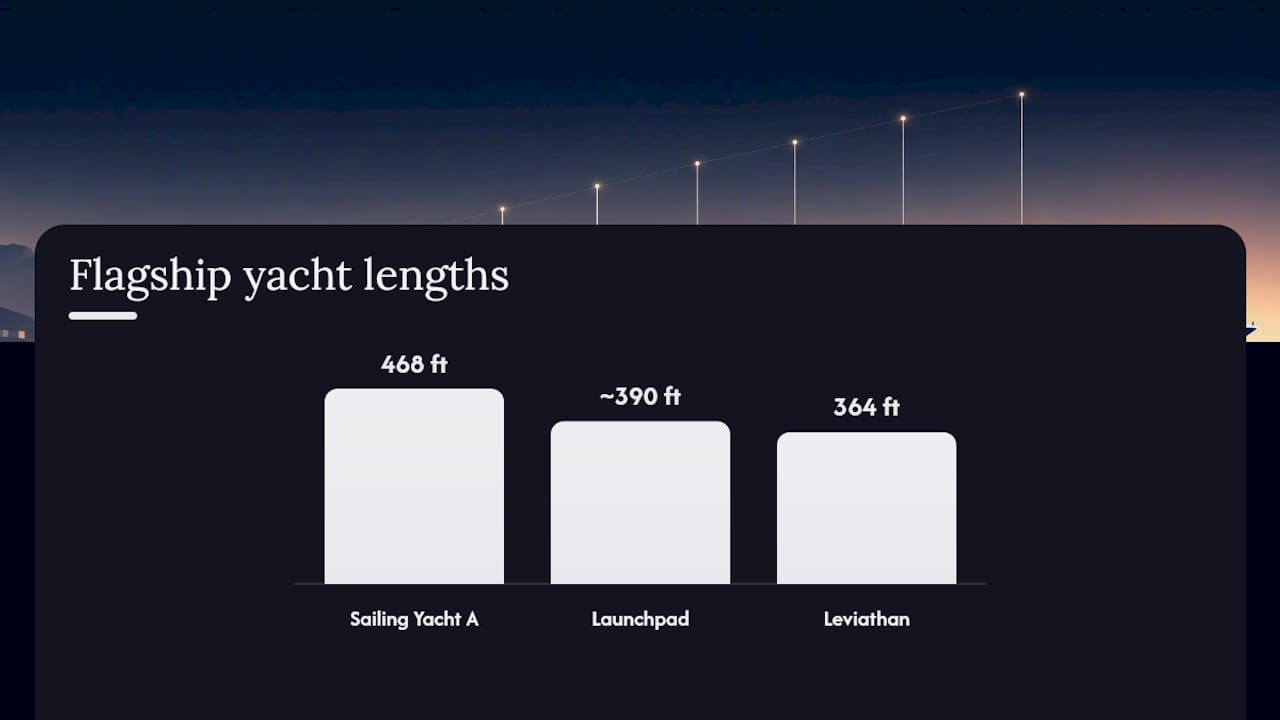
Mark Zuckerberg — Launchpad. Reported at roughly 390 feet with capacity for about 26 guests and 49 crew, Launchpad carries a helipad, a swimming pool, a cinema, a gym, a beach club, and a deck jacuzzi, along with a 3,000 nautical mile range. The reported annual running cost sits near $30 million, a figure that alone illustrates why owning at this scale is a different financial category entirely. Note: builder and exact delivery status are not publicly confirmed; treat specs as reported pending verification.
Roman Abramovich — Eclipse. Eclipse has held its place in yacht enthusiast circles for years as one of the most recognizable superyachts on the water, reportedly built by Blohm+Voss with two helipads and a missile defense system among its more unusual features. Public reporting on exact current specs and ownership status varies, so treat headline figures as approximate until confirmed through registry or press channels.
Gabe Newell — Leviathan. At 364 feet (111 meters) with room for 26 guests and 37 crew, Leviathan stands out less for size records and more for philosophy. Newell reportedly drove an unusually collaborative design process that prioritized crew wellbeing, choosing details like synthetic decking for durability over pure showpiece aesthetics. It is a useful reminder that flagship status is not only about length.
Andrey Melnichenko — Sailing Yacht A. This 468 foot sailing superyacht, built by Nobiskrug, remains one of the most photographed vessels afloat thanks to its three freestanding masts and submarine-inspired hull design. It represents a different branch of the flagship conversation entirely: sail power at a scale almost no one else has attempted.
Bill Gates — Project 821. Widely reported as a Gates-linked hydrogen-powered superyacht project, Project 821 has circulated in yachting press for years without full official confirmation. Reported concepts describe a hydrogen fuel cell propulsion system, a feature that would place it among the most technologically ambitious builds in the category if confirmed.
Amancio Ortega — Drizzle. The Zara founder’s yacht regularly appears on billionaire yacht lists, valued in the hundreds of millions and known for a design that favors privacy and understated luxury over ostentatious features, consistent with Ortega’s famously low public profile.
Bernard Arnault — Symphony. Built by Feadship, Symphony reflects the LVMH chairman’s taste for refined minimalism rather than maximalist spectacle, a Feadship signature that has made the yard a preferred choice among owners who want quiet excellence over headline-grabbing gimmicks.
Lakshmi Mittal — Amevi. The steel magnate’s yacht, built by Feadship, has been part of the billionaire yacht conversation since its delivery and remains a reference point for classic, tradition-forward Feadship styling.
Len Blavatnik — Odessa II. Built by Lürssen, Odessa II is one of the larger yachts associated with a media and industrial fortune, illustrating how Lürssen’s engineering pedigree continues to attract owners seeking serious blue-water capability alongside luxury.
Thierry Stern — Nautilus. The Patek Philippe president’s yacht carries a name that nods directly to his family’s most famous watch line, a small but telling detail about how personal branding threads through even private vessel names.
Several rows above carry a “not publicly listed” note rather than an invented figure, and that gap is itself a lesson: verified specs for the world’s most private yachts are harder to pin down than glossy headlines suggest.
How Do You Verify Who Actually Owns a Yacht?
The fastest reliable path combines official registries, shipyard press releases, and reputable yachting press, cross-checked against AIS tracking data and photographic evidence.
- Look up the vessel’s IMO number and flag registry, which ties the hull to a legally registered entity.
- Check whether the builder issued a delivery press release, since yards like Feadship, Oceanco, and Lürssen routinely confirm specs on delivery.
- Search AIS or marine traffic snapshots to confirm the vessel is active and matches reported dimensions.
- Cross-reference reputable yacht press such as Boat International or MegaYachtNews against the shipyard’s own claims.
- Weigh photographic evidence and any owner statements against the paper trail above before treating an ownership claim as settled.
Beneficial ownership often hides behind a corporate shell or nominee registrant rather than an individual’s name, which is standard practice for privacy-conscious yacht transactions. When a registry search only turns up a holding company, that is not necessarily suspicious. It is simply how most nine-figure purchases are structured.
Pro Tip: If a registry search dead-ends at a corporate name, search that entity in a national company registry. Intermediary companies are frequently domiciled in jurisdictions like the Marshall Islands or Malta, and a maritime lawyer can trace beneficial ownership faster than any public database.
What Does a Superyacht Really Cost Every Year?
- Crew payroll (the dominant cost past roughly 60 feet)
- Insurance
- Maintenance and scheduled refits
- Marina and berthing fees
- Fuel
- Management and administration fees
- Flag and classification costs
- Depreciation and opportunity cost on capital
Launchpad’s reported $30 million annual running cost sits at the extreme end of the scale, driven by a 49 person crew and constant systems upkeep. Compare that to mid-size superyachts in the 80 foot range, where industry guidance puts annual costs closer to $600,000 to $1.5 million, with refit cycles landing every five to seven years.
That heuristic holds reasonably well for boats under 100 feet, but it becomes far less reliable at the flagship end of the market, where crew size and refit scope stop scaling in a straight line with hull length. Anyone comparing chartering against outright ownership should treat that 10% figure as a floor, not a ceiling.
What Today’s Flagship Owners Actually Prioritize
Design, bespoke technology, and crew wellbeing now drive flagship commissions more than raw length ever did. Owners who could easily chase a size record are instead spending their budget on livability and operational depth.
- Custom tech integration — bespoke navigation, entertainment, and connectivity systems built around how technology drives performance at sea.
- Energy and range choices — projects like Project 821’s reported hydrogen propulsion signal a shift toward efficiency, not just horsepower.
- Crew welfare and training spaces — dedicated crew areas designed for retention, not just function, echoed in why yachts build out dedicated crew quarters.
- Multi-purpose guest and crew areas — layouts that flex between entertaining and quiet family use.
- Long-range capability — a growing preference for vessels that can cross oceans without refueling stops.
Leviathan is the clearest case study here. Newell’s build process was reportedly built around the people who run the boat daily, not just the guests who step aboard occasionally.
The owner’s collaborative approach put crew wellbeing and durable, practical materials at the center of the design brief, a marked departure from pure showpiece thinking.
Launchpad tells a parallel story at a different scale: its helipad and beach club are headline amenities, but the 49 person crew and $30 million annual budget reveal where the real investment goes.
How a Specialist Yacht Broker Supports Buyers and Owners
A specialist broker reduces transaction risk and unlocks vetted listings and market context that a private buyer simply cannot access alone. That value shows up long before a contract is signed and long after delivery.
- Tailored search and matching against a buyer’s actual usage pattern, not just budget
- Verification and due diligence on registry status, liens, and mechanical condition
- Contract negotiation and Memorandum of Agreement support
- Escrow and closing coordination to protect deposits
- Post-delivery service recommendations and ongoing market advice
Private sales can work for lower-value, known-buyer situations, but broker networks generally deliver faster sales and stronger net proceeds above roughly €100,000, a threshold that covers virtually every flagship transaction discussed in this article.
Pro Tip: A seasoned broker’s real edge is closed-sale data. Public listings show asking prices, but brokers with shipyard relationships know what similar vessels actually transacted for, which is the number that matters when negotiating a nine-figure deal. Yachts-bysteve builds every client relationship around exactly that kind of access to brokerage expertise.
A Broker’s Take on Verifying What a Yacht Really Is
Years of walking clients through sea trials taught me one lesson that never gets old: the brochure and the boat are not always the same vessel until you have stood on the deck yourself. A buyer once assumed a “recent refit” meant new systems throughout, only to find the yard had replaced upholstery and little else. Always verify specs in person, or through someone who has, before you trust the paperwork.
Frequently Asked Questions
Who is considered the most notable yacht owner today?
No single name holds that title outright, but Mark Zuckerberg, Roman Abramovich, and Gabe Newell consistently top public shortlists thanks to Launchpad, Eclipse, and Leviathan.
What does the average yacht owner pay annually to maintain a superyacht?
Annual running costs typically range from 6% to 15% of purchase price, with crew payroll and refits driving most of that spend on vessels over 60 feet.
Is chartering a better option than buying for a first-time yacht owner?
It depends on usage frequency; readers weighing both paths should review chartering versus purchase before committing capital to ownership.
Can I find out who really owns a specific yacht?
Often, though beneficial ownership is frequently held through a corporate structure rather than an individual’s name, which requires a corporate registry search or a maritime lawyer to trace fully.
Why do yacht owners use brokers instead of buying privately?
Above roughly €100,000, brokers typically close faster and secure better terms because they carry closed-sale data and shipyard relationships that private buyers cannot access on their own.
Sources
- Yacht Leviathan Owner Gabe Newell Has a Vision Unlike Any Other – Megayacht News
- Inside Mark Zuckerberg’s jaw-dropping $300 million superyacht — a floating mansion with its own helipad
- Yacht Prices & Ownership Costs: What You’ll Really Pay in 2026 — Yachtpedia
- Sellyourboat
- The biggest superyachts owned by billionaires
Recommended
Featured Listings

2028 Columbus Yachts
$22,900,008
137
Ancona

2012 Benetti PATIENCE
$10,975,000
132
Fort Lauderdale Florida

2028 Kingship Kingship
$20,350,000
125

2024 Silver Yachts
$25,400,000
117

2009 Hargrave BRANDI WINE
$2,500,000
114
Fort Lauderdale Florida

2028 Extra Yachts
$20,350,000
100
Ancona

2028 Alpha
$12,100,000
100
Ft Lauderdale Florida

2028 Extra Yachts Extra 96
$9,495,000
96
Ancona

2021 Sanlorenzo GATSBY
$6,795,000
96
Fort Lauderdale Florida

2028 Kingship
$11,990,000
90

2028 Alpha
$9,894,500
90
Fano

2023 Azimut COMPASS
$7,950,000
88
Miami Beach Florida

1999 Northern Marine OFF LINE
$2,495,000
84
Ft Lauderdale Florida

2013 Pershing DOROTHY ANN
$1,375,000
82
Fort Lauderdale Florida

1997 Ferretti Yachts
$825,000
80
La Paz

2008 Princess Yachts OCARALIA
$1,095,000
75
Charleston South Carolina

2014 Sunseeker
$1,400,000
68
New York New York

2024 Fairline
$2,750,000
68
Ft. Lauderdale Florida

2019 Vanquish Yachts IMPULSIVE
$1,799,000
58
Miami Beach Florida

2021 Ferretti Yachts HAVEN
$1,595,000
57
Fort Lauderdale Florida

2025 Formula BREAKTHROUGH III
$1,895,000
53
Miami Beach Florida

2023 Fairline
$900,000
45
Fort Lauderdale Florida

2012 Zeelander Mississippi Queen
$575,000
44
West Palm Beach Florida
2028 Columbus Yachts 137'
$22,900,008
2012 Benetti 132'
$10,975,000
2028 Kingship 125'
$20,350,000
2024 Silver Yachts 117'
$25,400,000
2009 Hargrave 114'
$2,500,000
2028 Extra Yachts 100'
$20,350,000
2028 Alpha 100'
$12,100,000
2028 Extra Yachts 96'
$9,495,000
2021 Sanlorenzo 96'
$6,795,000
2028 Kingship 90'
$11,990,000
2028 Alpha 90'
$9,894,500
2023 Azimut 88'
$7,950,000
1999 Northern Marine 84'
$2,495,000
2013 Pershing 82'
$1,375,000
1997 Ferretti Yachts 80'
$825,000
2008 Princess Yachts 75'
$1,095,000
2014 Sunseeker 68'
$1,400,000
2024 Fairline 68'
$2,750,000
2019 Vanquish Yachts 58'
$1,799,000
2021 Ferretti Yachts 57'
$1,595,000
2025 Formula 53'
$1,895,000
2023 Fairline 45'
$900,000
2012 Zeelander 44'
$575,000