

Yes, genuine buying opportunities exist among recent yacht price reductions, but only for buyers who pair the discount with a proper survey and an honest look at running costs. The single best move right now is to get onto vetted listing feeds and gather your documents (survey access, maintenance records, financing pre approval) before you find the boat you want. Yachts-bysteve tracks and verifies these reductions daily, which means the legwork of separating a genuine bargain from a tired listing is already half done by the time you call.
TL;DR:
- Genuine yacht price reductions are often hidden in broker feeds, aggregator filters, and post boat-show roundups, which require verification.
- Confirm the actual price history, vessel condition, and comparable sales before considering a discount as a real bargain.
- Large, sudden reductions usually offer better negotiation leverage, especially when backed by survey results, rather than slow, small cuts.
- Regional market conditions, seasonal timing, and how often a listing is repriced influence whether to act immediately or wait for deeper discounts.
- Verify all discounts through official broker records and vessel documentation to avoid marketing tricks and assess true market value.
Table of Contents
- Where to Find Yacht Price Reductions Before Everyone Else
- How Do You Know If a Price Cut Is a Real Bargain?
- Turning a Price Reduction Into a Better Deal at the Table
- Tax and Ownership Costs That Can Erase Your Savings
- Where Price Reductions Cluster and What That Tells You
- How to Verify a Price Reduction Is Real, Not a Marketing Trick
- How Yachts-bysteve Verifies Every Price Reduction We Show You
- Ready to Act on a Price-Reduced Yacht?
- Sources
Where to Find Yacht Price Reductions Before Everyone Else
The yachts that get the deepest discounts rarely announce themselves on the first page of a general search. They surface on broker market-intelligence pages, inside aggregator filters built specifically for repriced inventory, and in the monthly roundups that trade publications compile after major boat shows.
Boat International publishes a monthly digest of the biggest superyacht price drops, complete with before and after asking prices, and it consistently catches large cuts before the wider market notices them. These roundups exist because brokers want repositioned inventory to move, so they feed the story to outlets willing to publish it. That makes the roundups a genuinely useful early-warning system, provided you treat them as a starting point rather than a verified fact.
Here is where serious buyers actually look:
- Brokerage market-intelligence pages. Most major brokerages maintain a running feed of recent price adjustments on their own listings, often before a public marketplace catches up.
- Aggregator marketplaces with dedicated “price reduced” filters. Build a saved search around your target length, year range, and region, and set alerts so a new cut lands in your inbox the day it happens rather than the week after.
- Post boat-show roundups. Reductions cluster in the weeks following major shows, when unsold inventory gets repriced to compete with fresh listings that just debuted.
- Broker newsletters and VIP lists. Many brokers share reductions with subscribers before the listing is updated publicly, which can hand you a few days of head start.
Once you spot a reduction, verify it before you get attached to the number. Ask the broker for the listing’s full price history, not just the current ask, and find out whether the vessel has been repriced once or five times. Cross-check hull details against class society or ship-register data to confirm the boat is what the listing claims. A five-minute phone call to the listing broker often surfaces context, like a pending survey or an owner relocation, that the online listing never mentions.
Pro Tip: Ask the broker point blank why the price dropped. A broker who has done real diligence on the listing will give you a specific answer involving time on market, an owner’s changed circumstances, or survey findings. A vague answer is itself useful information.
How Do You Know If a Price Cut Is a Real Bargain?
A lower number on a listing page tells you almost nothing until you know why it got there. Start by confirming the actual price history rather than trusting the headline discount.
Work through the reduction in this order:
- Pull the full price history. Ask the listing broker for every prior asking price and the date each change took effect, not just the current figure against the original.
- Get the survey and service records. Engine hours, oil analysis, refit invoices, and the most recent haul-out report will tell you more about real condition than any brochure photo.
- Run the comparables. Compare the new ask against three to five similar vessels sold or currently listed in the same size and age band, adjusting for refit history and equipment.
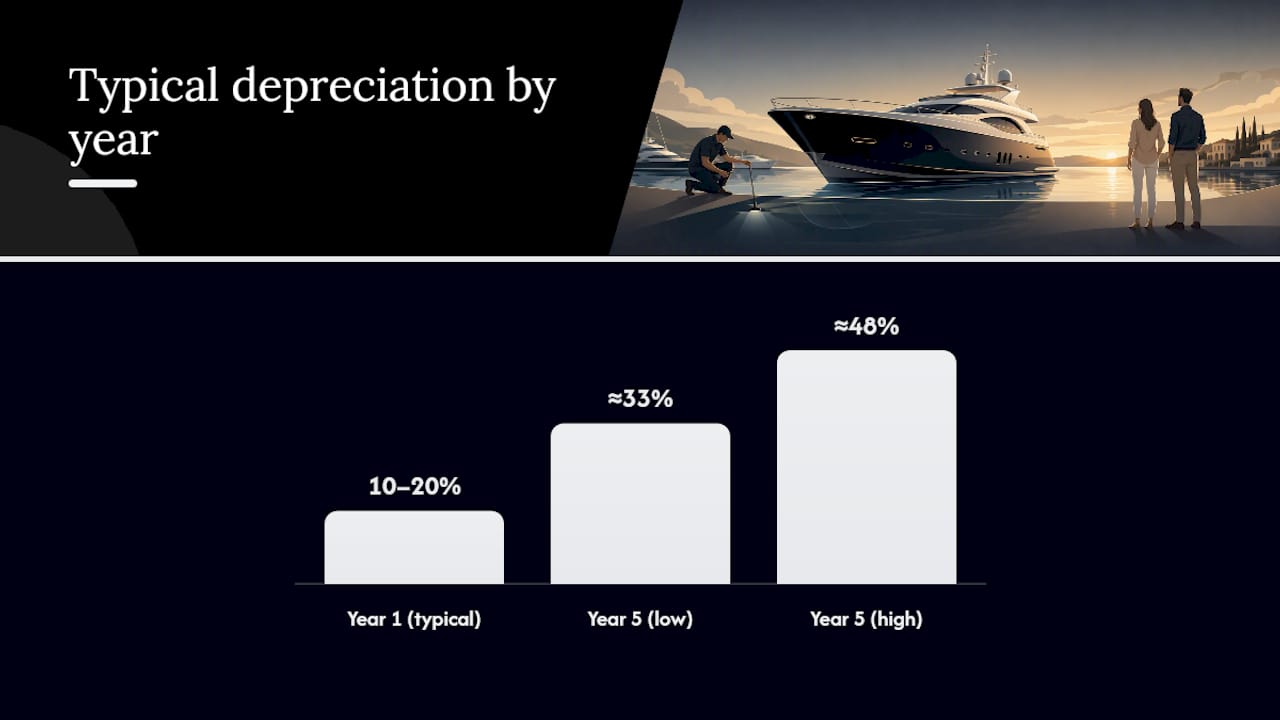
- Check the depreciation curve against the ask. Broker-aggregated data shows year-one depreciation typically runs 10% to 20%, with cumulative losses of roughly 33% to 48% by year five for many yachts. If a five-year-old boat’s reduced price still sits above that curve, the discount may be more marketing than substance.
- Estimate your total exposure. Add the purchase price to expected survey-flagged repairs and any deferred maintenance, then compare that total to the comparables you just pulled.
Comparables lie when they include distressed or off-market sales that never closed at the listed figure, so ask your broker which comps actually transacted versus which simply appeared for sale. A discounted asking price can also mask structural costs that surface during survey, like an overdue refit or engine work the seller deferred rather than disclosed. That is exactly why the discount headline and the net cost after purchase are two different numbers, and only the second one matters.
Before you go further, request the vessel’s full survey report, current insurance status, class certificates, and any warranty documentation still in force. A seller or broker who hesitates on any of these is telling you something worth hearing.
Turning a Price Reduction Into a Better Deal at the Table
The size and pattern of a reduction tells you almost everything about how the seller will negotiate. A string of small trims, on the other hand, often means the boat simply is not attracting qualified offers and the seller is passively repricing rather than reacting to anything specific.
That distinction should shape your opening offer:
- Against a large, sudden cut, move quickly with a conditional offer keyed to survey results rather than haggling over the number first.
- Against a slow drift of small cuts, take your time. The seller has already shown willingness to keep coming down, and a patient buyer usually gets a second discount within weeks.
- Size your deposit to signal seriousness, typically 10% held in escrow, without over-committing before the survey contingency clears.
- Push for concessions beyond price when leverage allows: a berth transfer already paid through the season, an extended warranty on major systems, or a refit credit tied to items the survey flags.
A skilled negotiator knows how to stage these asks so the seller doesn’t feel cornered into a single all-or-nothing counter. This is also where a broker earns their commission twice over: they can get you access to reductions before they’re public, and they know exactly which contract language protects your deposit if the survey turns up something the listing didn’t mention.
Pro Tip: Never let a broker’s urgency become your urgency. “Another buyer is looking” is sometimes true and sometimes theater. Ask for proof of a competing offer before you shorten your own survey contingency window.
Tax and Ownership Costs That Can Erase Your Savings
A headline discount evaporates fast once you factor in where you close the sale, how you register the vessel, and what running the boat actually costs each year. State sales tax and registration fees vary enormously, and several states cap the tax owed on large purchases or offer favorable treatment depending on where you take delivery and where the vessel is primarily used; for insights on luxury vessel usage, see Booking a Private Boat on the Amalfi Coast, Done Right. Where you close matters as much as what you pay.
Buyers chasing a discount sometimes assume they can offset the purchase with aggressive depreciation claims. Bonus depreciation and Section 179 can deliver real first-year tax benefits, but only for a yacht used in a bona fide charter business exceeding 50% qualified use, backed by strict compliance. Casual “I’ll charter it occasionally” plans routinely fail hobby-loss scrutiny and get disallowed, which turns an assumed tax advantage into an audit risk.
- Keep contemporaneous logs recording date, route, hours underway, passengers, and stated business purpose for every voyage.
- Talk to a tax adviser before you close, not after, since usage patterns established from day one determine what you can later claim.
- Budget running costs as a real line item, not an afterthought against the sale price.
The old “10% rule” for annual operating costs is folklore more than formula. Realistic ranges cluster between 8% and 15% of the vessel’s value per year, trending toward the higher end for older and larger yachts with fuller crews. Run the numbers before the savings headline talks you into anything.
Where Price Reductions Cluster and What That Tells You
Reductions rarely fall evenly across the market. They bunch up around predictable moments, and reading those clusters tells you whether to move now or wait for a deeper cut.
- Post boat-show repricing. Unsold inventory competes against fresh debuts, and brokers trim asking prices in the weeks following major shows to stay relevant.
- Segment oversupply. When a particular size band or builder has too much inventory chasing too few buyers, reductions across that segment tend to run deeper and more often.
- Older, larger yachts. Vessels past the ten-year mark in the superyacht range often carry the biggest percentage discounts, since maintenance and refit exposure grows and the buyer pool narrows.
- Off-season regional inventory. Listings in a market between charter seasons, or outside peak buying windows for that region, see softer pricing simply because fewer serious buyers are shopping.
Three metrics separate a market worth watching from one worth acting on immediately: how often a listing gets repriced, how large each cut runs, and how long the vessel sits after the most recent reduction. A boat cut once and sold within two weeks tells you the market found fair value fast. A boat cut four times over eight months and still sitting is either overpriced relative to its true condition or carrying a problem nobody wants to discover after closing. Track those numbers across a handful of listings in your target segment, and the pattern usually makes the decision for you: wait for the next cut, or move before someone else does.
How to Verify a Price Reduction Is Real, Not a Marketing Trick
Not every advertised discount is what it looks like. Some listings show an inflated “original” price that was never seriously offered, just so the current figure looks like a bigger cut than it is. Others recycle an old reduction across multiple aggregator sites long after the price actually changed, making a stale discount look fresh.
Start by asking the listing broker directly for the vessel’s documented price history, including the date of each change, and compare it against what the aggregator site displays. A legitimate broker will produce this without hesitation. If a private seller or an unfamiliar site refuses to provide documentation, or the listing has no verifiable broker of record, treat the discount as unconfirmed.
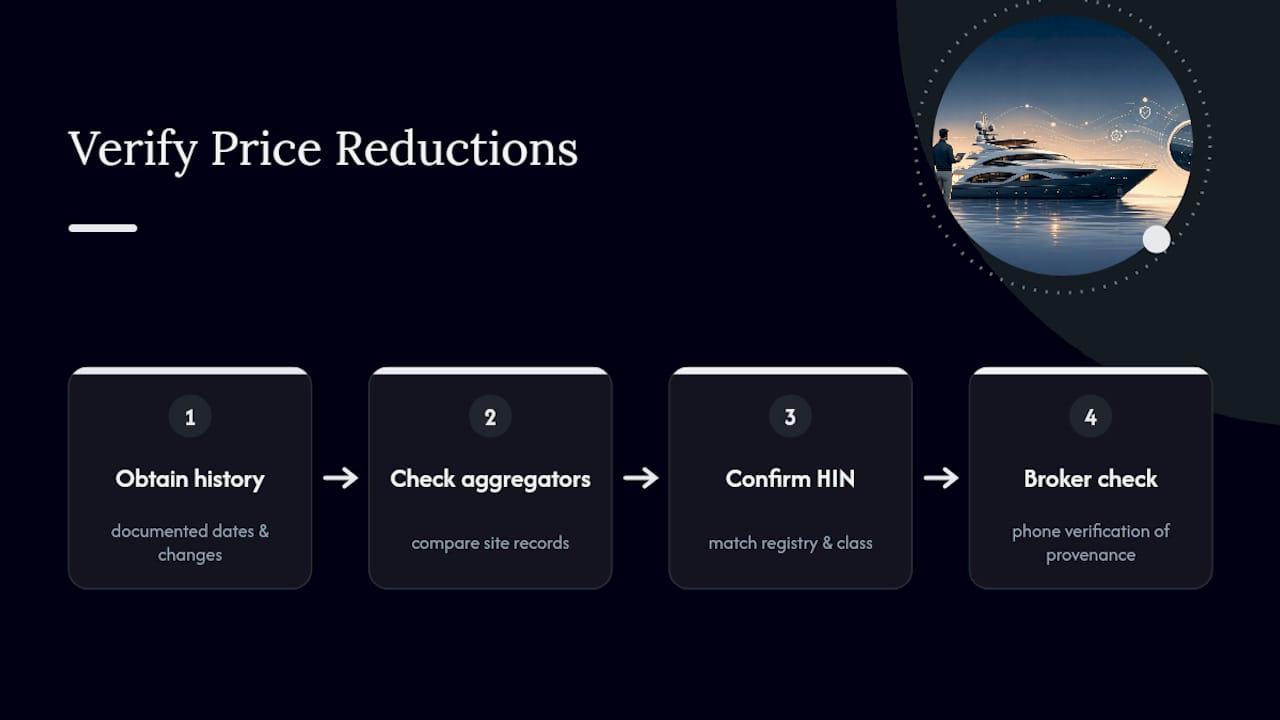
Cross-reference the hull identification number against class society or registry data to confirm the listing matches an actual, currently for-sale vessel rather than a duplicate or a “ghost” listing kept live to harvest inquiries. Watch for listings that never update their days-on-market counter, or that show a suspiciously round percentage cut applied to every listing from the same seller. That pattern usually means a marketing template, not a genuine market response. When in doubt, a licensed broker can confirm a listing’s provenance in a single phone call, which is faster and more reliable than trying to verify it yourself from a screen.
How Yachts-bysteve Verifies Every Price Reduction We Show You
Every reduction Yachts-bysteve surfaces gets run through the same checklist: vetted broker contacts, listing-provenance checks against registry data, and confirmed survey access before we ever call it a genuine opportunity. That verification work is the difference between a headline discount and a discount you can actually bank.
If you want curated alerts on price-reduced listings that match your size, budget, and region, or a valuation check before you make an offer, reach out and we will set it up.
— Jason
Ready to Act on a Price-Reduced Yacht?
Chasing reductions on your own means checking a dozen aggregator sites, cold-calling brokers for price histories, and hoping the survey doesn’t undo the savings you thought you found. Yachts-bysteve does that legwork before you ever see a listing, verifying provenance, pulling comparables, and flagging survey risk so the discount you’re looking at is a real one. Our brokers also carry negotiation leverage that comes from relationships with listing brokers, not from a marketplace algorithm.
If you’re ready to move on a reduced listing or want a valuation check before you make an offer, choosing the right yacht broker is the first step, and Yachts-bysteve is built to be that partner from first alert to closing table.
Sources
- The biggest superyacht price drops of July
- The 10% rule for yachts – fact, myth, or a misunderstood guideline?
- How to claim a yacht tax break: deductions explained
- First Owner’s Reference — depreciation and ownership reality
- Can I claim tax deductions for a yacht purchase?
Recommended
Featured Listings

2028 Columbus Yachts
$22,900,008
137
Ancona

2012 Benetti PATIENCE
$10,975,000
132
Fort Lauderdale Florida

2028 Kingship Kingship
$20,350,000
125

2024 Silver Yachts
$25,400,000
117

2009 Hargrave BRANDI WINE
$2,500,000
114
Fort Lauderdale Florida

2028 Extra Yachts
$20,350,000
100
Ancona

2028 Alpha
$12,100,000
100
Ft Lauderdale Florida

2028 Extra Yachts Extra 96
$9,495,000
96
Ancona

2021 Sanlorenzo GATSBY
$6,795,000
96
Fort Lauderdale Florida

2028 Kingship
$11,990,000
90

2028 Alpha
$9,894,500
90
Fano

2023 Azimut COMPASS
$7,950,000
88
Miami Beach Florida

1999 Northern Marine OFF LINE
$2,495,000
84
Ft Lauderdale Florida

2013 Pershing DOROTHY ANN
$1,375,000
82
Fort Lauderdale Florida

1997 Ferretti Yachts
$825,000
80
La Paz

2008 Princess Yachts OCARALIA
$1,095,000
75
Charleston South Carolina

2014 Sunseeker
$1,400,000
68
New York New York

2024 Fairline
$2,750,000
68
Ft. Lauderdale Florida

2019 Vanquish Yachts IMPULSIVE
$1,799,000
58
Miami Beach Florida

2021 Ferretti Yachts HAVEN
$1,595,000
57
Fort Lauderdale Florida

2025 Formula BREAKTHROUGH III
$1,895,000
53
Miami Beach Florida

2023 Fairline
$900,000
45
Fort Lauderdale Florida

2012 Zeelander Mississippi Queen
$575,000
44
West Palm Beach Florida
2028 Columbus Yachts 137'
$22,900,008
2012 Benetti 132'
$10,975,000
2028 Kingship 125'
$20,350,000
2024 Silver Yachts 117'
$25,400,000
2009 Hargrave 114'
$2,500,000
2028 Extra Yachts 100'
$20,350,000
2028 Alpha 100'
$12,100,000
2028 Extra Yachts 96'
$9,495,000
2021 Sanlorenzo 96'
$6,795,000
2028 Kingship 90'
$11,990,000
2028 Alpha 90'
$9,894,500
2023 Azimut 88'
$7,950,000
1999 Northern Marine 84'
$2,495,000
2013 Pershing 82'
$1,375,000
1997 Ferretti Yachts 80'
$825,000
2008 Princess Yachts 75'
$1,095,000
2014 Sunseeker 68'
$1,400,000
2024 Fairline 68'
$2,750,000
2019 Vanquish Yachts 58'
$1,799,000
2021 Ferretti Yachts 57'
$1,595,000
2025 Formula 53'
$1,895,000
2023 Fairline 45'
$900,000
2012 Zeelander 44'
$575,000