

Many potential yacht buyers assume all luxury yachts offer similar experiences, but the reality is far more nuanced. The type of yacht you choose profoundly influences your cruising lifestyle, maintenance requirements, operational costs, and long-term investment value. Whether you’re drawn to the speed and convenience of motor yachts, the timeless elegance of sailing vessels, or the adventure-ready capabilities of expedition yachts, understanding these distinctions is essential before making a purchase decision. This comprehensive guide breaks down the key yacht categories, their unique features, and how to match the right type to your lifestyle and cruising ambitions in 2026.
Table of Contents
- Understanding Motor Yachts: Design, Categories, And Luxury Features
- Sailing Yachts Explained: Types, Rigging Styles, And Luxury Cruising Appeal
- Explorer And Expedition Yachts: Long-Range Luxury For Adventure Seekers
- Choosing The Right Yacht Type For Your Lifestyle: Considerations And Expert Advice
- Discover Expert Yacht Brokerage Services With Yachts By Steve
- Frequently Asked Questions About Yacht Types
Key takeaways
| Point | Details |
|---|---|
| Yacht types vary widely | Different categories offer distinct propulsion methods, size ranges, design philosophies, and onboard amenities tailored to specific cruising styles. |
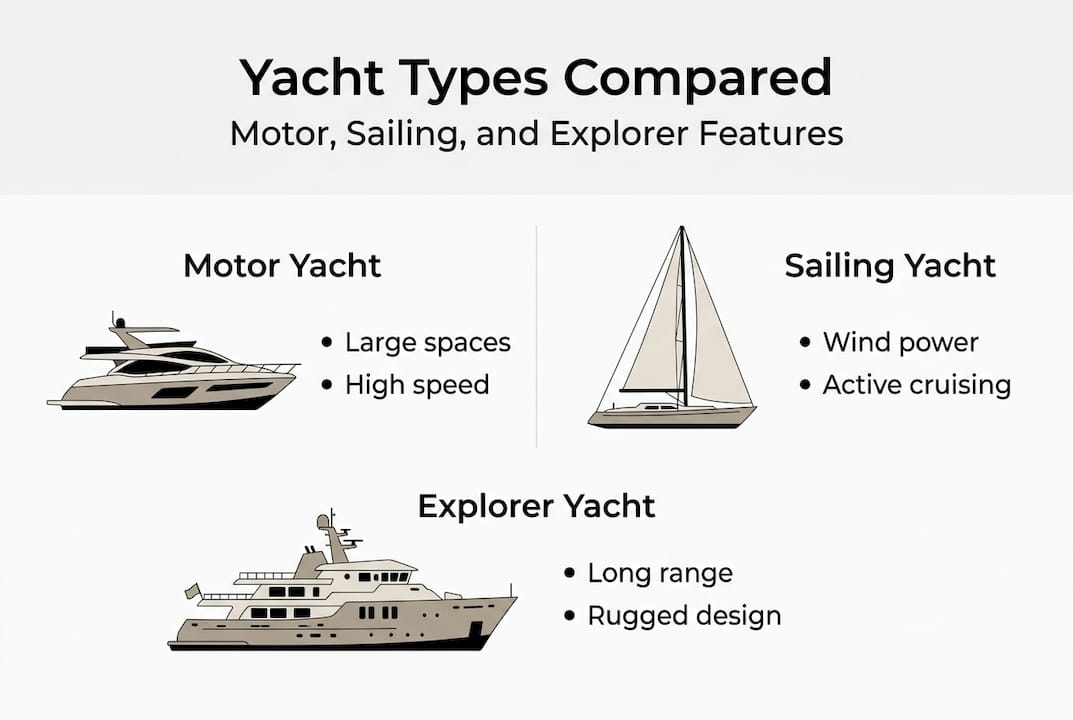
| Motor versus sailing yachts | Motor yachts prioritize speed and spacious layouts, while sailing yachts emphasize wind-powered travel, sport, and environmental sustainability. |
| Explorer yachts enable adventure | These specialized vessels feature reinforced hulls and extended range for remote destinations and transoceanic voyages. |
| Lifestyle alignment matters most | Selecting the ideal yacht type requires matching vessel capabilities to your intended usage, crew availability, and investment goals. |
Understanding motor yachts: design, categories, and luxury features
Motor yachts represent the most popular segment in the luxury yachting market, powered primarily by diesel engines that deliver speed, reliability, and impressive onboard space. These vessels dominate the luxury yachting market due to their combination of performance and comfort. Unlike sailing yachts that rely on wind, motor yachts offer predictable travel times and effortless handling, making them ideal for owners who prioritize convenience and spacious living areas.
Motor yachts span a wide range of sizes and configurations. Sport yachts typically measure 40 to 80 feet, emphasizing sleek lines and high-speed performance for day cruising and entertaining. Flybridge motor yachts, ranging from 50 to 100 feet, add an elevated helm station and additional deck space for socializing. Superyachts exceed 100 feet and can reach over 300 feet, offering unparalleled luxury with multiple decks, crew quarters, and resort-style amenities.
Luxury features commonly found on motor yachts include expansive sun decks with jacuzzis, state-of-the-art navigation and stabilization systems, high-performance engines capable of 20 to 30 knots, and entertainment spaces with premium audio-visual equipment. Many models incorporate beach clubs, swim platforms, and water toy garages to enhance the onboard experience. The advantages over sailing yachts are clear: faster cruising speeds, more interior volume per foot of length, and simpler operation without the need for sail handling.
| Motor Yacht Class | Typical Length | Key Features |
|---|---|---|
| Sport Yacht | 40-80 feet | High speed, sleek design, day cruising focus |
| Flybridge Yacht | 50-100 feet | Elevated helm, entertaining spaces, versatile layout |
| Superyacht | 100-300+ feet | Multiple decks, full crew, resort-level amenities |
Pro Tip: When evaluating motor yachts, carefully consider engine type and fuel capacity in relation to your intended cruising range. Diesel engines offer reliability and efficiency for extended voyages, while gasoline engines may suit shorter coastal trips. Always review the motor yacht guide specifications to ensure the vessel’s range aligns with your cruising plans and refueling infrastructure availability.
Sailing yachts explained: types, rigging styles, and luxury cruising appeal
Sailing yachts harness wind power as their primary propulsion method, offering a fundamentally different yachting experience rooted in tradition, sport, and environmental consciousness. These vessels offer a classic yachting experience valued for sustainability and the pure satisfaction of sailing. While most luxury sailing yachts include auxiliary diesel engines for maneuvering in harbors and calm conditions, the essence of sailing yacht ownership lies in the connection to natural elements and the skill involved in sail handling.
The rigging configuration defines how a sailing yacht performs and handles. Three main rig types dominate the luxury market:
- Sloop rig features a single mast with a mainsail and headsail, offering simplicity and excellent upwind performance for yachts up to 80 feet.
- Ketch rig adds a second shorter mast aft of the mainmast, distributing sail area for easier handling on larger vessels and providing versatility in heavy weather.
- Cutter rig uses a single mast but multiple headsails, allowing fine-tuned sail combinations for varying wind conditions and enhanced balance.
| Rig Type | Advantages | Considerations |
|---|---|---|
| Sloop | Simple, efficient, excellent upwind | Less sail area distribution on larger yachts |
| Ketch | Balanced, versatile, easier handling | More complex rigging, slightly slower |
| Cutter | Flexible sail combinations, balanced | Requires more sail inventory and expertise |
Luxury sailing yachts appeal to buyers seeking a more engaged cruising experience, where reading wind patterns and trimming sails becomes part of the journey’s pleasure. The environmental benefits are significant, as wind propulsion dramatically reduces fuel consumption and emissions compared to motor yachts. Many owners appreciate the tranquility of sailing without engine noise, the sporting challenge of optimizing performance, and the timeless aesthetic of a well-designed sailing vessel.
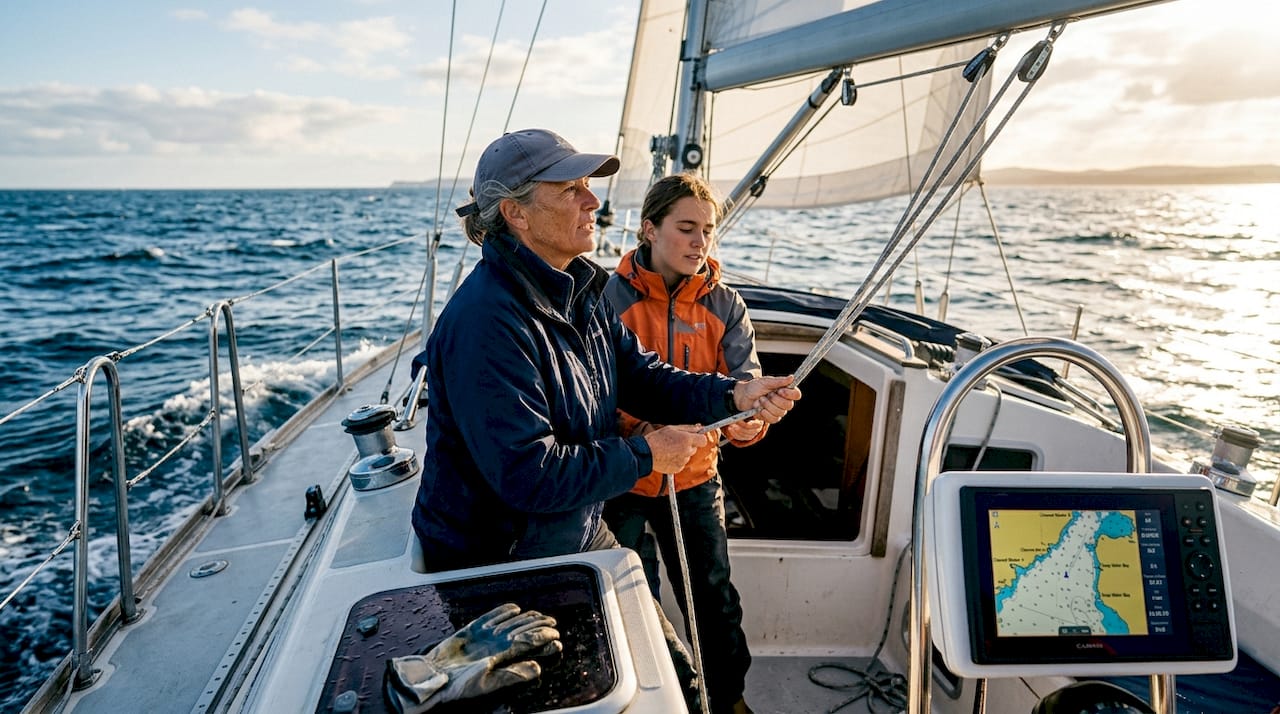
Pro Tip: Sailing yachts typically require more experienced crew or owner involvement than motor yachts of comparable size. Factor in the learning curve, ongoing training, and potential crew costs when evaluating whether a sailing yacht guide matches your lifestyle. Maintenance of rigging, sails, and associated systems also differs significantly from motor yacht upkeep.
Explorer and expedition yachts: long-range luxury for adventure seekers
Explorer and expedition yachts represent a specialized category designed for owners who refuse to compromise between luxury and adventure. These vessels combine luxury with transoceanic capabilities and rugged design, featuring reinforced steel or aluminum hulls, massive fuel tanks, and systems engineered for extended voyages to remote destinations. While traditional motor yachts excel in coastal cruising and popular marinas, explorer yachts venture to polar regions, isolated islands, and uncharted waters where infrastructure is minimal or nonexistent.
The defining characteristics of explorer yachts include ice-strengthened hulls capable of navigating challenging conditions, fuel capacities enabling 4,000 to 6,000 nautical mile ranges, advanced stabilization systems for rough seas, and redundant mechanical systems for reliability far from repair facilities. These vessels typically feature utilitarian exterior profiles prioritizing function over sleek aesthetics, though interior accommodations maintain full luxury standards.
Key design elements that distinguish expedition yachts include:
- Reinforced hull construction using steel or aluminum for ice navigation and impact resistance
- Oversized fuel and water tanks supporting extended autonomy without resupply
- Helicopter landing pads and submersible storage for exploration equipment
- Advanced water makers, waste treatment systems, and power generation for self-sufficiency
- Crew quarters and provisions storage designed for longer voyage durations
- Specialized navigation and communication equipment for remote area operation
“The demand for explorer yachts has surged among affluent buyers seeking authentic adventure without sacrificing comfort. These vessels represent the ultimate expression of go-anywhere capability combined with five-star accommodations, opening destinations that traditional yachts simply cannot access.”
Explorer yachts appeal to owners with adventurous spirits who view their yacht as a tool for discovery rather than merely a floating resort. Typical uses include Antarctic expeditions, Pacific island exploration, Arctic passage navigation, and extended world cruising. Compared to conventional motor yachts, explorers sacrifice some speed and interior volume in exchange for range, durability, and capability. They typically cruise at 10 to 14 knots rather than 20-plus knots, but their ability to access remote anchorages and withstand harsh conditions creates unique opportunities unavailable to standard luxury yachts.
Choosing the right yacht type for your lifestyle: considerations and expert advice
Selecting the ideal yacht type requires honest assessment of how you’ll actually use the vessel rather than romantic notions of yachting life. The right yacht type involves matching vessel features to owner lifestyle and intended use. Follow this systematic approach to clarify your priorities:
- Define your primary cruising destinations and typical voyage lengths to determine required range and seaworthiness.
- Assess your preferred pace, deciding whether speed and convenience or sailing engagement matters more.
- Evaluate crew availability and your willingness to manage complex systems versus turnkey operation.
- Consider how much time you’ll spend aboard versus chartering the yacht when not using it.
- Determine your budget for both acquisition and ongoing operational costs including fuel, maintenance, and crew.
- Factor in resale considerations and how different yacht types hold value in the pre-owned market.
Key considerations extend beyond initial appeal to practical ownership realities. Size directly impacts marina fees, insurance costs, and crew requirements. Range determines whether you can reach desired destinations without constant refueling stops. Speed affects how much actual cruising versus motoring you’ll experience during limited vacation time. Maintenance complexity varies dramatically, with sailing yachts requiring rigging and sail care, motor yachts needing engine service, and explorer yachts demanding specialized systems attention.
Amenities and layout preferences also guide selection. Motor yachts typically offer more interior volume and entertaining space per foot of length. Sailing yachts provide outdoor cockpit areas ideal for experiencing the elements. Explorer yachts emphasize storage for expedition gear and toys. Consider which features genuinely enhance your enjoyment versus impressive-sounding options you’ll rarely use.
Pro Tip: Engage a qualified yacht broker early in your decision process, well before viewing specific listings. Experienced brokers help choose a luxury yacht by asking questions you might not consider, introducing yacht types you hadn’t explored, and providing realistic cost projections for different categories. Their market knowledge prevents costly mismatches between buyer expectations and vessel capabilities.
Balancing luxury desires with operational realities creates sustainable ownership satisfaction. The most successful yacht owners recognize that the perfect yacht type aligns with their actual cruising patterns, available time, crew resources, and long-term goals rather than simply impressing others at the marina. Taking time to thoroughly understand yacht type distinctions before purchasing pays dividends in enjoyment and investment value throughout your ownership experience.
Discover expert yacht brokerage services with yachts by steve
Now that you understand the fundamental differences between yacht types, the next step is partnering with experienced professionals who can translate this knowledge into finding your ideal vessel. Yachts by Steve specializes in guiding affluent buyers through every aspect of yacht acquisition, from initial type selection to final closing. Our team brings decades of combined experience in luxury yacht transactions, market analysis, and buyer advocacy.
We offer tailored brokerage services that simplify complex purchasing decisions by providing unbiased guidance, comprehensive vessel evaluations, and skilled negotiation on your behalf. Whether you’re drawn to the speed of motor yachts, the tradition of sailing vessels, or the adventure of explorer yachts, our expertise ensures you select a yacht perfectly matched to your lifestyle and investment objectives in 2026.
Pro Tip: Professional brokers leverage insider market knowledge to identify opportunities before they reach public listings, negotiate favorable terms, and manage the extensive paperwork required for yacht transactions. Learn how to choose a yacht broker who prioritizes your interests, review our comprehensive buy a yacht guide, and discover what yacht brokerage help can provide throughout your purchasing journey.
Frequently asked questions about yacht types
What factors determine the price differences between yacht types?
Price variations stem from construction materials, propulsion complexity, size, and amenities. Motor yachts command premiums for powerful engine systems and spacious layouts. Sailing yachts with advanced rigging and carbon fiber components increase costs significantly. Explorer yachts cost more due to reinforced hulls and specialized long-range systems.
How does maintenance differ between sailing and motor yachts?
Sailing yachts require regular rigging inspections, sail repairs, and specialized hardware maintenance that motor yachts avoid. Motor yachts need more frequent engine servicing, generator maintenance, and fuel system care. Both types share hull, electrical, and interior system upkeep, but sailing yachts add unique sail-handling equipment costs.
Can explorer yachts be used for coastal cruising or only long voyages?
Explorer yachts function perfectly well for coastal cruising, though their design priorities make them less efficient than purpose-built coastal motor yachts. Their deeper drafts may limit access to shallow anchorages, and slower cruising speeds extend travel times. However, their stability and comfort excel in rougher coastal conditions where lighter yachts struggle.
What is the typical crew size needed for each yacht type?
Motor yachts under 80 feet often operate with couples or small families handling them independently. Yachts from 80 to 120 feet typically need two to four crew members. Superyachts over 120 feet require five to twenty crew depending on size. Sailing yachts of comparable length need similar or slightly larger crews due to sail handling demands.
Are there popular hybrid yachts combining motor and sailing features?
Motor sailers represent the primary hybrid category, featuring both substantial engine power and sailing rigs. These vessels offer flexibility to motor when convenient and sail when conditions favor it. Modern examples include luxury catamarans with powerful engines and efficient sail plans, appealing to owners wanting versatility without committing fully to either propulsion method.
Recommended
Featured Listings

2028 Columbus Yachts
$22,900,008
137
Ancona

2012 Benetti PATIENCE
$10,975,000
132
Fort Lauderdale Florida

2028 Kingship Kingship
$20,627,500
125

2024 Silver Yachts
$25,400,000
117

2009 Hargrave BRANDI WINE
$2,500,000
114
Fort Lauderdale Florida

2028 Extra Yachts
$20,627,500
100
Ancona

2028 Alpha
$12,265,000
100
Ft Lauderdale Florida

2028 Extra Yachts Extra 96
$9,495,000
96
Ancona

2021 Sanlorenzo GATSBY
$6,795,000
96
Fort Lauderdale Florida

2028 Kingship
$12,153,500
90

2023 Azimut COMPASS
$7,950,000
88
Miami Beach Florida

1999 Northern Marine OFF LINE
$2,495,000
84
Ft Lauderdale Florida

2013 Pershing DOROTHY ANN
$1,375,000
82
Fort Lauderdale Florida

1997 Ferretti Yachts
$825,000
80
La Paz

2008 Princess Yachts OCARALIA
$1,095,000
75
Charleston South Carolina

2014 Sunseeker
$1,400,000
68
New York New York

2024 Fairline
$2,750,000
68
Ft. Lauderdale Florida

2019 Vanquish Yachts IMPULSIVE
$1,799,000
58
Miami Beach Florida

2021 Ferretti Yachts HAVEN
$1,595,000
57
Fort Lauderdale Florida

2025 Formula BREAKTHROUGH III
$1,895,000
53
Miami Beach Florida

2023 Fairline
$900,000
45
Fort Lauderdale Florida

2012 Zeelander Mississippi Queen
$575,000
44
West Palm Beach Florida
2028 Columbus Yachts 137'
$22,900,008
2012 Benetti 132'
$10,975,000
2028 Kingship 125'
$20,627,500
2024 Silver Yachts 117'
$25,400,000
2009 Hargrave 114'
$2,500,000
2028 Extra Yachts 100'
$20,627,500
2028 Alpha 100'
$12,265,000
2028 Extra Yachts 96'
$9,495,000
2021 Sanlorenzo 96'
$6,795,000
2028 Kingship 90'
$12,153,500
2023 Azimut 88'
$7,950,000
1999 Northern Marine 84'
$2,495,000
2013 Pershing 82'
$1,375,000
1997 Ferretti Yachts 80'
$825,000
2008 Princess Yachts 75'
$1,095,000
2014 Sunseeker 68'
$1,400,000
2024 Fairline 68'
$2,750,000
2019 Vanquish Yachts 58'
$1,799,000
2021 Ferretti Yachts 57'
$1,595,000
2025 Formula 53'
$1,895,000
2023 Fairline 45'
$900,000
2012 Zeelander 44'
$575,000